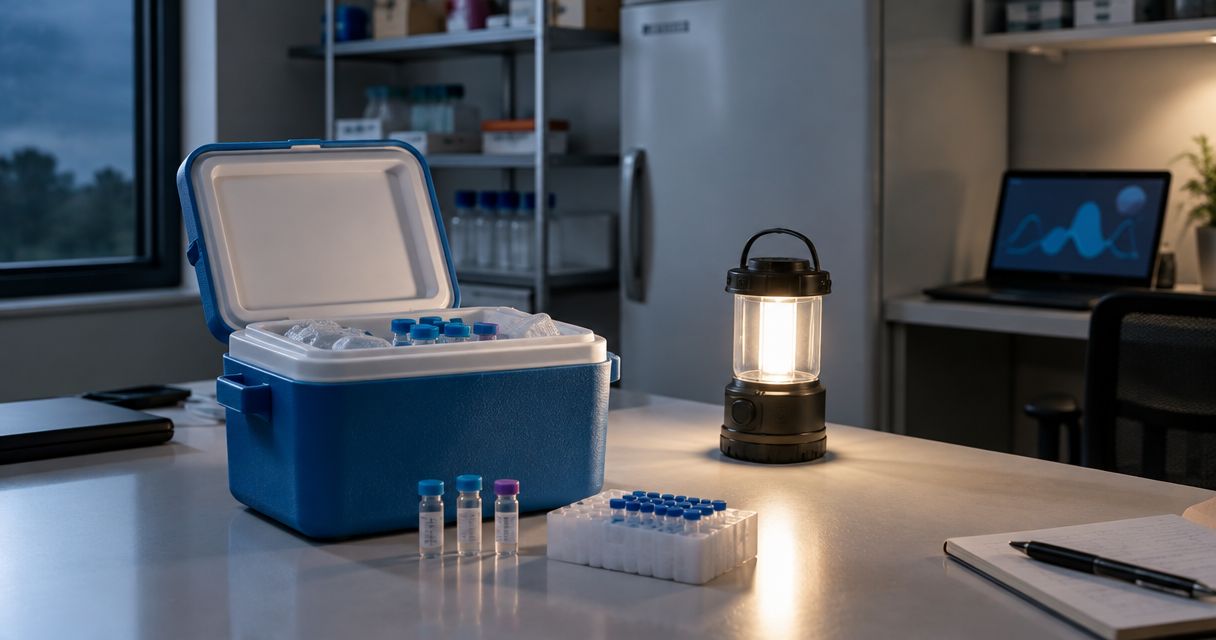
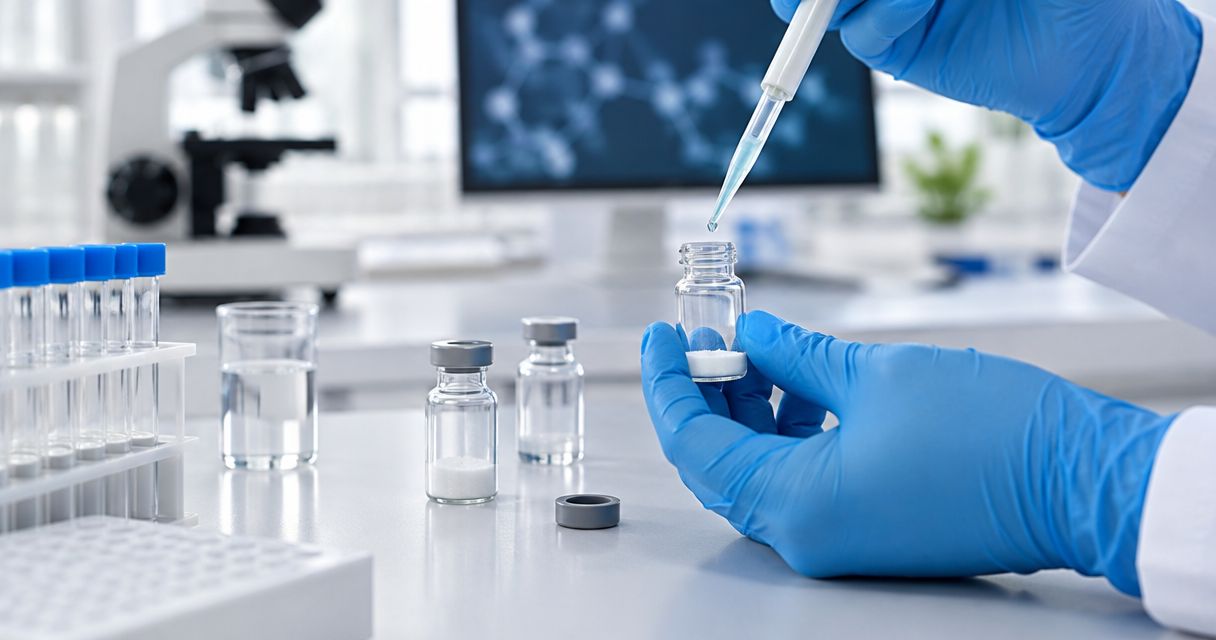
To reconstitute Hexarelin peptide for research, use the solvent, final concentration, mixing method, and storage conditions specified in the material’s documentation and your approved laboratory protocol. Calculate the required final volume from the documented peptide content, introduce the specified solvent with appropriate contamination controls, and confirm dissolution before preparing assay dilutions. Reconstitution does not establish sterility, biological activity, or suitability for human use.
- To reconstitute Hexarelin peptide, follow material-specific instructions rather than a generic mixing recipe.
- Calculate concentration from documented peptide content and final solution volume; purity percentage is not peptide mass.
- Peptides777 supplies research-grade peptides for laboratory and scientific research, not personal treatment.
- Choose solvents and storage conditions for the research assay; clear appearance alone does not verify identity or activity.
How do you reconstitute Hexarelin peptide for research?
Start with the batch documentation, not a standard amount of water. A reproducible preparation connects the material’s identity and content to a specified solvent, measurable final volume, and documented handling conditions.
Before opening the vial, review the label, certificate of analysis, and handling instructions together. Use the guide to reading a peptide certificate of analysis correctly to distinguish identity, purity, and content information.
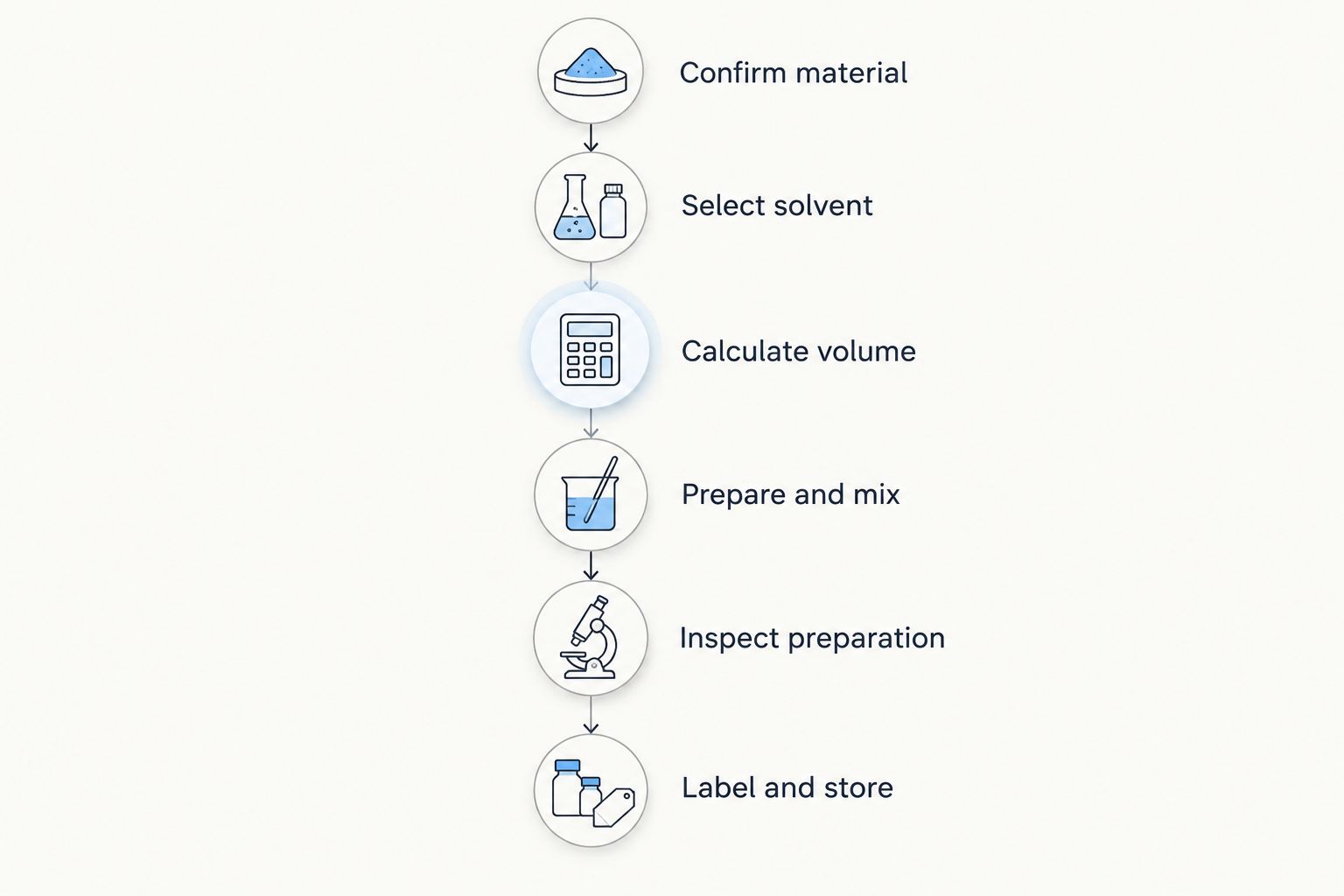
1. Confirm the material and protocol
Match the vial identifier and lot number to the accompanying documents. Confirm that your method actually calls for Hexarelin and that the material meets the method’s acceptance criteria.
Check whether the stated content represents peptide content, total supplied material, or another defined measurement. Do not silently treat those descriptions as interchangeable when calculating your stock concentration.
2. Select the documented solvent
Use the solvent named in the material-specific instructions and accepted by the downstream assay. Water, saline, buffered solutions, and preservative-containing solutions are not automatic substitutes for one another.
If the instructions do not identify a suitable solvent, obtain clarification before preparing the stock. Do not turn an undocumented solvent choice into a laboratory standard simply because the powder appears to dissolve.
3. Calculate the required final volume
Use the relationship final volume = documented peptide mass ÷ target mass concentration, keeping the units consistent. This calculation gives a preparation target; it does not verify the actual content of the vial.
Distinguish final solution volume from solvent volume added. Follow your method’s convention, particularly when quantitative accuracy requires preparation to a defined final volume.
4. Prepare and mix under controlled conditions
Use suitable laboratory equipment and the contamination controls required by your assay and institutional procedures. Introduce the specified solvent and mix using the documented method, rather than improvising an agitation procedure.
Record any departure from the instructions. An unrecorded change prevents another researcher from determining whether later differences came from the material, preparation, or assay.
5. Inspect and assess the preparation
Check for visible undissolved material, unexpected cloudiness, discoloration, or container damage. Compare the preparation with any appearance criteria in the method.
A clear solution passes only a visual check. It does not establish chemical identity, concentration, sterility, or biological activity; those require the appropriate analytical or microbiological evidence.
6. Label, store, and record
Label the preparation with its identity, lot number, calculated concentration, solvent, preparation date, and preparer. Add storage conditions and a use-by assignment only when supported by the applicable procedure or stability information.
For a preparation made in 2026, record the full date rather than the year alone. Link the stock record to subsequent dilutions so the assay result remains traceable to the original material.
Why this matters
Reconstitution creates the stock solution from which later experimental concentrations are calculated. An error at this stage carries into every dilution prepared from that stock, even when the later pipetting is accurate.
For your 2026 research records, treat reconstitution as a documented experimental operation rather than a preliminary chore. The useful output is not merely a dissolved peptide: it is a preparation whose identity, concentration basis, and handling history another researcher can reconstruct.
Which solvent should you use for Hexarelin research?
Use a solvent supported by the material’s instructions and the assay method. A solution that dissolves the peptide can still introduce an unwanted variable into a cell-based, biochemical, or analytical experiment.
The following comparison identifies questions to resolve, not interchangeable recipes. None of these options establishes suitability without checking the actual material and intended method.
| Solvent category | Best for | Advantage | Limitation to check |
|---|---|---|---|
| Laboratory water | Methods explicitly specifying aqueous preparation without added salts | Avoids intentionally adding buffer salts or preservatives | Does not provide a defined buffering system |
| Saline | Methods explicitly accepting the specified salt composition | Provides a defined salt-containing vehicle | Adds ionic components that must suit the assay |
| Buffered solution | Methods requiring a specified buffer and pH | Provides a defined buffering environment | Buffer chemistry can affect the experiment |
| Preservative-containing water | Methods explicitly permitting the preservative | Supplies the documented preservative-containing vehicle | The preservative becomes an additional assay component |
Do not assume a solvent is appropriate because it appears in a general peptide article. Check its grade, composition, handling instructions, and compatibility with the experimental system.
For Peptides777 research-grade peptides, the store’s stated laboratory-use positioning does not replace material-specific handling instructions. Peptides777 is for laboratory buyers sourcing research-grade peptides, not products for personal treatment.
Match the vehicle control to the preparation
Where your assay requires a vehicle control, account for the solvent components introduced with the peptide stock. Otherwise, a measured difference can reflect the vehicle rather than the research material alone.
Document the stock solvent and the final vehicle composition used in the experiment. Keep those records connected instead of recording only the nominal peptide concentration.
How do you calculate the Hexarelin stock concentration?
Mass concentration equals documented peptide mass divided by final solution volume. State both the numerical result and its units in the preparation record, and describe whether the result is nominal or analytically verified.
Keep these exact unit relationships available:
- 1 mg = 1,000 µg. Milligrams and micrograms are different mass units.
- 1 mL = 1,000 µL. Milliliters and microliters are different volume units.
- 1 µg/mL = 1 mg/L. These expressions represent the same mass concentration.
These are unit conversions, not recommended Hexarelin preparation conditions. They do not specify how much material belongs in your vial or what concentration your experiment requires.
Separate stock concentration from assay concentration
The stock concentration describes the prepared source solution. The assay concentration describes the peptide concentration after that stock enters the full experimental mixture.
Use C₁V₁ = C₂V₂ for a compatible dilution calculation, with consistent concentration and volume units. Include the complete final assay volume, not just the volume of solvent into which the stock was first transferred.
The guide to calculating peptide concentration after mixing covers this distinction. Keep the calculation alongside the preparation record so a reviewer can follow the dilution without guessing.
Do not use purity as a substitute for content
A reported chromatographic purity percentage does not, by itself, establish the mass of peptide present. Interpretation depends on the analytical method and what the supplier’s reported result measures.
Peptides777 markets its research materials with 99%+ purity. That claim is not a batch-specific content determination, a sterility result, or evidence of suitability for a particular experiment.
Why Hexarelin reconstitution conditions vary
A universal mixing recipe ignores variables that belong in the material documentation and research method. Resolve these factors before preparing your 2026 study stocks:
- Material specification: The stated chemical form and content basis determine how you interpret the supplied material and its concentration calculation.
- Solvent composition: Water, salts, buffers, and preservatives introduce different components into the preparation and assay.
- Target concentration: Your assay and dilution plan determine the stock concentration you need; convenience alone is not a method justification.
- Assay requirements: Analytical, biochemical, and cell-based methods can impose different requirements for vehicle composition and contamination control.
- Handling history: Preparation, transfers, storage, and thawing belong in the record used to assess whether the material remains fit for the method.
- Available stability evidence: Storage conditions and a use-by assignment need support for the actual preparation, not a different peptide or solvent.
Record the reason for each selected condition. A reproducible protocol explains the choices that affect the experiment instead of documenting only the final volume.
What should you do if Hexarelin does not dissolve?
Stop and compare the preparation with the documented method before changing it. Confirm the material identity, solvent composition, calculation, and mixing procedure, then record what you observe.
Do not repeatedly add solvent, adjust pH, heat the preparation, or change the mixing method without an approved basis. Each change creates a different preparation and can invalidate the planned concentration or assay conditions.
If troubleshooting is authorized, document it as a method change rather than rewriting the original record. Preserve enough detail to distinguish the initial preparation from the revised one.
Can you filter a cloudy preparation and keep using it?
Filtration is not a general rescue step. It changes the handling process and does not establish that the remaining solution contains the intended concentration or acceptable material.
Use filtration only when the method specifies or validates it. An unexpected appearance warrants investigation against acceptance criteria, not an assumption that removing visible particles restores suitability.
How long can you store reconstituted Hexarelin?
Assign storage conditions and a use-by period from preparation-specific evidence or your validated laboratory procedure. A generic peptide storage statement does not establish stability for Hexarelin in your chosen solvent and container.
For a 2026 study, record the source and revision of the storage instruction you follow. Distinguish a supplier recommendation from stability demonstrated under your own experimental conditions.
If your method calls for aliquots, label each aliquot so it remains connected to the parent stock. Do not replace that traceability with an unlabeled container or an assumed preparation date.
FAQ
What do I need before I reconstitute Hexarelin peptide for research?
You need material-specific documentation, a defined laboratory method, the specified solvent, suitable measuring equipment, and a preparation record. Confirm the material identity, content basis, target concentration, and handling requirements before opening the vial.
Can I use bacteriostatic water to reconstitute Hexarelin?
Use bacteriostatic water only when the material instructions and assay method permit that preservative-containing solvent. Do not assume a solvent used for another peptide is suitable for your Hexarelin experiment.
How much water should I add to a Hexarelin vial?
Calculate the required final solution volume from the documented peptide mass and your protocol’s target concentration. There is no single volume that applies independently of vial content, solvent compatibility, and experimental requirements.
Does a clear Hexarelin solution mean it is ready for research?
A clear Hexarelin solution has passed a visual check, not a complete quality assessment. Identity, concentration, contamination requirements, and any activity criteria must still meet the method’s acceptance requirements.
Is reconstituting Hexarelin the same as preparing an injection?
No; laboratory reconstitution does not establish suitability for injection or other human use. Research-use materials and laboratory handling procedures are not substitutes for approved medicines or clinical preparation standards.
Can I use storage instructions from a different research peptide?
Do not substitute another peptide’s storage instructions for preparation-specific guidance. The material, solvent, container, and handling conditions must match the evidence or validated procedure you follow.
What should I put on a reconstituted Hexarelin label?
Include the material identity, lot number, calculated concentration, solvent, preparation date, and preparer. Add supported storage instructions and the assigned use-by information required by your laboratory procedure.
One last thing
Dissolution is an observation; concentration is a calculation or measurement. Keep those statements separate in your 2026 laboratory notebook: a clear vial does not prove that its contents match the concentration written on the label.
Before releasing the stock for an experiment, have the record checked against the method’s acceptance criteria. Catching a unit mismatch or an unsupported solvent substitution at preparation is better than trying to explain it after interpreting assay results.