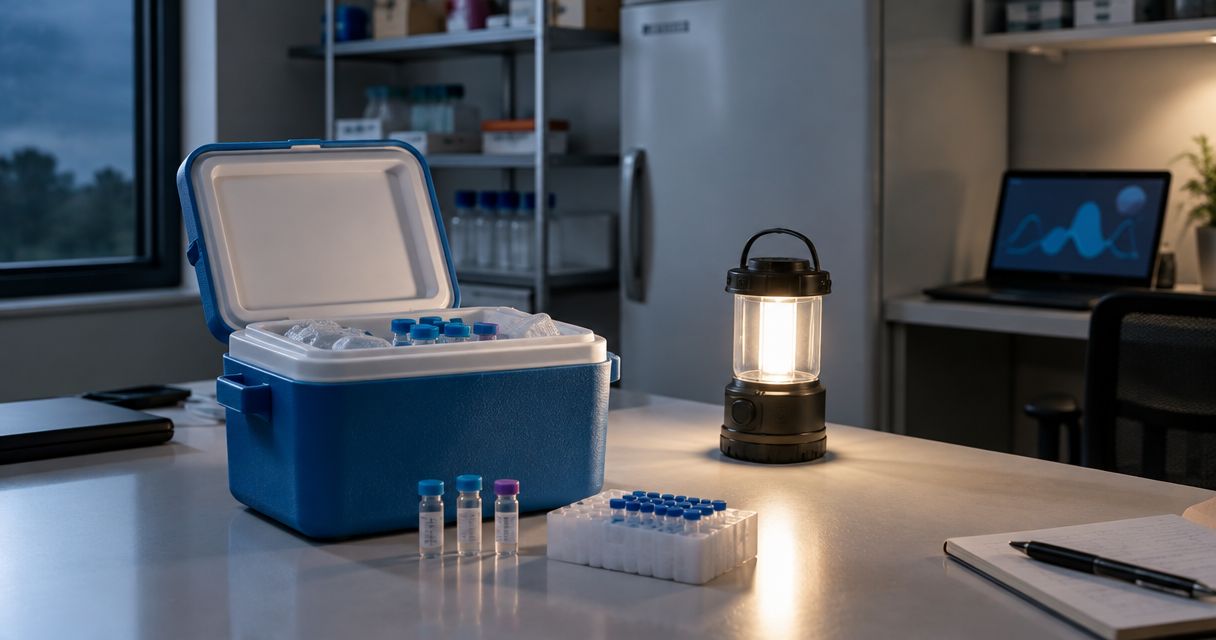
You can pay for peptide orders with a university purchasing card only when your institution authorizes the purchase and the supplier accepts that card. A successful checkout does not establish procurement approval, funding eligibility, or permission to use the material in your research.
- To pay for peptide orders with purchasing card authorization, confirm university policy and supplier acceptance before checkout.
- Peptides777 research peptides are intended for laboratory and scientific research, not personal use.
- Use a purchase order instead when your university requires that purchasing route.
- Keep the approval, itemized receipt, funding allocation, and receiving record together.
Can you pay for peptide orders with a university purchasing card?
Yes, if the university permits the specific transaction and the supplier accepts the payment method. Neither condition replaces the other: a permitted research purchase still needs an accepted payment method, and an accepted card still needs institutional authorization.
For a Peptides777 research-peptide order, use the contact page to ask about purchasing-card acceptance and the documentation your university requires. Confirm those details before submitting payment.
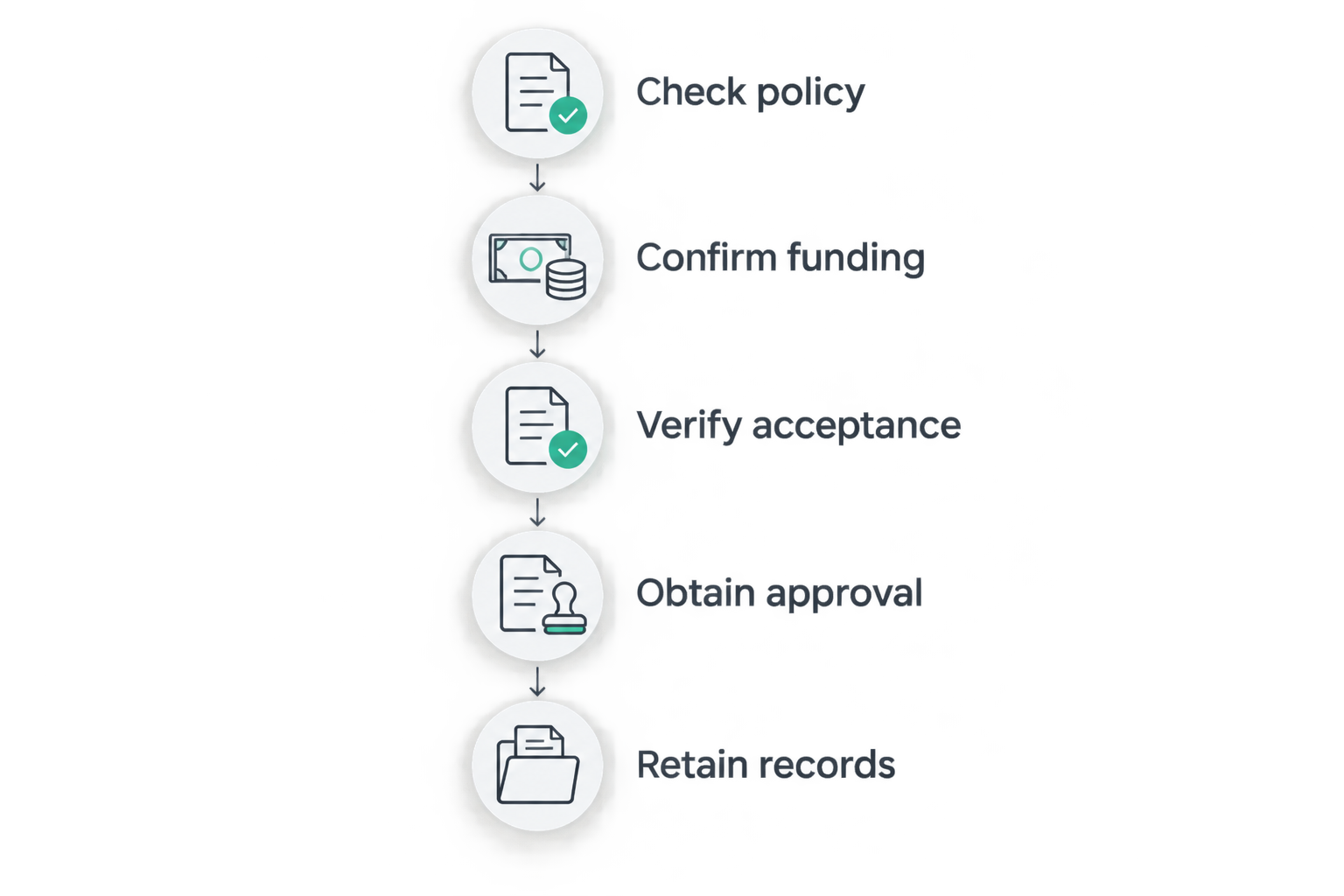
Use this sequence for a 2026 purchase:
- Check policy. Read the current purchasing-card rules for laboratory materials, restricted purchases, transaction limits, and required approvals. Ask your procurement office to resolve any unclear classification.
- Confirm funding. Identify the account that will cover the order. For sponsored research, ask the responsible administrator whether the purchase fits the award and institutional requirements.
- Verify acceptance. Ask the supplier whether it accepts your institution’s card and can provide the required itemized documentation. Do not treat a generic card-payment option as confirmation.
- Obtain approval. Complete the approvals your university requires before placing the order. Keep the written decision with the purchase request.
- Retain records. Save the order details, payment receipt, approval, funding allocation, and receiving documentation in the university’s designated system.
Why this matters
Card authorization is not research authorization. A payment confirmation answers whether a transaction processed; it does not answer whether the institution approved the material, supplier, funding source, or intended use.
Keep those decisions separate in your 2026 purchasing file. The cardholder should be able to show why the purchase was permitted without asking a reviewer to infer approval from a receipt.
For research-grade materials, the financial record also serves a different purpose from the scientific record. An itemized receipt supports reconciliation; a certificate of analysis supports evaluation of the material. Retain each document for its own purpose rather than treating either as a substitute for the other.
Purchasing card or purchase order: which route should you use?
Use the route your procurement office authorizes for the specific purchase. A purchasing card is not automatically the right choice because checkout is available, and a purchase order is not automatically required because the material is a peptide.
The comparison below describes selection criteria, not payment options confirmed for any particular supplier.
| Purchasing route | Best for | Practical benefit | Limitation to resolve |
|---|---|---|---|
| University purchasing card | Transactions explicitly permitted under the institution’s card policy | Lets an authorized cardholder complete an eligible card purchase | Requires supplier acceptance, card eligibility, and complete reconciliation records |
| University purchase order | Transactions the institution requires to enter its purchase-order workflow | Establishes the approved purchasing instruction before fulfillment | Requires the institution’s workflow and the supplier’s agreement to that arrangement |
For a 2026 order, ask procurement to identify the authorized route before contacting the supplier about payment. Then confirm that the supplier can work with that route.
Do not assume that a purchase order means deferred payment. Likewise, do not assume that an online card transaction eliminates the need for a requisition or prior approval. Ask about each requirement separately.
When a purchasing card fits
A purchasing card fits when your institution explicitly permits the material, supplier, amount, funding source, and intended use under its card rules. Your next task is to confirm supplier acceptance and collect the documentation required for reconciliation.
Best for: an eligible transaction with a clear approval path. The limitation is that card acceptance alone cannot resolve university restrictions. Stop before payment if the policy interpretation remains unsettled.
When a purchase order fits
A purchase order fits when procurement directs you to use that workflow. Obtain the required institutional approval and confirm the supplier’s ability to accept the arrangement before treating the order as ready to place.
Best for: a transaction assigned to the university’s purchase-order process. The limitation is coordination: the university’s requirements and the supplier’s ordering process must agree. Do not promise a payment arrangement on either party’s behalf.
Why purchasing-card eligibility varies
The answer depends on the institution and the transaction, not on the word peptide alone. Resolve these factors against the rules that apply to your purchase:
- Material classification. Ask procurement how the exact compound and its intended research use are classified. Do not select a convenient category merely to complete checkout.
- Card authority. Check that the cardholder is authorized to make this purchase and that the transaction meets the applicable card controls.
- Funding restrictions. Confirm the proposed account and any award-specific conditions with the administrator responsible for that funding.
- Supplier requirements. Ask whether vendor registration, tax documentation, or another institutional review must occur before ordering.
- Research requirements. Identify any protocol, safety, or other institutional approval that applies to the planned work. A purchasing decision does not replace those reviews.
- Record requirements. Establish what the cardholder must submit, who reviews the transaction, and where supporting documents belong.
Use the current 2026 policy and account-specific instructions. A previous order is useful background, but it is not a substitute for checking the requirements governing the new transaction.
What should you ask the supplier before paying?
Send a specific purchasing inquiry rather than a general question about whether cards work. Include the requested material, quantity, institutional billing details, and delivery destination through the supplier’s appropriate ordering channel.
Ask the supplier to confirm:
- Whether it accepts your university purchasing card for the proposed order.
- Whether the billing name and address can match the institution’s requirements.
- Whether the receipt identifies the purchased materials and quantities.
- Whether requested research documentation is available for the material being ordered.
- Whether the supplier needs institutional information before payment.
Do not send a full card number or security code in an ordinary inquiry. Use the payment channel approved by your institution and confirmed by the supplier.
Peptides777 is for buyers sourcing research-grade peptides for laboratory and scientific research, not personal use. Its stated research-only positioning does not establish university vendor approval, purchasing-card acceptance, or suitability for a particular protocol; confirm those points independently.
What records should you keep for a peptide purchase?
Build the purchase file before checkout. A useful record connects the authorization, the transaction, and the material received without requiring someone else to reconstruct the sequence from scattered emails.
| Record | What it should establish | What it does not establish alone |
|---|---|---|
| Purchase approval | Who authorized the proposed transaction | That the supplier accepted payment |
| Itemized receipt | What was purchased and charged | That the expense was institutionally permitted |
| Funding allocation | Which account should bear the expense | That every award condition was satisfied |
| Receiving record | What the laboratory received | That the material meets scientific acceptance criteria |
| Research documentation | The material information supplied for evaluation | That the purchase followed card policy |
Use your university’s required records and retention process rather than treating this table as an institutional checklist. If a required document is unavailable, ask the reviewer how to proceed before placing the order.
Keep purchasing details factual. Describe the material and its research purpose accurately; do not relabel the purchase to avoid review or make the receipt appear consistent with an unrelated expense category.
What should you do if the purchasing card is declined?
Stop and identify the cause through the authorized channels. A decline does not, by itself, tell you whether the problem is a payment detail, a card control, supplier acceptance, or institutional eligibility.
Contact the card administrator using your university’s established process. Ask what information is needed to review the transaction, then contact the supplier if the administrator identifies a payment-processing question.
Do not repeatedly retry the transaction with altered descriptions or divide the order to evade a limit. If procurement directs you to another purchasing route, obtain that direction before resubmitting the order.
For a 2026 purchase, record the resolution alongside the original request. That gives the reconciler a clear explanation of what changed and why the eventual transaction followed the approved process.
Does a successful card payment mean the peptide order is approved?
No. A successful payment confirms processing, not university approval. You still need the authorization, funding eligibility, and research permissions that apply to the transaction.
If payment occurred before those checks, contact the responsible institutional administrator promptly. Explain what happened accurately and follow the institution’s correction process rather than creating an approval record that implies advance authorization.
Can you split a peptide order to stay under a card limit?
Do not split an order to bypass a purchasing-card control. Ask procurement how to handle the complete purchasing requirement instead of changing the transaction structure to avoid review.
The relevant question is which purchasing route the university authorizes for the order. Supplier willingness to process separate payments does not answer that question.
Does a research-only label make the purchase eligible?
No. A research-only label does not establish purchasing-card eligibility. The institution must still determine whether the material, use, supplier, funding source, and payment route meet its requirements.
Keep personal use outside the university purchase. Buying a research-labelled material with an institutional card does not turn it into a product authorized for human treatment or self-administration.
FAQ
Can I pay for peptide orders with purchasing card approval from my lab manager?
Lab-manager approval is sufficient only if your university gives that person the required authority and no additional approvals apply. Check the purchasing-card policy and the requirements for the proposed funding account before ordering.
Does Peptides777 accept university purchasing cards?
Confirm university purchasing-card acceptance directly with Peptides777 before ordering. Ask about your institution’s card, billing requirements, and itemized receipt needs rather than assuming that online checkout confirms acceptance.
Do I need a purchase order if I have a university card?
You need a purchase order when your university requires that purchasing route for the transaction. Possessing an institutional card does not remove requisition, supplier-review, or approval requirements.
Can I charge research peptides to a grant?
Charge research peptides to a grant only after the responsible administrator confirms that the expense meets the award and institutional requirements. Card acceptance does not establish whether the grant can bear the expense.
What receipt do I need for a university peptide order?
Obtain the itemized receipt and supporting records your university requires for reconciliation. Confirm those requirements before paying, including the information needed to connect the transaction to its approval and funding account.
Can I use a personal card and request reimbursement instead?
Use a personal card only if your institution expressly permits that reimbursement route for the purchase. Do not treat personal payment as a workaround for a restricted institutional-card transaction.
Does a certificate of analysis replace purchasing approval?
A certificate of analysis does not replace purchasing approval. It provides material-related information for evaluation, while procurement approval addresses the institution’s authority to make the purchase.
One last thing
Ask the approver to confirm the purchasing route, not just the research purpose. Approval to conduct an experiment and permission to pay a particular supplier with a particular card answer different questions.
Before your next 2026 order, put the proposed material, supplier, funding account, and payment route in the same approval request. That gives the reviewer a defined transaction to assess instead of an open-ended request to buy research supplies.