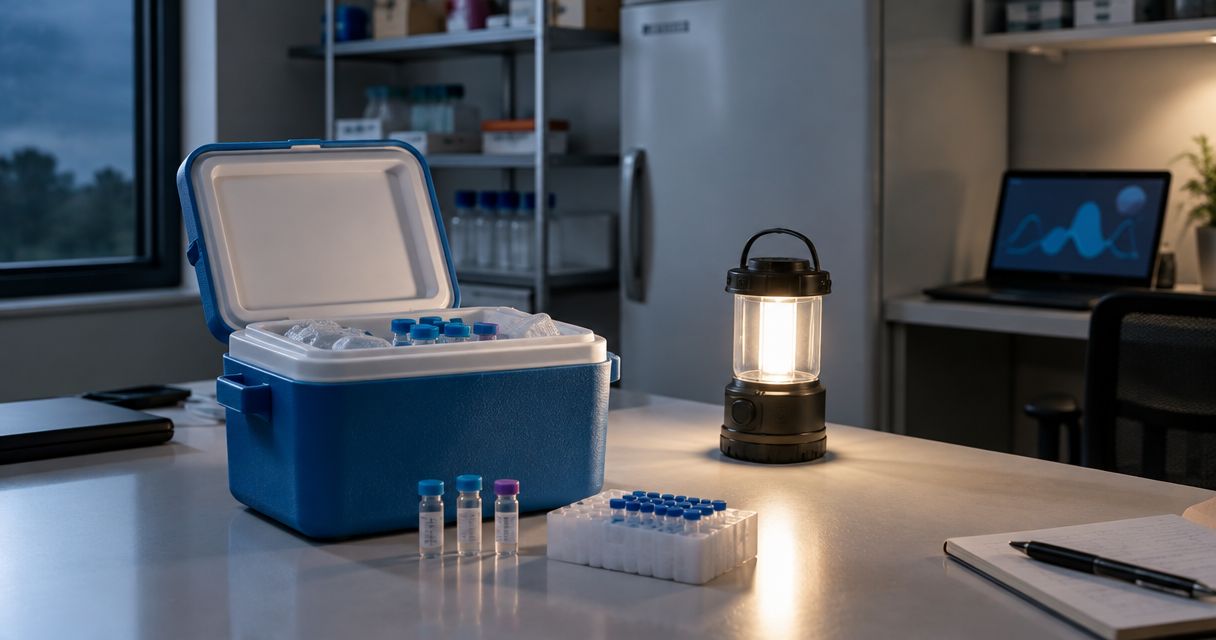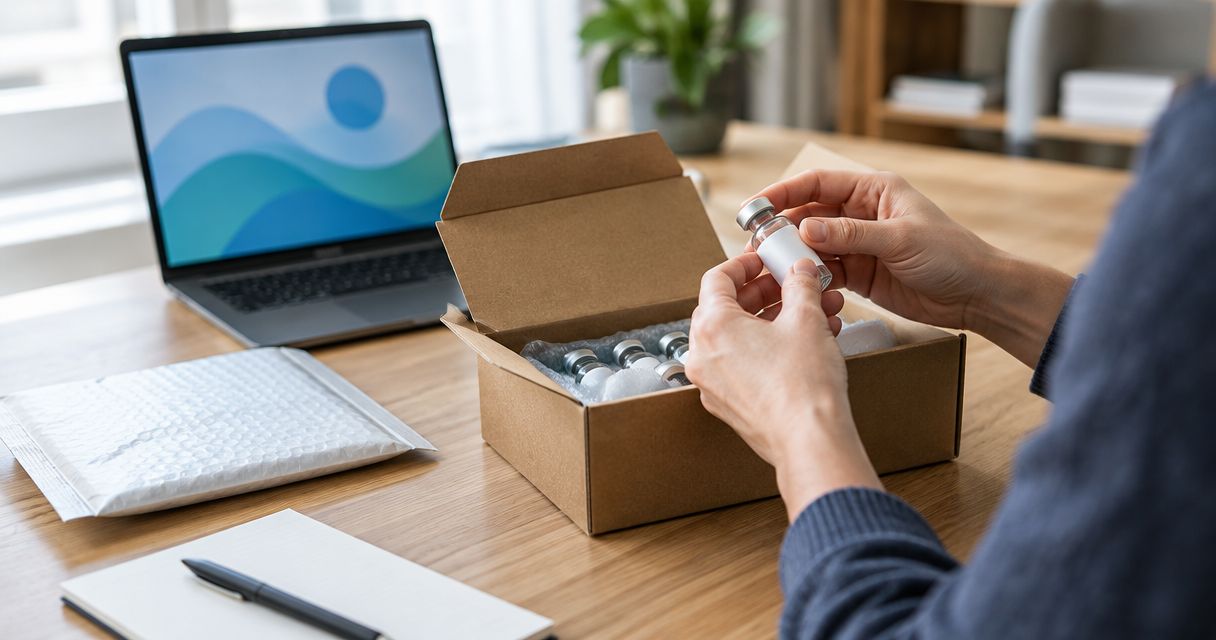

Ordering peptides online is not automatically safe: laboratory purchasing requires verified identity, batch documentation, and handling controls, while research-labeled peptides should not be used for self-treatment. A purity claim does not establish sterility, clinical safety, or approval for human use.
- Is it safe to order peptides online? Research procurement requires verification; research labeling does not establish medical safety.
- Peptides777 sells research peptides for laboratory and scientific use, not approved treatments.
- A 99%+ purity claim does not establish identity, sterility, or suitability for human use.
- Check batch-specific documentation, supplier identity, and shipping requirements before approving a laboratory purchase.
Is it safe to order peptides online in 2026?
An online checkout is not evidence that a peptide is safe for your intended use. Start by separating laboratory procurement from medical treatment. Those decisions require different evidence, and a research supplier’s certificate cannot substitute for clinical evaluation.
For laboratory purchasing, verifying a peptide certificate of analysis is a useful starting point. It is not the entire supplier assessment.
| Intended use | What supports the decision | What does not establish safety | Recommended next move |
|---|---|---|---|
| Laboratory research | Batch identity, relevant analytical results, traceability, and protocol suitability | A research label or purity percentage alone | Complete your laboratory’s supplier qualification process |
| Personal treatment with research-labeled material | Research documentation cannot establish suitability for self-treatment | Testimonials, handling instructions, or claims of similarity to medicines | Do not self-administer; discuss treatment with a licensed clinician |
| Prescribed peptide medicine | Clinical assessment and dispensing through a licensed pharmacy | A seller displaying the same compound name | Verify the prescriber, pharmacy, and exact medicine |
The distinction matters even when the compound names look familiar. A shared name does not establish that a research material and a prescribed medicine have equivalent formulation, manufacturing controls, or regulatory status.
Why this matters
The word safe combines several separate questions. Is the seller identifiable? Is the material what the label says? Will it work in your experiment? Is it appropriate for administration to a person?
Evidence answering one question does not automatically answer the others. Secure payment processing protects a transaction; it does not authenticate the vial. An analytical report describes tested material; it does not establish clinical benefit.
For a 2026 purchase, define the intended use before comparing suppliers. If your goal is treatment rather than an approved laboratory protocol, stop evaluating research storefronts as substitutes for medical care.
What should you verify before a laboratory order?
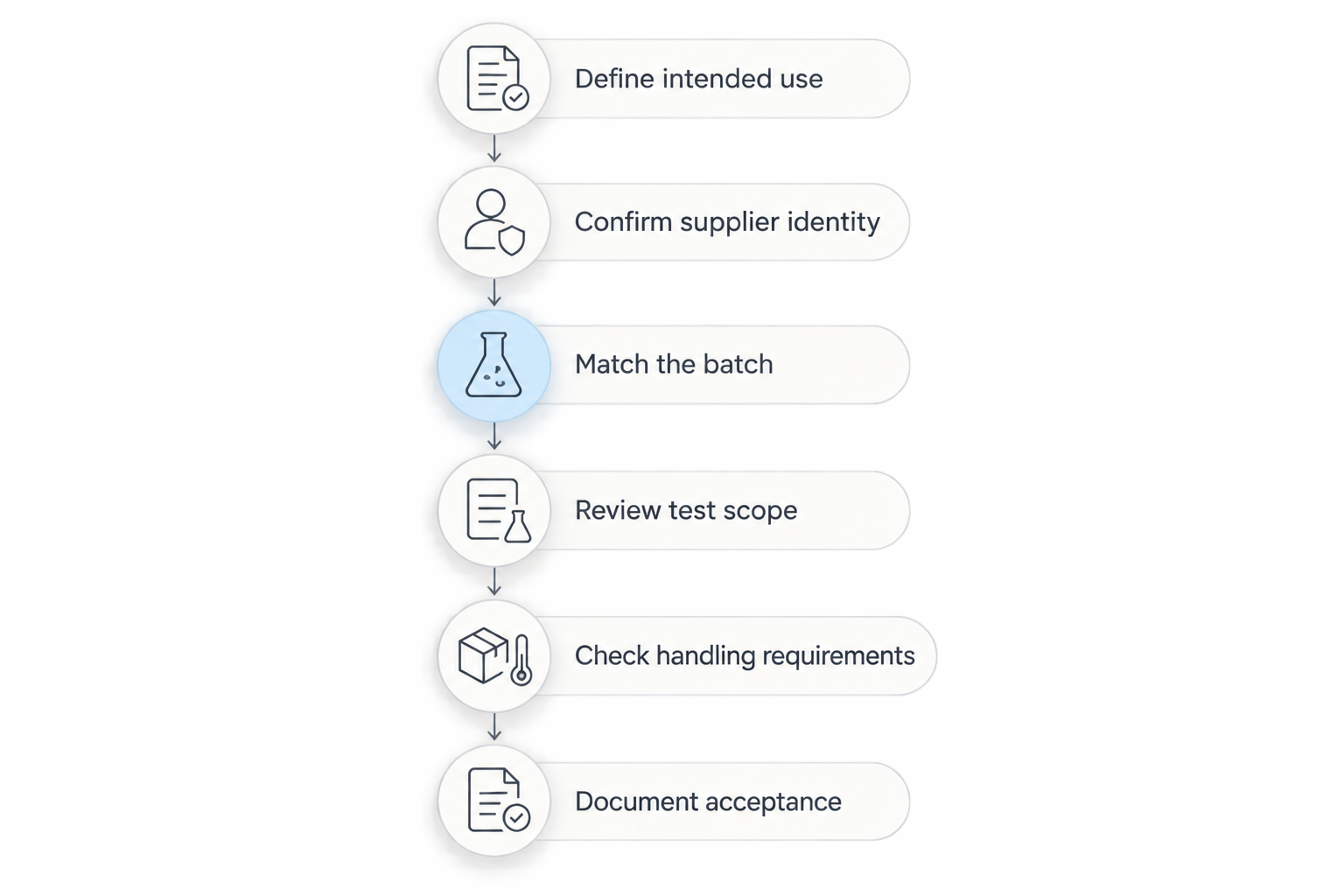
Use a documented sequence rather than a general impression of the website. Each step should resolve a specific uncertainty before the purchase receives approval.
- Define intended use. Identify the research application and the material specifications your protocol requires. Keep laboratory procurement separate from personal health decisions.
- Confirm supplier identity. Check the business identity, reachable contact details, and the organization responsible for supplying the material. HTTPS alone does not authenticate a supplier.
- Match the batch. Connect the product label, lot identifier, and analytical report. A report for another batch does not establish the characteristics of your shipment.
- Review test scope. Determine which methods support identity and purity, and whether other attributes matter for your experiment. Do not treat an unexplained percentage as a complete specification.
- Check handling requirements. Obtain product-specific storage and transport instructions. Compare those instructions with your laboratory’s receiving and storage capabilities.
- Document acceptance. Record who reviews the shipment, what evidence is required, and when material must remain on hold. Apply those criteria when the parcel arrives.
These steps organize a procurement decision; they do not certify a material as safe. Your laboratory remains responsible for determining whether the supplied evidence meets its protocol and quality requirements.
Does a 99%+ purity claim make peptides safe?
A 99%+ purity claim is not a human-safety certification. You need to know the analytical method, the sample tested, and the meaning of the reported result before interpreting that percentage.
For example, chromatographic purity describes a result under specified analytical conditions. It does not independently establish the material’s identity, the quantity in the vial, sterility, or bacterial endotoxin levels.
Treat these as separate questions:
- Identity: Does the analytical evidence support the claimed compound?
- Purity: What method produced the result, and which impurities can that method detect?
- Content: What evidence supports the stated amount of peptide rather than total vial contents?
- Microbiological attributes: Were relevant tests performed, and what exactly do the results establish?
- Traceability: Does the report correspond to the supplied lot?
Not every experiment requires the same specifications. Select requirements from the protocol rather than assuming that the largest displayed purity figure identifies the right material.
A useful 2026 purchasing rule is to ask what a result leaves unanswered. A percentage without a method and batch connection provides less decision-making value than a report whose scope you can evaluate.
What makes a certificate of analysis useful?
A useful certificate of analysis connects an identifiable sample to interpretable test results. A document that looks formal but cannot be connected to your material does not resolve the procurement question.
Look for the compound identity, lot or batch identifier, report date, test methods, reported results, and responsible testing organization. Where supporting chromatograms or spectra are supplied, have someone qualified review whether they support the conclusions.
If a report names an outside laboratory, verify the report through independently established contact information. Contact details printed only on a questionable document are not independent confirmation.
A certificate is evidence to evaluate, not permission to self-administer. Even an authentic analytical report has a defined scope; it cannot establish clinical safety or effectiveness for a person.
Why ordering risk varies
The risk of an online peptide purchase depends on the material, evidence, and intended application—not simply the storefront.
- Intended use: Laboratory experiments and human treatment require different safeguards. Research labeling does not bridge that difference.
- Analytical coverage: Identity testing, purity analysis, and microbiological testing answer different questions. Missing coverage leaves the corresponding question unresolved.
- Batch traceability: Documentation must connect to the shipment. General product literature cannot establish a particular lot’s characteristics.
- Transport conditions: Evaluate shipping against product-specific stability and handling information. Packaging appearance alone cannot confirm the shipment’s temperature history.
- Receiving controls: Damaged packaging, mismatched identifiers, or unresolved documentation should trigger your laboratory’s hold process rather than automatic acceptance.
- Supplier accountability: A reachable supplier can address discrepancies. A contact channel does not itself establish product quality, but unresolved questions prevent a sound acceptance decision.
For 2026 procurement, make these criteria part of the approval record. Do not replace them with customer ratings or a supplier’s general statements about quality.
Where does Peptides777 fit?
Peptides777 is a research-peptide store for laboratory buyers, not a treatment provider. Its stated offering includes research-grade peptides, bioregulators, and research compounds marketed with 99%+ purity for laboratory and scientific research use.
- Best for: Laboratory buyers assessing research materials against a defined protocol.
- Relevant fit: The stated research-only scope matches laboratory procurement rather than personal treatment.
- Limitation: The stated purity claim alone does not establish batch identity, sterility, or suitability for your experiment.
Apply the same evidence requirements to Peptides777 that you apply to another research supplier. Before approving an order, contact the supplier with the compound, intended research application, and documentation questions your laboratory needs answered.
The next move is not to assume either acceptance or rejection from the storefront description. Obtain the relevant evidence and compare it with written acceptance criteria.
Is buying online the same as buying legally?
No. A transaction completing successfully does not establish that purchase, importation, possession, or intended use complies with applicable requirements.
Regulatory status depends on the exact substance, product presentation, intended use, and jurisdiction. Do not interpret a research-only label as a universal legal exemption or as authorization for human administration.
For a 2026 order, have your institution review applicable procurement and import requirements before payment. If the question concerns treatment, use a licensed clinician and verify the dispensing pharmacy through the relevant state board of pharmacy.
FDA’s BeSafeRx guidance addresses online medicine purchasing; its scope is medicine and pharmacy safety, not certification of research suppliers. Keep that distinction when using public guidance to assess an online purchase.
What should you do when the shipment arrives?
Keep unaccepted material out of experiments until receiving checks are complete. Compare the shipment with the purchase record, photograph discrepancies, and preserve the packaging when investigating damage.
Check that vial identifiers match the supporting documents. Review seal condition and any available transport records against the agreed requirements; a cold parcel or an included cold pack does not establish the full shipping history.
If something does not match, place the material on hold under your laboratory’s procedures and ask the supplier to resolve the discrepancy. Do not invent a storage deadline, stability limit, or acceptance threshold when product-specific evidence is required.
Document the acceptance decision before transferring the material into working inventory. That record preserves the connection between the experiment, the supplied lot, and the evidence used to approve it.
FAQ
Is it safe to order peptides online for personal use?
Research-labeled peptides should not be used for self-treatment. Online sale and laboratory analytical results do not establish clinical safety, effectiveness, or suitability for human administration.
Does 99% purity mean a peptide is sterile?
A 99% purity result does not establish sterility. Purity analysis and sterility testing assess different attributes, and neither alone establishes that a research product is appropriate for human use.
How do I check whether a peptide supplier is legitimate?
Verify the supplier’s identity, reachable contact details, batch traceability, and relevant analytical documentation. Evaluate each element separately rather than treating reviews or secure checkout as proof of material quality.
Can a certificate of analysis prove that peptides are safe to inject?
A certificate of analysis cannot establish that a research peptide is safe to inject. Its conclusions are limited to the sample, methods, and attributes actually tested; it does not replace clinical assessment or drug approval.
Are research peptides the same as prescription peptide medicines?
Research peptides and prescription peptide medicines are not interchangeable. A shared compound name does not establish equivalent formulation, manufacturing controls, regulatory status, or suitability for treatment.
Does Peptides777 sell peptides for human treatment?
Peptides777 describes its products as intended for laboratory and scientific research use. That stated scope does not support using its research products for personal treatment.
What should a laboratory do if a peptide vial arrives damaged?
Place damaged material on hold under the laboratory’s receiving procedures and document the condition. Contact the supplier before accepting the material; appearance alone cannot establish whether the contents remain suitable for the experiment.
One last thing
Ask this before your next 2026 order: What evidence would make your laboratory reject the shipment? If you cannot answer, your acceptance criteria are not ready.
Write those criteria before payment. A polished report is less useful than a clear decision rule connecting the right evidence to the actual batch and intended experiment.