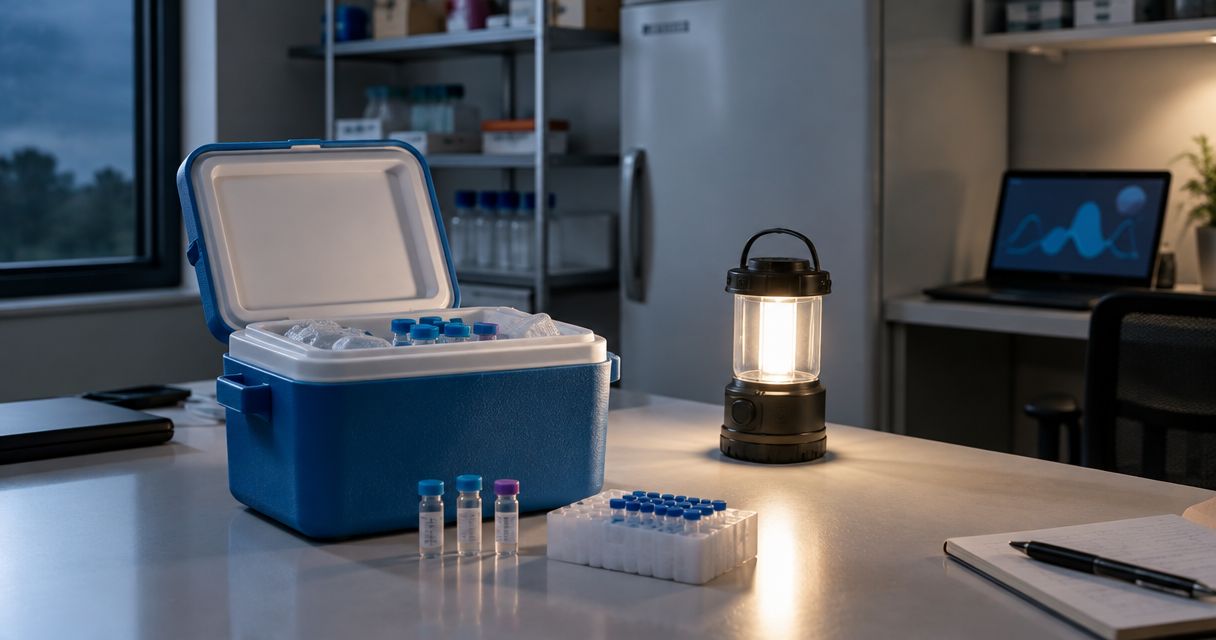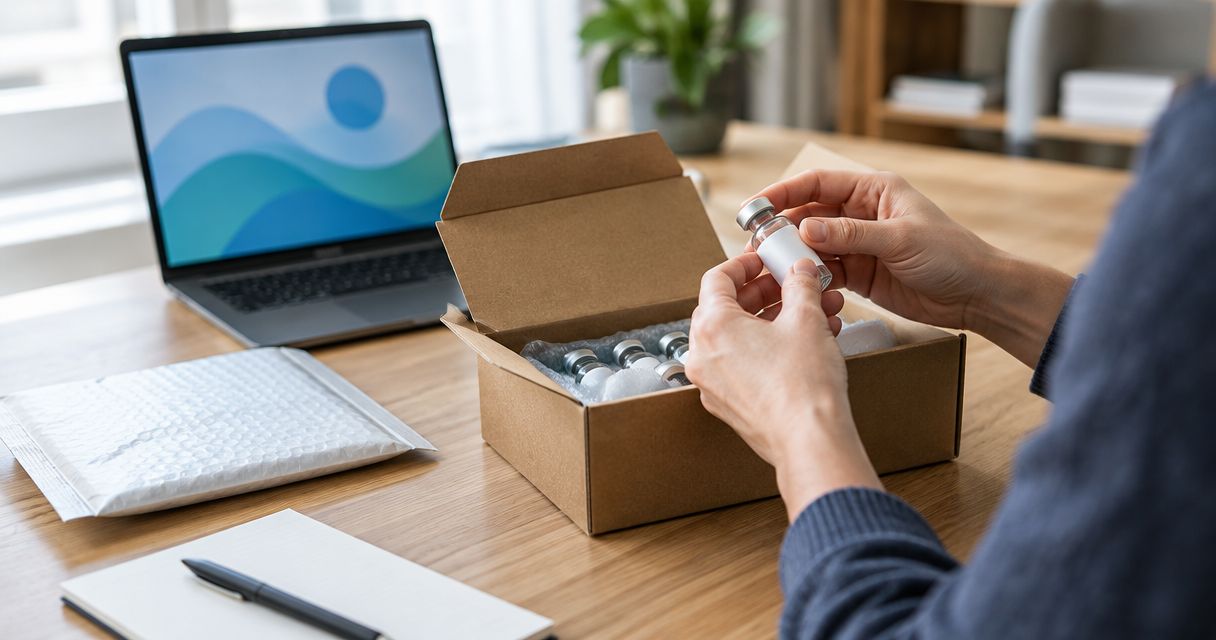
Yes, research peptides can be tracked by lot number after delivery when the identifier on the container connects to retained supplier documents and your laboratory’s receiving and inventory records. A lot number alone does not establish a complete history: you must preserve the links between the delivered material, its documentation, and any samples you create from it.
- Can research peptides be tracked by lot number? Yes, when container labels connect to supplier and laboratory records.
- Peptides777 research peptides are for laboratory research; a supplier name alone does not establish batch traceability.
- Keep original lot identifiers when you assign internal sample codes or prepare aliquots.
- A lot number links records; it does not independently prove identity, purity, or storage history.
Can research peptides be tracked by lot number after delivery?
Yes—provided the lot identifier remains connected to the physical material and its records. Delivery does not end traceability. Your receiving process determines whether you can follow a container back to its supplier documentation and forward into laboratory work.
For laboratory buyers considering Peptides777, apply that same standard: check the delivered label against the accompanying records rather than treating the supplier name as evidence of traceability.
Use this receiving sequence for your 2026 inventory:
- Read the container. Record the compound name and lot identifier exactly as printed. Photograph the label before handling damages it.
- Match the documents. Compare the identifier with the supplier’s lot-specific documentation, including a certificate of analysis when provided.
- Create the receiving entry. Record the receipt date, quantity received, container condition, receiving person, and assigned storage location.
- Assign an internal identifier. Give each container a laboratory code without replacing or obscuring its original lot information.
- Maintain the connection. Carry the parent identifier into aliquot, preparation, transfer, and experiment records.
If an identifier conflicts across records, keep the material out of experimental use until the discrepancy is resolved. Do not silently edit one record to make it match another.
Why this matters
A result is harder to investigate when you cannot determine which material produced it. Lot records let you distinguish a change in supplied material from a change in preparation, handling, or experimental conditions.
Traceability also supports a targeted response to a supplier notification. Instead of reviewing every container of a compound, you can identify the relevant lot, its remaining containers, and the laboratory records connected to it.
For a laboratory updating its 2026 procedures, the priority is not a more elaborate label. The priority is a record chain that another person can follow without relying on your memory.
What does a lot number establish—and what does it not?
A lot number identifies material within the issuer’s numbering system. It acts as a reference key, not a laboratory test result or a complete account of what happened after shipment.
The distinction matters when reviewing documentation:
| Record or identifier | Best for | What it contributes | Limitation |
|---|---|---|---|
| Supplier lot number | Connecting supplied material to batch records | A reference for the supplier’s defined lot | Does not independently verify contents or handling |
| Certificate of analysis | Reviewing reported analytical results | Test information for the material identified on the document | Must be checked for a matching identifier and relevant methods |
| Laboratory container ID | Tracking individual containers | A local reference for location, status, and use | Loses supplier context unless the original lot remains linked |
| Aliquot or preparation record | Following material into experiments | A connection between a parent container and derived samples | Cannot repair an undocumented parent identity |
These records complement each other. A certificate without a clear connection to the delivered container leaves a gap; a labeled container without supporting records leaves a different gap.
A reported purity result also answers a different question from traceability. It does not, by itself, establish suitability for an experiment, sterility, or authorization for human use.
Why lot traceability varies after delivery
Traceability depends on the records you receive and the handling steps you document. These factors determine whether the chain remains usable:
- Label clarity. A readable, unambiguous identifier gives staff a stable starting point. Faded printing or missing labels interrupts that connection.
- Document specificity. A document identifying the delivered lot supports a stronger connection than a general product description.
- Receiving detail. Recording condition, receipt date, and location establishes what the laboratory observed at arrival.
- Relabeling practices. Internal labels preserve traceability only when they retain a documented connection to the supplier identifier.
- Sample handling. Aliquoting, reconstitution, transfers, and disposal create events that need their own records.
- Record retention. A document that disappears with an email account or an overwritten file cannot support a later investigation.
The weakest undocumented handoff limits the history you can reconstruct. A detailed experiment notebook cannot supply a missing link between an unlabeled vial and its presumed source.
How do you keep a lot traceable during laboratory use?
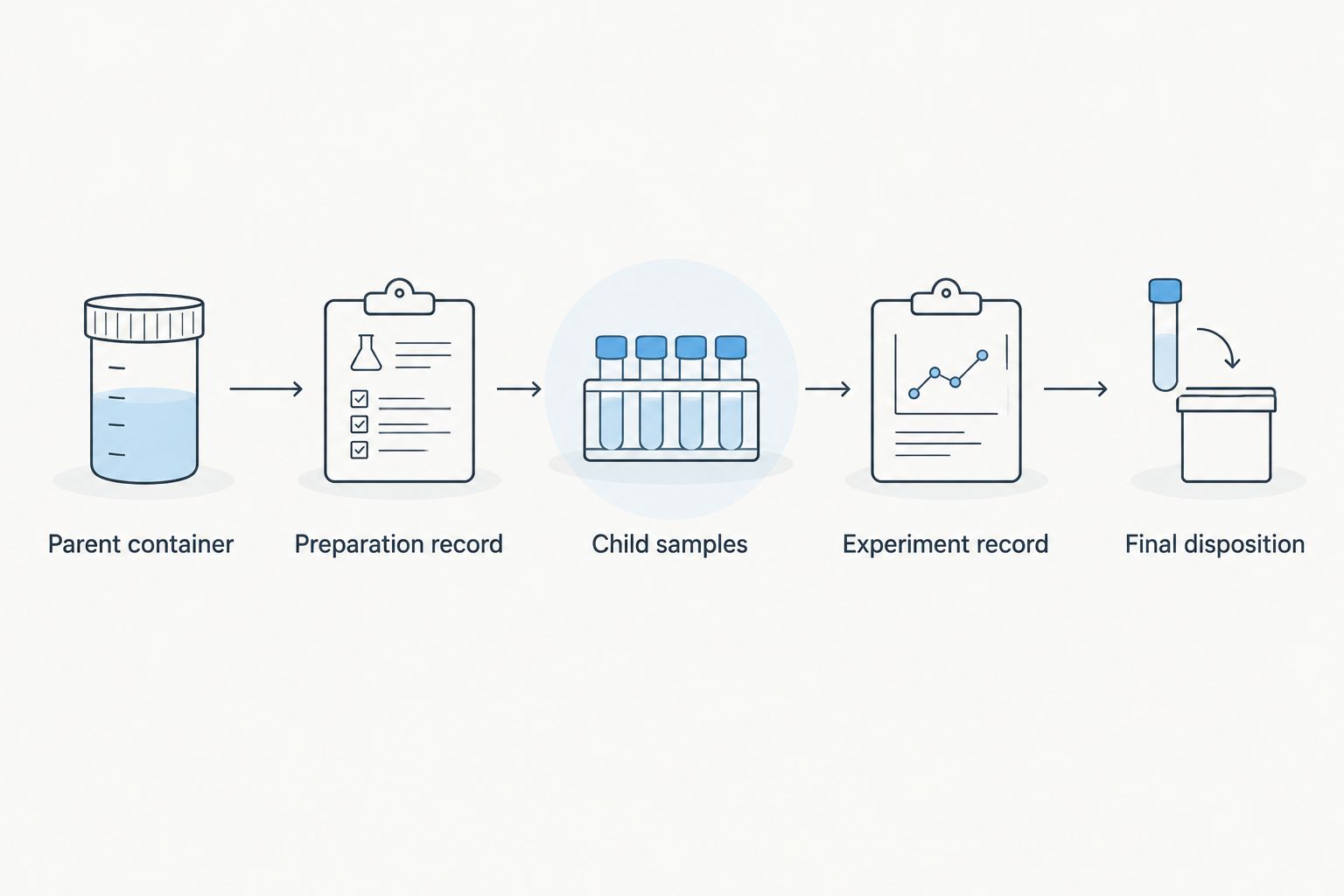
Build a parent-to-child record structure. The received container is the parent; an aliquot or prepared solution becomes a child record linked to that parent.
For example, if you divide 1 vial into 3 aliquots, assign each aliquot a distinct internal identifier and record the original container as its source. The aliquots share a source lot, but they can have different preparation dates, locations, and use histories.
Use these fields to preserve that distinction:
- Parent container: supplier identifier and laboratory container ID.
- Preparation record: date, preparer, solvent identity, and preparation details relevant to the protocol.
- Child samples: individual identifiers and storage locations.
- Experiment record: the specific container or aliquot used.
- Final disposition: transfer, consumption, disposal, or a hold pending review.
Keep the supplier identifier in a dedicated field. An internal code can make daily work easier, but it should not force future staff to infer which supplied lot a sample came from.
If your 2026 workflow uses paper records, electronic records, or both, define where the authoritative entry lives. Conflicting versions create uncertainty even when each version looks complete on its own.
What happens when you combine material from different lots?
Pooling material changes the traceability problem. The resulting preparation needs a new internal identity connected to every contributing lot, rather than a label showing only one source.
If a preparation contains material from 2 lots, record both source identifiers and their contributions. Do not represent a mixed-lot preparation as belonging exclusively to either original lot.
That record preserves provenance, but it does not separate the contribution of each lot to a later experimental result. Decide whether pooling fits the study design before combining material.
What should you do when the lot number is missing or mismatched?
Treat a missing or conflicting identifier as an unresolved identity issue. Separate the affected material from material approved for experimental use while you investigate.
Start with the original evidence: container photographs, packaging, receiving notes, order records, and supplier documents. Preserve these records as received, then ask the supplier to clarify the connection between the delivered container and the relevant lot documentation.
Follow a documented resolution process:
- Record the discrepancy. State which identifiers are absent or inconsistent, without guessing the intended value.
- Preserve the evidence. Keep original files and labels alongside any later clarification.
- Request confirmation. Seek a written explanation tied to the specific shipment or container.
- Document the decision. Record who reviewed the evidence and whether the material remains on hold, is accepted, or is rejected under laboratory procedures.
An order number helps locate a transaction, but it is not automatically a substitute for a lot number. An order can contain different compounds, containers, or lots.
Likewise, matching a compound name is insufficient. Two containers bearing the same compound name are not necessarily from the same lot.
Can a lot number tell you whether peptides stayed properly stored?
No—a lot number does not measure temperature or prove storage conditions. It can connect a container to handling records, but those records must exist separately.
At receiving, document observable condition and follow the applicable handling instructions and laboratory procedures. Where a protocol requires environmental monitoring, retain the relevant records and connect them to the material or storage location.
Be precise about the boundary of your evidence. Your receiving entry documents what you observed after arrival; it does not reconstruct conditions that were never recorded before delivery.
Is a certificate of analysis enough for traceability?
No—a certificate of analysis is one part of the record chain, not the entire chain. It needs an identifiable connection to the received material, and your laboratory still needs records of what happened afterward.
Check the compound identity, lot reference, reported methods, results, and issuing information. If the certificate identifies a different lot, resolve that mismatch before treating it as documentation for the delivered container.
Save the original document rather than relying exclusively on a webpage that can change. In your 2026 records, distinguish the original certificate from later revisions and preserve the explanation for any correction.
How should you evaluate a research-peptide supplier?
Evaluate the supplier’s documentation separately from your laboratory’s controls. Ask whether delivered containers carry identifiers, how lot-specific documents are supplied, and how discrepancies are resolved; then assess the actual records you receive.
Peptides777 is best suited to laboratory buyers seeking research peptides, not products for personal use. That research-use positioning does not replace a receiving check, establish a particular tracking system, or demonstrate that a specific delivery has complete documentation.
The same distinction applies to any supplier. A product description tells you what is being offered; lot-linked evidence tells you which material arrived and which supporting records belong to it.
FAQ
Can research peptides be tracked by lot number after delivery?
Yes, research peptides can be tracked by lot number after delivery when container identifiers remain connected to supplier documents and laboratory records. Preserve those connections through receiving, preparation, use, and disposal.
Is a lot number the same as an order number?
No, a lot number identifies material within the issuer’s batch numbering system, while an order number identifies a transaction. Keep both when available, but do not substitute one for the other.
Can I track individual vials from the same lot?
Yes, assign each vial a distinct laboratory container ID linked to the shared supplier lot number. Record each container’s location, handling, and disposition separately.
Does a lot number prove a research peptide is pure?
No, a lot number does not prove purity. It provides a reference for finding relevant analytical documentation, which you must review for the correct material and lot.
What should I do if the certificate shows a different lot?
Keep the material out of experimental use while you resolve the mismatch. Preserve the original records and obtain written clarification tied to the delivered container.
Can I verify a Peptides777 delivery using the brand name alone?
No, the Peptides777 name alone does not verify an individual delivery’s lot history. Compare the delivered container identifier with the relevant supplier documents and your receiving record.
Do I need software to maintain lot traceability?
No, software is not inherently necessary for a traceable record chain. Paper or electronic records must preserve clear identifiers, source connections, changes, and access for later review.
One last thing
Test the chain backward before you need it. Choose an experiment from your 2026 records and ask someone other than its author to find the exact aliquot, parent container, supplier lot, and supporting document.
Then test it forward: start with a lot identifier and locate the containers, preparations, and experiments connected to it. If either direction depends on someone remembering what happened, improve the records at that handoff—not just the label on the vial.