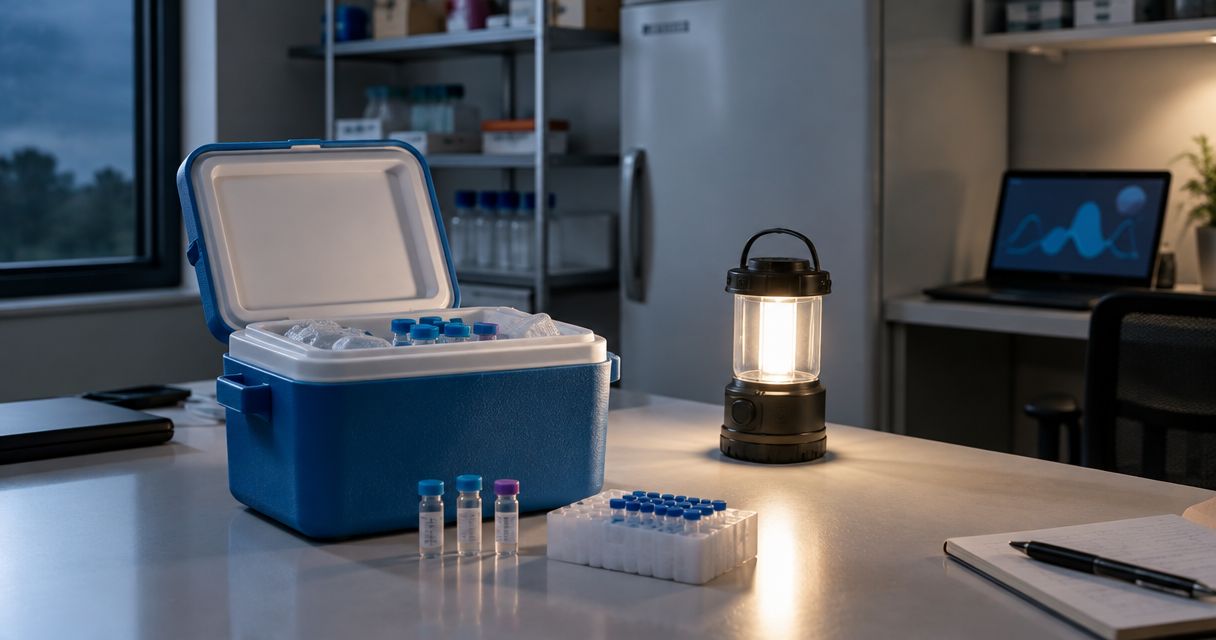

DSIP has no universally applicable shelf life after reconstitution; use a storage period supported by stability data for your exact preparation. A starting purity result does not establish how long the dissolved material remains suitable, and chemical stability does not establish microbiological quality.
- DSIP stability after reconstitution requires solution-specific evidence, not a shelf-life estimate borrowed from another peptide.
- A certificate of analysis documents tested attributes; it does not automatically validate storage after reconstitution.
- Refrigeration and freezing describe storage conditions, not guaranteed stability periods.
- Peptides777 sells research peptides for laboratory use, not preparations intended for human administration.
Why this matters
An unsupported storage deadline introduces uncertainty into your experiment. If a stored solution changes during the study, differences between experimental runs become harder to interpret. A clear-looking vial does not resolve that uncertainty.
For your 2026 laboratory records, separate three questions: whether the material retains its identity, whether its measured composition remains acceptable, and whether handling has introduced contamination. Ask for preparation-specific documentation through the contact page before treating a general storage statement as a validated hold time.
How long does DSIP stay stable once reconstituted?
The defensible answer is the period demonstrated for the specific solution, container, handling conditions, and analytical acceptance criteria. Without that match, a fixed number of days is an assumption rather than an established expiration period.
Start by identifying what the available documentation actually measures. A certificate issued for dry material answers a different question from a study that measures a dissolved preparation over time.
| Evidence or observation | Best for | What it supports | What it does not establish |
|---|---|---|---|
| Starting-material certificate of analysis | Checking documented batch attributes | Results for the sample and tests described | Stability after dissolution unless specifically studied |
| Written storage instructions | Defining handling conditions | The stated storage procedure | A validated solution lifetime unless supporting evidence is specified |
| Solution stability study | Establishing a condition-specific hold time | Results within the conditions and period studied | Suitability outside those conditions |
| Visual inspection | Detecting visible changes | Observations such as particles or discoloration | Identity, purity, or absence of contamination |
These evidence types complement one another; they are not interchangeable. A strong starting-material result cannot fill the gap left by an untested storage interval.
If your work depends on a defined acceptance threshold, establish that threshold before evaluating stored samples. Otherwise, the phrase still stable has no clear experimental meaning.
Refrigerated DSIP: temperature is not a shelf-life claim
A refrigerator designation alone does not establish DSIP stability after reconstitution. Conventional laboratory refrigeration is often described as 2 °C to 8 °C, but that range is a temperature specification—not evidence that your preparation remains acceptable for any particular duration.
Check whether the supporting document describes the same solvent, concentration, container, and handling pattern as your preparation. A continuously stored sample and a vial repeatedly removed for sampling do not have identical exposure histories.
In a 2026 study plan, record the actual storage conditions rather than writing only refrigerated. Include the preparation date, location, excursions, and sampling history. Those details help determine whether later measurements describe the intended storage condition or an interrupted one.
Use refrigeration instructions to control temperature, not to invent an expiration date. If the documentation specifies temperature without a duration, it has not supplied a complete solution shelf-life claim.
Frozen DSIP: distinguish frozen storage from freeze–thaw handling
Frozen storage and repeated thawing are separate experimental conditions. Documentation for an unopened frozen aliquot does not automatically cover a working vial that is thawed, sampled, and returned to storage.
For example, a freezer setting of −20 °C describes a storage temperature. It does not, by itself, demonstrate that DSIP retains its measured attributes throughout storage or after thawing. Treat that temperature as a condition to evaluate, not a recommendation for every preparation.
Aliquoting can reduce repeated access to a larger stock, but it also adds transfer steps, containers, and opportunities for handling variation. The useful choice depends on the experimental workflow and the preparation-specific instructions.
Before choosing an aliquoting plan, review the distinction between refreezing reconstituted peptides after thawing and maintaining a continuously frozen sample. Neither practice supplies its own validated hold time.
Why DSIP stability after reconstitution varies
A shelf-life statement is meaningful only when its conditions are defined. These factors belong in the preparation record and in any comparison with supporting stability documentation:
- Solvent composition: Record the solvent and any additives. Evidence for one formulation does not automatically apply to another.
- Solution pH: Record the specified or measured pH when relevant to the protocol. Changing the solution environment changes the conditions being evaluated.
- Peptide concentration: Record the actual preparation concentration. A result from a different concentration is not an exact match.
- Temperature history: Record storage conditions and excursions, including time outside controlled storage during sampling.
- Container and exposure: Document the container, closure, and relevant light exposure. These are part of the tested storage system.
- Handling history: Record withdrawals, transfers, and freeze–thaw events. Chemical measurements and contamination controls address different concerns.
Do not turn this list into a prediction formula. Knowing the factors does not let you calculate a reliable shelf life without measurements. Its purpose is to identify whether a published or supplier-provided result applies to your sample.
How do you establish a defensible laboratory hold time?
Use a documented sequence that connects the starting material to the final experimental decision. Keep the evidence and its limits together so a later reader can understand why the preparation was accepted.
Identify the batch
Record the batch identifier and retain the associated documentation. Confirm that the document describes the material you received, not simply the same compound name.
Keep the original report alongside your experimental record. A transcribed purity value without its method, sample identity, or report context is harder to interpret.
Match the conditions
Compare the documented formulation, temperature, container, and handling conditions with your planned preparation. Identify differences before accepting a stated storage interval.
Do not silently extend a claim from dry powder to solution, from refrigerated storage to frozen storage, or from an undisturbed sample to a repeatedly accessed vial. Each changes the scope of the claim.
Define acceptance
Specify what must remain acceptable for the experiment: identity, measured composition, concentration, or another justified attribute. Select analytical methods that can assess those attributes.
A method that detects the starting material is not necessarily able to distinguish it from every relevant degradation product. The analytical question must match the experimental decision.
Document the decision
Record the evidence supporting the hold time and the conditions under which it applies. Include exceptions and the action required when storage conditions change.
Your 2026 laboratory procedure should distinguish an internally selected handling limit from an experimentally demonstrated stability period. Both can guide operations, but they make different claims.
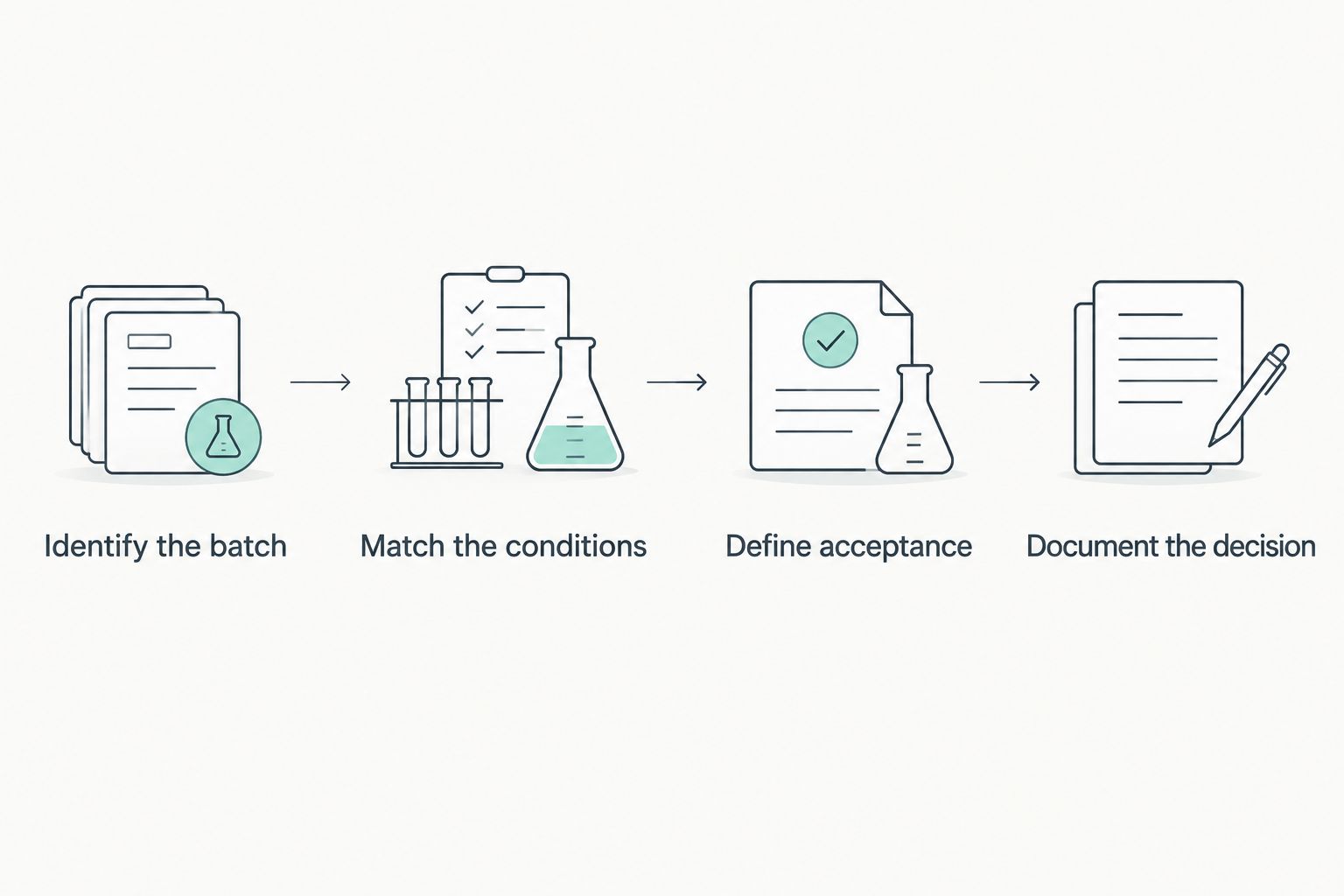
The final record should let someone reconstruct the decision without relying on memory. If the evidence changes, update the handling limit rather than continuing to use an unsupported interval.
What should you ask a research peptide supplier?
Ask a narrow question that distinguishes a product specification from a solution stability claim: does the available documentation address DSIP after reconstitution under your intended conditions?
A useful request identifies the solvent, concentration, storage temperature, container, and handling pattern. Ask what was measured, when it was measured, and what criteria defined an acceptable result. A general statement about keeping peptides cold does not answer those questions.
Peptides777 research peptides are for laboratory researchers, not people seeking preparations for human use. Peptides777 markets research materials with 99%+ purity; that starting-material claim does not establish DSIP stability after reconstitution. Evaluate the supporting documentation against the actual preparation rather than extending a catalog claim beyond its scope.
The benefit of a supplier document is traceability to stated tests and conditions. Its limitation is equally important: it supports only the attributes and conditions it actually addresses. Do not interpret silence about solution stability as a positive stability result.
Can clear DSIP solution still be unsuitable for research?
Yes. A clear solution can fail analytical acceptance criteria because visual inspection does not measure molecular identity, concentration, or the full impurity profile. Appearance is a screening observation, not a stability assay.
Record visible particles, unexpected color, or other changes and follow your laboratory's investigation procedure. Do not assume that removing visible material restores the original composition or makes the preparation acceptable.
The reverse also matters: an unchanged appearance is not affirmative evidence that nothing has changed. Keep visual checks as one part of the record, not the deciding test for a long-stored preparation.
Does a certificate of analysis prove reconstituted DSIP is stable?
No. A certificate of analysis establishes the reported results for the described sample and methods; it proves a reconstituted storage period only when the documentation specifically includes that evaluation. Check the scope before applying its results.
Look for the sample state, test date, method, and batch identity. A dry-material purity result and a solution stability result answer different questions even when both appear in the same supplier file.
For your 2026 documentation, keep the analytical report separate from the working preparation log but connect them through the batch identifier. That preserves traceability without implying that the original test evaluated every later handling step.
FAQ
How long can I keep DSIP after reconstitution?
Use only a hold time supported for the specific DSIP preparation and storage conditions. A general peptide storage estimate does not establish the lifetime of your solution.
Does refrigerating reconstituted DSIP guarantee stability?
No. Refrigeration controls temperature, but it does not establish a validated storage duration or demonstrate microbiological quality.
Can I freeze reconstituted DSIP to make it last longer?
Freezing is not a substitute for preparation-specific stability evidence. Check whether the supporting documentation covers the formulation, frozen storage conditions, and subsequent thawing.
Does a clear DSIP solution mean it has not degraded?
No. Clear appearance does not establish chemical identity, concentration, or purity; those attributes require suitable analytical assessment.
Does a high-purity certificate establish the shelf life after mixing?
No. A starting-material purity result does not establish stability after mixing unless the documentation specifically evaluates the reconstituted preparation over time.
What information should I record when reconstituting DSIP for research?
Record the batch identifier, preparation date, solvent, concentration, container, storage conditions, and handling history. Connect those records to the acceptance criteria used for the experiment.
Are Peptides777 research peptides intended for human administration?
No. Peptides777 sells research peptides and related compounds for laboratory and scientific research use, not preparations intended for human administration.
One last thing
A handling deadline and a demonstrated stability period are not the same thing. A laboratory can set a conservative internal handling limit to standardize work, but that operational decision does not prove that the preparation retains its attributes until that deadline.
For every DSIP preparation made in 2026, write the basis beside the deadline: preparation-specific stability evidence, an applicable documented instruction, or an internal handling rule. That distinction makes the record useful when you compare experiments, investigate an unexpected result, or revise the protocol.