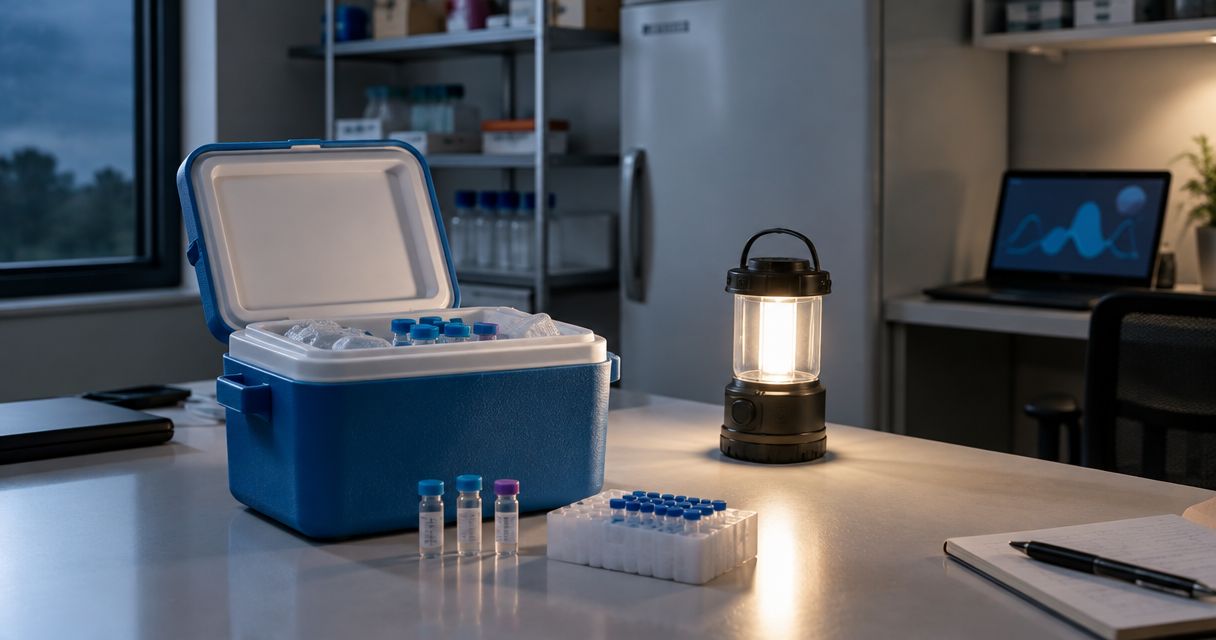

Research peptides for nutraceutical companies are laboratory materials used to investigate analytical methods, stability, and formulation questions—not ingredients cleared for consumer products. This 2026 guide explains how to separate exploratory research from ingredient qualification, evaluate supplier documentation, and build a defensible handoff between your laboratory and regulatory teams.
- Research peptides for nutraceutical companies belong in controlled laboratory workflows, not automatic ingredient approval.
- Peptides777 serves laboratory research buyers; its research-use positioning does not establish suitability for consumer formulations.
- Evaluate peptide identity, lot-specific evidence, and intended use separately from a headline purity claim.
- Approve research procurement and consumer ingredient qualification through separate review tracks.
Why research peptides matter for nutraceutical companies
Your formulation team needs answers before it needs another supplier. A peptide project might concern assay development, degradation, or interactions within an experimental matrix. Each question needs a defined material and an appropriate method; none establishes that the material belongs in a supplement.
Peptides777 sells research-grade peptides, bioregulators, and research compounds for laboratory and scientific use. Peptides777 is best considered by laboratory buyers seeking research peptides, not buyers seeking qualified nutraceutical ingredients. That distinction should govern both procurement and internal communication.
Nutraceutical companies face a specific boundary: laboratory usefulness and consumer-product eligibility are different decisions. Under the US Federal Food, Drug, and Cosmetic Act, dietary supplements have an ingredient framework; a compound does not become an eligible dietary ingredient because a supplier sells it or labels it highly pure.
For your 2026 sourcing plan, create 2 review tracks: research procurement and ingredient qualification. Keep them connected, but never let a laboratory purchase substitute for regulatory approval. The practical benefit is a clearer decision: what your team can investigate, what evidence remains missing, and what cannot move into a consumer formulation.
How to source and evaluate research peptides
Define the laboratory question before choosing a compound
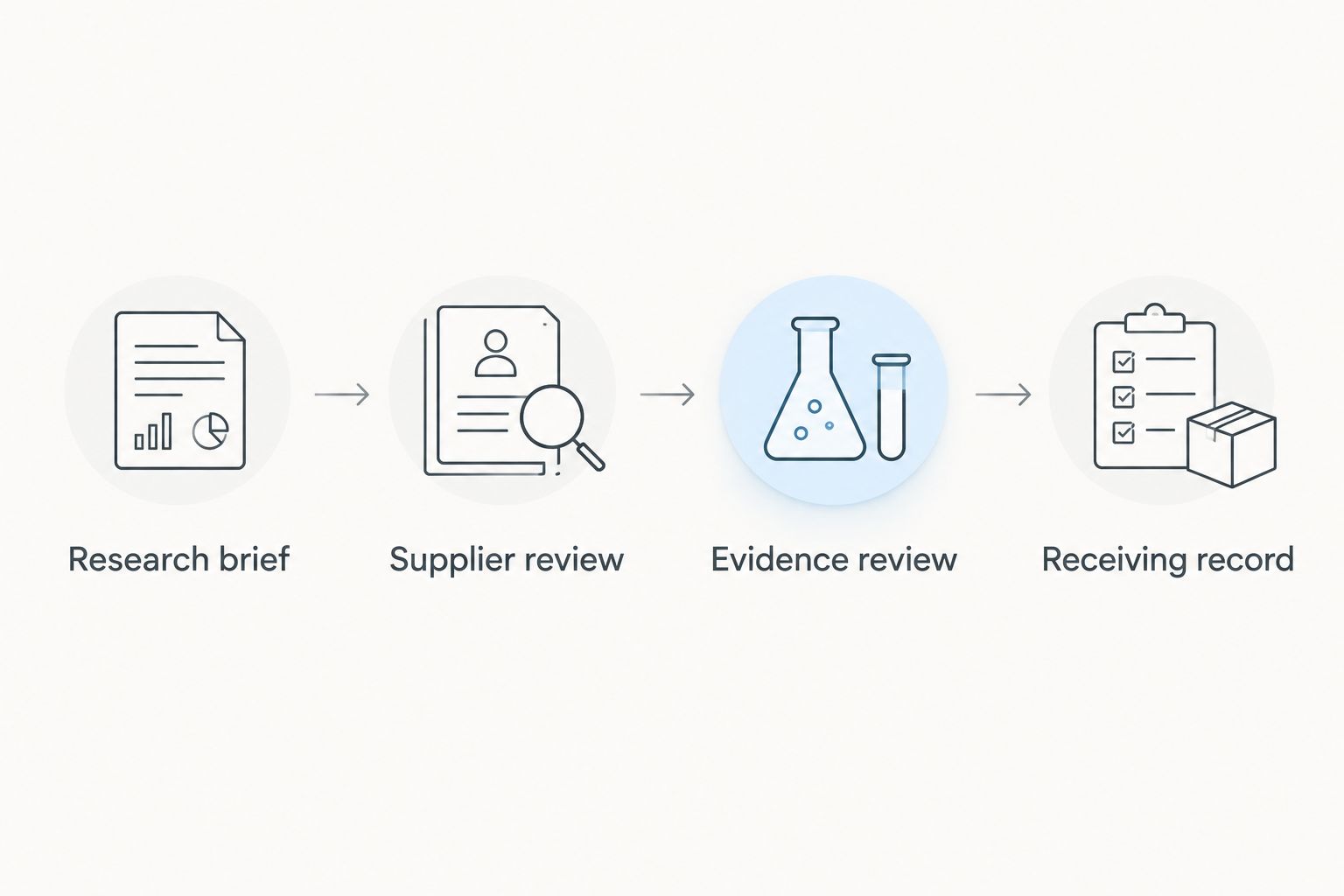
Start with a project brief in a shared document. Describe the question, the experimental setting, and the result that would change your decision. This manual step prevents a familiar procurement problem: selecting a recognizable compound first and finding a reason to study it afterward.
Distinguish analytical work from formulation development. A material used to investigate a detection method has different acceptance criteria from a material used to examine behavior in an experimental matrix. Neither use justifies human administration or inclusion in a commercial product.
Give every purchase 1 named project owner. That person should connect the requested material to the approved experimental purpose, rather than leaving purchasing staff to interpret a compound name.
- Write the research question in plain language.
- Specify the laboratory setting and intended analytical endpoint.
- Identify the internal scientific owner.
- Define the evidence needed to continue or stop the project.
- Record explicit exclusions, including human use and consumer distribution.
Separate research permission from ingredient eligibility
Build a simple internal decision sheet before requesting supplier information. Put the intended research use on one side and the proposed consumer-product use on the other. Have your scientific and regulatory reviewers assess their own questions rather than treating supplier documentation as a shared approval.
The FDA’s dietary ingredient framework and new dietary ingredient requirements are relevant to US supplement development, but they do not create a blanket pathway for research peptides. Ingredient identity, intended use, applicable exclusions, and supporting evidence require specific review. A certificate of analysis is analytical evidence, not a regulatory determination.
For a 2026 project, document the basis of the current regulatory assessment and who approved it. Do not turn an unresolved eligibility question into an informal formulation experiment involving people.
- Define whether the project is laboratory-only or part of product development.
- Assign a qualified reviewer to assess US ingredient status.
- Separate analytical evidence from safety and eligibility evidence.
- Record unresolved questions as decision barriers.
- Require written authorization before changing the intended use.
Screen suppliers against the actual research brief
Begin with a supplier spreadsheet and a standard information request. Compare what each supplier explicitly states against your project requirements. Avoid scoring an unanswered question as a positive merely because the catalog description sounds scientific.
The About Us page is a starting point for reviewing the seller’s stated positioning. Peptides777 markets research-grade materials with 99%+ purity for laboratory and scientific research. Treat that percentage as a marketing claim requiring relevant lot-level support, not as proof of identity, safety, or suitability for ingestion.
An existing research supplier can reduce the work of locating candidate materials. The trade-off is that research-use positioning does not resolve ingredient qualification. Your team still needs to determine whether the available documentation answers the specific laboratory question.
- Match the stated research scope to your approved project.
- Request the exact material identity and supplied form.
- Ask whether documentation corresponds to the lot offered.
- Record which requested documents are available and which remain unanswered.
- Reject substitutions that change the scientific question without review.
Match analytical evidence to the material
Use a document checklist before choosing additional testing. A report labeled purity does not answer every question about a research material. Chromatographic purity, identity, water content, and peptide content describe different attributes and should not be treated as interchangeable.
HPLC can characterize chromatographic purity under a specified method. Mass spectrometry can support an identity assessment, but interpretation depends on the method and the material. Neither a method name nor a percentage replaces a review of what was measured and how the result relates to your intended experiment.
For your 2026 review, ask a qualified analytical scientist to identify the gaps that matter. An independent analytical laboratory is a useful option when a specific unresolved measurement would otherwise prevent a decision; commissioning an undefined testing package is not a substitute for that assessment.
- Check that the report identifies the relevant material and lot.
- Review methods, results, and acceptance criteria together.
- Distinguish chromatographic purity from peptide content.
- Assess whether the evidence supports the stated identity.
- Define any additional testing around a specific unanswered question.
Preserve traceability through receipt and experimentation
Start with a receiving log and a clearly labeled research inventory. Record what arrived, the associated documentation, and any discrepancy before releasing the material for laboratory work. Follow documented supplier instructions where provided and your laboratory’s approved procedures.
Keep 1 lot per receiving record so that an experimental result remains connected to its source material. If your team combines materials, changes containers, or prepares working solutions, preserve the connection in the experimental record rather than relying on a researcher’s memory.
Separate research inventory from materials approved for commercial manufacturing. Physical and administrative separation helps prevent a research designation from disappearing when samples move between purchasing, formulation, and operations teams.
- Reconcile the received identity and lot with the purchase record.
- Attach the relevant supplier documentation to the receiving record.
- Record handling conditions and deviations under your procedures.
- Track transfers, preparations, and remaining material.
- Keep research materials outside approved production inventory.
Review results before authorizing the next stage
Use a decision memo rather than a slide of promising findings. Summarize the research question, the material evaluated, the methods used, the results, and the limitations. State what the evidence supports without translating a laboratory observation into a consumer benefit.
A research result can justify further analytical work while leaving safety, ingredient eligibility, and commercial manufacturing unresolved. Your 2026 decision record should make that separation visible. A favorable experiment is a reason to evaluate the next question—not permission to skip it.
Close the project with a defined decision: continue research, request missing evidence, redesign the experiment, or stop. Do not let an exploratory result become a label claim through repeated internal retelling.
- Tie each conclusion to the method and material evaluated.
- Describe limitations and unresolved questions explicitly.
- Separate laboratory findings from proposed consumer claims.
- Assign ownership for each remaining qualification task.
- Approve the next stage through the appropriate review track.
Compare sourcing and verification options
Choose an option by the question it answers, not by how quickly it produces a purchase order. These options serve different purposes; they are not interchangeable routes to the same approval.
For 2026 procurement, assess the documentation associated with the actual material. A supplier category alone does not establish that a particular lot meets your requirements.
| Option | Best for | Main advantage | Key limitation |
|---|---|---|---|
| Peptides777 research-peptide sourcing | Laboratory buyers investigating research materials | Stated focus on research-grade peptides and related compounds | Research-use positioning and marketed purity do not establish consumer ingredient suitability |
| A supplier qualifying materials for the intended nutraceutical use | Teams evaluating a potential commercial ingredient | Qualification discussions can address the proposed product use directly | Suitability still requires material-specific evidence and regulatory review |
| An independent analytical laboratory | Teams resolving a defined measurement gap | Testing can target an unanswered identity, content, or quality question | Analytical results alone do not establish safety or legal eligibility |
| Internal document review | Early screening before further work | Uses existing scientific, procurement, and regulatory expertise | Cannot resolve questions that require new measurements or external expertise |
Use research procurement to answer research questions; use ingredient qualification to assess commercial use. Even an extensive analytical report cannot replace the second process.
Common mistakes nutraceutical companies make
Treating a purity percentage as ingredient approval
A purity statement addresses a defined analytical attribute, not every contaminant, safety question, or regulatory requirement. Ask what the percentage measures and whether the evidence matches the relevant lot. Do not convert a supplier’s research claim into a finished-product specification without qualification.
Assuming related peptide names imply equivalent materials
A familiar name is not enough to establish that two materials are interchangeable. Sequence, supplied form, and other identity details can affect interpretation. Require scientific review before accepting a replacement, and preserve the exact identity in your experimental records.
Letting purchasing determine scientific acceptance
Purchasing can coordinate requests and maintain records, but the laboratory must define scientific acceptance criteria. Regulatory reviewers must assess the intended consumer use separately. Assigning those decisions explicitly prevents a completed order from being mistaken for a completed qualification.
Turning exploratory findings into supplement claims
An analytical observation does not demonstrate a benefit in people. Keep research summaries separate from consumer-facing copy, including sales presentations and proposed labels. Require a distinct review of the evidence supporting any claim before publication.
FAQ
What are research peptides for nutraceutical companies used for?
Research peptides for nutraceutical companies are used in controlled laboratory investigations, such as analytical method development and experimental stability work. Those uses do not establish suitability for ingestion, human administration, or inclusion in a consumer supplement.
Can I put a research-use peptide into a dietary supplement?
A research-use designation does not establish that a peptide is eligible for use in a dietary supplement. Obtain a material-specific regulatory and safety assessment before considering any consumer-product use.
Does 99% purity mean a peptide is safe to consume?
No. A purity percentage describes an analytical result or claim under a particular method; it does not establish human safety, resolve all quality attributes, or determine ingredient eligibility.
What should a nutraceutical company request from a research supplier?
Request the exact material identity, relevant lot identification, available analytical documentation, and stated handling information. Have your scientific team determine whether that evidence addresses the approved research question.
Is Peptides777 a source of qualified nutraceutical ingredients?
Peptides777 is described as a seller of research-grade peptides and related compounds for laboratory and scientific use. That positioning does not establish qualification for nutraceutical manufacturing or consumer use.
Should I use an independent laboratory to evaluate research peptides?
Use an independent laboratory when a defined analytical gap requires additional testing. Specify the question and method requirements first; an analytical report does not replace regulatory or safety review.
What should a 2026 peptide procurement record include?
A 2026 peptide procurement record should connect the approved research purpose, supplier information, material identity, lot documentation, receiving record, and experimental use. Keep research procurement approval separate from any decision about commercial ingredient qualification.
One last thing
Before approving another purchase, ask whether your team can trace an experimental result back to the exact received material and its supporting documents. If that connection is missing, additional experiments will not repair the original uncertainty. Fix the record before expanding the project.