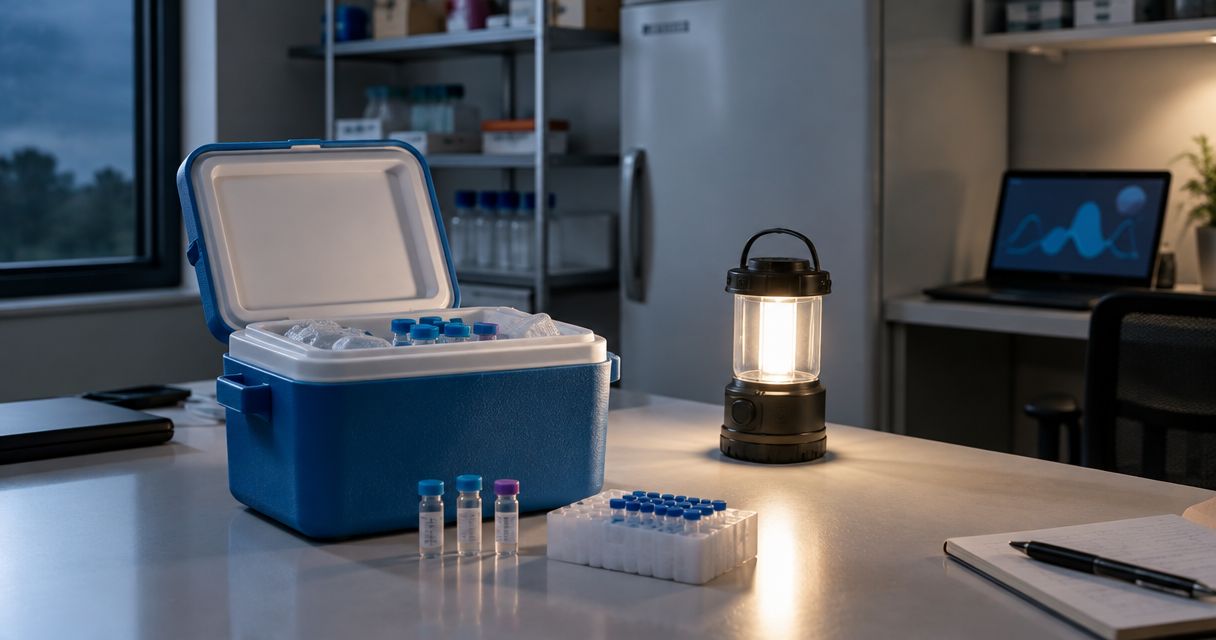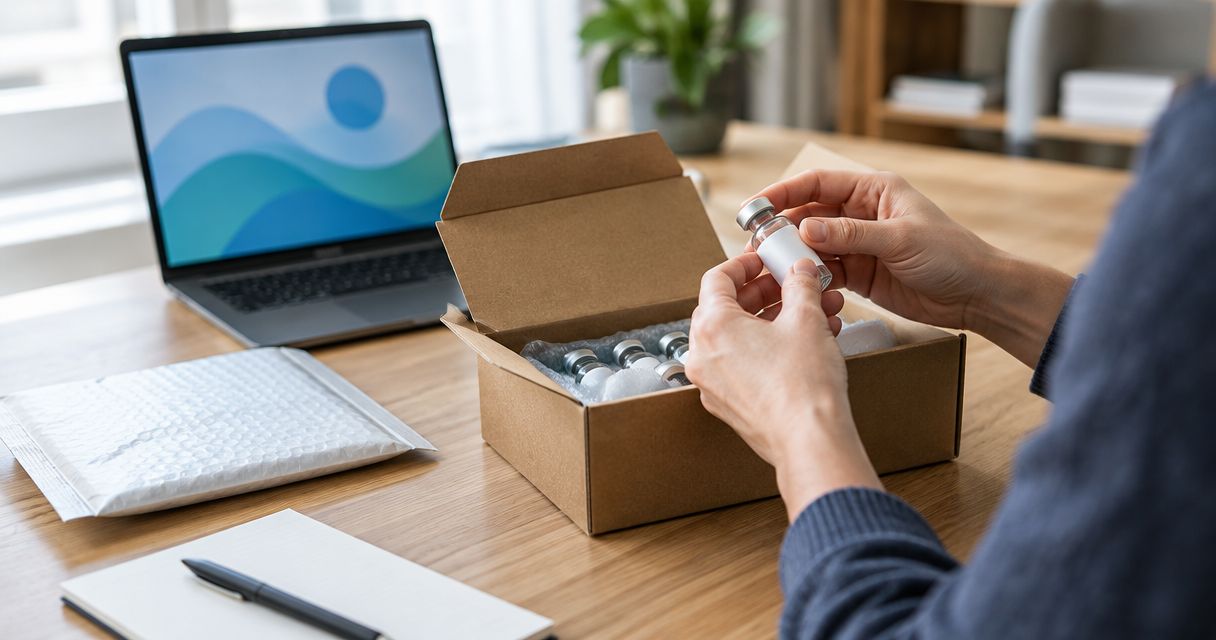

Diagnostic laboratory peptide research is the evaluation of peptide reagents under controlled conditions to support assay development, method investigation, and analytical troubleshooting—not authorization to report patient results. This 2026 guide explains how to select research peptides for diagnostic labs, assess supporting documentation, and keep exploratory materials separate from clinical testing.
- Research peptides for diagnostic labs require identity checks, lot traceability, and fit-for-purpose analytical evaluation.
- Peptides777 sells research-grade peptides; its stated purity positioning does not establish diagnostic suitability.
- Separate exploratory assay development from patient-result reporting, including inventory, records, and authorization.
- Choose reagents by intended use and supporting evidence, not a purity percentage alone.
Why research peptides matter for diagnostic laboratories
Diagnostic laboratories investigating peptide-related methods need more than a compound name. You need to establish what the material is, what the analytical method measures, and whether the reagent fits the specific experiment. A supplier listing alone cannot answer those questions.
Peptides777 sells research-grade peptides, bioregulators, and research compounds marketed with 99%+ purity for laboratory and scientific research. Treat that percentage as a supplier marketing claim until you review the relevant analytical documentation; it does not establish concentration, biological activity, or diagnostic performance.
Peptides777 is best considered by teams sourcing research-grade peptides for laboratory investigation, not as evidence of diagnostic-use authorization.
For your 2026 procurement plan, distinguish a useful exploratory reagent from an acceptable component of a patient-testing workflow. Those are different decisions, with different evidence requirements. The distinction belongs in your purchasing criteria before an order reaches the laboratory.
Where peptide research fits
Possible research applications include investigating analytical selectivity, comparing sample-preparation approaches, or studying how a method responds to a defined peptide. These are experimental purposes, not claims that a particular catalog compound works in your assay.
A diagnostic laboratory also has a separation problem: exploratory work often happens near established clinical workflows. Keep reagent status visible so research inventory does not become a clinical calibrator, control, or patient-testing reagent by convenience.
How to evaluate research peptides for diagnostic labs
1. Define the intended research use
Start with a written experimental question rather than a product search. Describe the analyte, sample type, measurement technique, and decision the experiment should support. An experiment testing chromatographic separation needs different evidence from one investigating antibody recognition.
Use an existing laboratory template or a shared document first. A purchasing system can preserve the record, but software does not resolve an unclear intended use. Write down what the reagent must demonstrate before you compare suppliers.
For a 2026 method-development project, establish 3 review gates: intended use, reagent evidence, and experimental performance. These are recommended workflow checkpoints, not regulatory thresholds.
- Intended use: State the research question and explicitly exclude patient-result reporting.
- Reagent evidence: Identify the documentation needed to establish identity and relevant quality attributes.
- Experimental performance: Define the observations that support continued development.
- Ownership: Name the person responsible for approving the next research stage.
2. Match the peptide identity to the experiment
Check identity before purity. Similar names do not establish an identical sequence, modification, salt form, or formulation. A mismatch can make an otherwise carefully executed experiment answer the wrong question.
Build a manual comparison sheet with the specification you need beside the information supplied. Record unknown attributes as unresolved questions rather than filling them from another vendor's listing. Search results and general compound descriptions are not substitutes for documentation about the material you receive.
Peptides777's research-use positioning identifies its intended market, but it does not establish that any listed compound matches your assay target. Verify the exact material independently of the category label.
- Compare the stated peptide sequence with your experimental requirement.
- Check terminal modifications and other declared structural changes.
- Record the declared salt or counterion when relevant to the method.
- Distinguish peptide content from total material in the container.
- Confirm that the supplied form suits your planned analytical evaluation.
3. Review lot-specific evidence before purchasing
Request the certificate of analysis and supporting method information for the proposed lot. Read the test descriptions, not just the conclusion. A purity result describes the outcome of a particular measurement; it does not answer every quality question.
For example, chromatographic area purity does not by itself establish absolute peptide content, sterility, or suitability for a biological assay. Identity testing and purity testing address different questions. Determine which additional attributes matter to your experiment rather than requesting every possible test without a reason.
Use a written request first. The Contact Us page provides a route to ask Peptides777 about documentation; assess the actual response rather than assuming a document or service is available.
- Request documentation tied to the proposed lot identifier.
- Check which analytical methods support identity and purity statements.
- Ask what the reported percentage measures and how it is calculated.
- Review relevant handling, stability, and safety information when supplied.
- Resolve gaps before treating the material as an accepted research reagent.
4. Separate research intake from clinical inventory
Create the segregation process before the shipment arrives. A spreadsheet and a designated research-storage area provide a manual starting point; an inventory platform helps only if staff use the same status definitions consistently.
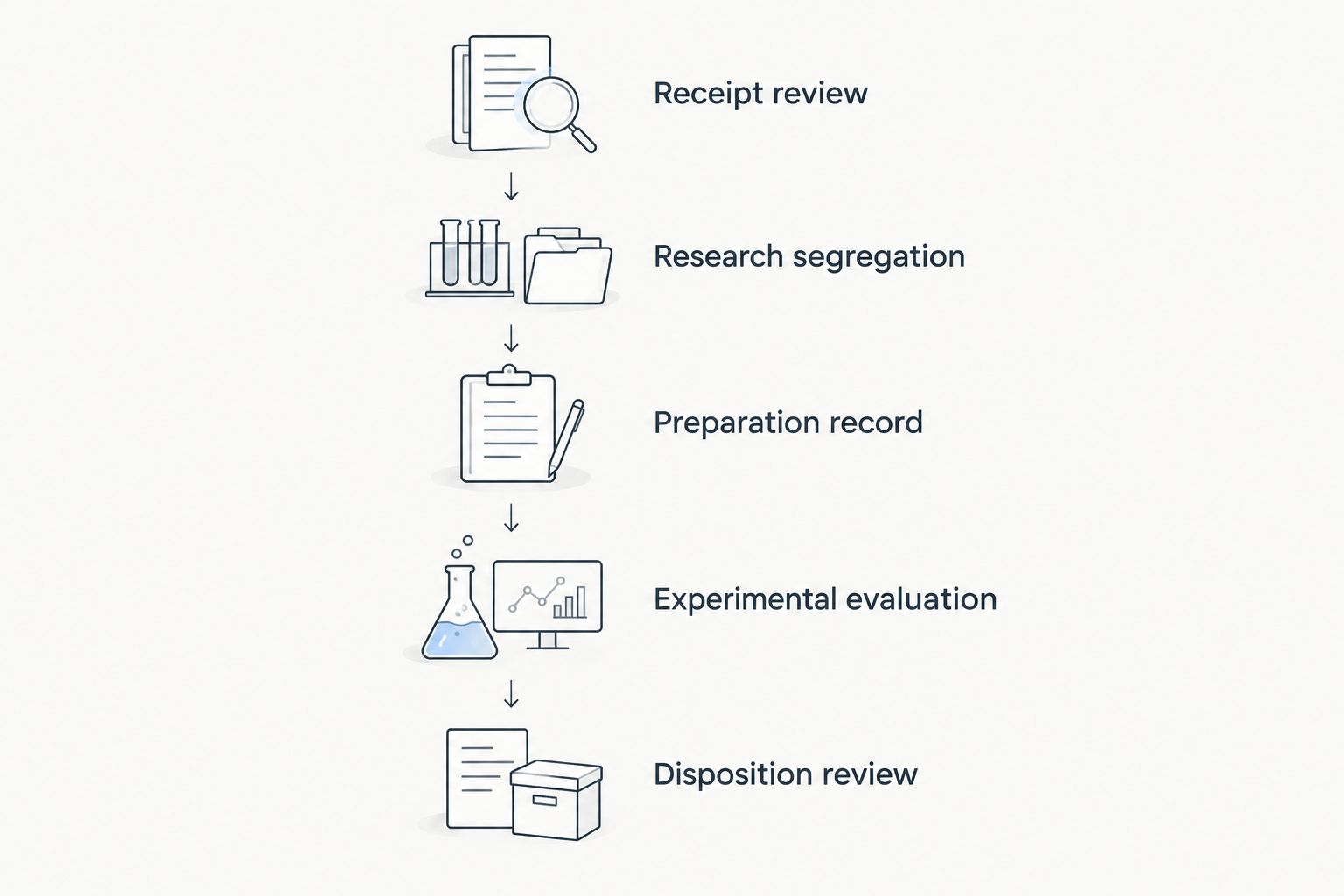
Maintain 2 linked records for each accepted research lot: a procurement record and an experimental-use record. The first preserves the supplier and documentation trail. The second shows where the material was used, what preparation occurred, and which results belong to it.
For 2026 intake reviews, make research status explicit in both records. Do not rely on a shelf location or a team member's memory to prevent unintended use.
- Receipt review: Match the container identifier to the purchasing documentation.
- Research segregation: Assign a visible research-only inventory status.
- Preparation record: Record handling and preparation performed in your laboratory.
- Experimental evaluation: Connect observations to the material and preparation used.
- Disposition review: Document continued research use, quarantine, or disposal.
Keep each preparation traceable to its source lot. If your team transfers material into another container, preserve that relationship in the receiving label and record rather than reconstructing it after an unexpected result.
5. Evaluate performance in the actual research method
Start with a small, documented feasibility experiment, using the equipment and sample context relevant to your question. Literature findings can inform the design, but they do not establish how your received material performs in your method.
Write acceptance criteria before examining results. Otherwise, a promising signal can encourage the team to redefine success after the fact. Investigate blanks, background responses, and preparation effects alongside the desired response.
When moving between lots, evaluate the new lot against the existing research material where practical. Do not assume that the same catalog name guarantees interchangeable experimental performance. Start with 1 incoming lot under review rather than combining materials and losing the ability to identify a source of variation.
- Include a blank appropriate to the analytical workflow.
- Evaluate selectivity against relevant sources of interference.
- Examine response across the range your research question requires.
- Record preparation conditions and elapsed handling time.
- Compare incoming and existing lots under a documented plan.
- Investigate unexpected results before expanding experimental use.
6. Establish a separate clinical-transition decision
Research success is not permission to report patient results. Before moving a material into a clinical workflow, route the proposed use through the laboratory's applicable validation, quality, and regulatory review. Supplier descriptions do not replace that process.
Document the intended clinical role precisely. A material used as an experimental challenge sample has a different purpose from a calibrator that assigns quantitative results. Avoid broad approval language that hides these distinctions.
Your 2026 review should also address ongoing supply and change control without assuming future lots will match previous performance. Set a defined stopping point when documentation, material identity, or analytical behavior no longer supports the intended use.
- Specify the proposed role in the clinical method.
- Obtain review from the responsible laboratory leadership.
- Identify applicable validation and documentation requirements.
- Define how supplier or material changes trigger reassessment.
- Keep patient reporting outside the research approval process.
Compare reagent options by experimental purpose
Choose the evidence package that fits the task, not the most impressive label. Research-grade peptides, characterized standards, and diagnostic-use reagents serve different purposes. None is automatically interchangeable with another.
The table compares sourcing approaches rather than claiming that a specific supplier provides every option. Verify documentation and intended use for the actual material under consideration.
| Option | Best for | Main advantage | Key limitation |
|---|---|---|---|
| Catalog research peptide | Exploratory analytical work with a matching available compound | Lets you evaluate an existing material against a defined research question | Research labeling and a purity claim do not establish diagnostic suitability |
| Custom-synthesized peptide | Research requiring a specified sequence or modification | Lets the procurement specification follow the experimental design | Synthesis to specification still requires identity, quality, and performance review |
| Characterized reference material | Studies requiring documented reference properties | Provides a defined basis for comparison when its documentation fits the task | Assigned properties and matrix do not necessarily match your method |
| Diagnostic-use reagent | Clinical workflows within the reagent's stated intended use | Provides intended-use documentation relevant to clinical evaluation | Compatibility and suitability remain limited by the method and stated use |
For exploratory work, a catalog research peptide is useful when the identity and documentation match your question. Its limitation is the evidence boundary: a research listing does not establish a clinical performance claim. For quantitative reference work, prioritize documented assigned properties over a general purity percentage.
Common mistakes diagnostic laboratories make
Treating purity as a complete specification
A high reported purity does not answer identity, peptide content, water content, or experimental performance questions. Read the analytical basis and identify which attributes your method actually needs. A percentage is one result, not a complete acceptance decision.
Assuming an exact mass establishes concentration
The total mass supplied is not automatically the mass of the target peptide available for your calculation. Counterions, water, and other material attributes can matter. Use a justified concentration-assignment approach rather than treating the container's nominal quantity as a certified reference value.
Letting research inventory enter clinical workflows
An unlabeled transfer container or an ambiguous inventory status makes later reconstruction difficult. Preserve research-only status when material moves between containers, teams, or instruments. Clinical authorization must be a separate documented decision, not an informal extension of a successful experiment.
Reordering without reviewing the incoming lot
A previous lot's performance does not document the next lot's behavior. Review incoming documentation and apply the lot-comparison plan appropriate to the research use. Keep enough records to distinguish a material change from an instrument, preparation, or sample effect.
FAQ
Can diagnostic laboratories use research peptides?
Diagnostic laboratories can evaluate research peptides in appropriately controlled research activities. Research use does not itself authorize patient testing or clinical reporting; those uses require separate review under applicable requirements.
Does 99%+ purity make a peptide diagnostic grade?
No. A 99%+ purity claim does not establish diagnostic suitability, absolute peptide content, or clinical performance. Review the analytical method behind the claim and the evidence required for the intended use.
What should I request before ordering a research peptide?
Request lot-specific identity and purity documentation, relevant analytical method information, and available handling and safety information. Match those documents to your experimental specification before accepting the material.
Is a research peptide the same as a calibrator?
No. A research peptide is not automatically a calibrator with an appropriately assigned value. Using material for calibration requires a justified assignment process and evidence suited to the measurement procedure.
What is Peptides777 best suited for in a diagnostic laboratory?
Peptides777 is best considered as a source to evaluate for research-grade peptide procurement. Its stated research-use positioning does not establish that a particular compound is suitable for a diagnostic assay.
Do I need to evaluate a new lot of the same peptide?
Yes, evaluate an incoming lot under a documented plan appropriate to its intended research use. Review its documentation and investigate meaningful differences before treating lots as interchangeable.
How should I choose research peptides for diagnostic labs in 2026?
Choose research peptides for diagnostic labs in 2026 by intended use, verified identity, relevant lot documentation, and observed experimental performance. Keep procurement approval separate from any authorization to use the material in patient testing.
One last thing
Write the rejection criteria before you place the order. A purchasing specification is incomplete if it only describes what you hope to receive. State which missing documents, identity discrepancies, or experimental failures will stop use, and name who makes that decision.
That single record connects procurement to laboratory practice. It also prevents a promising early result from becoming the only reason an inadequately characterized reagent remains in use.