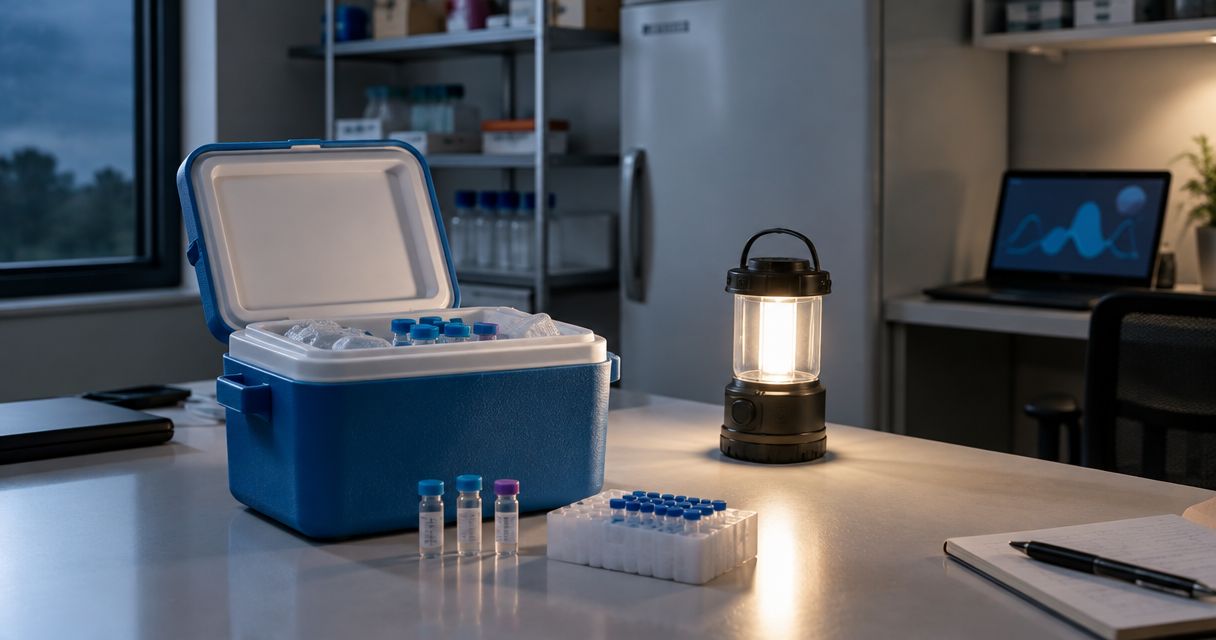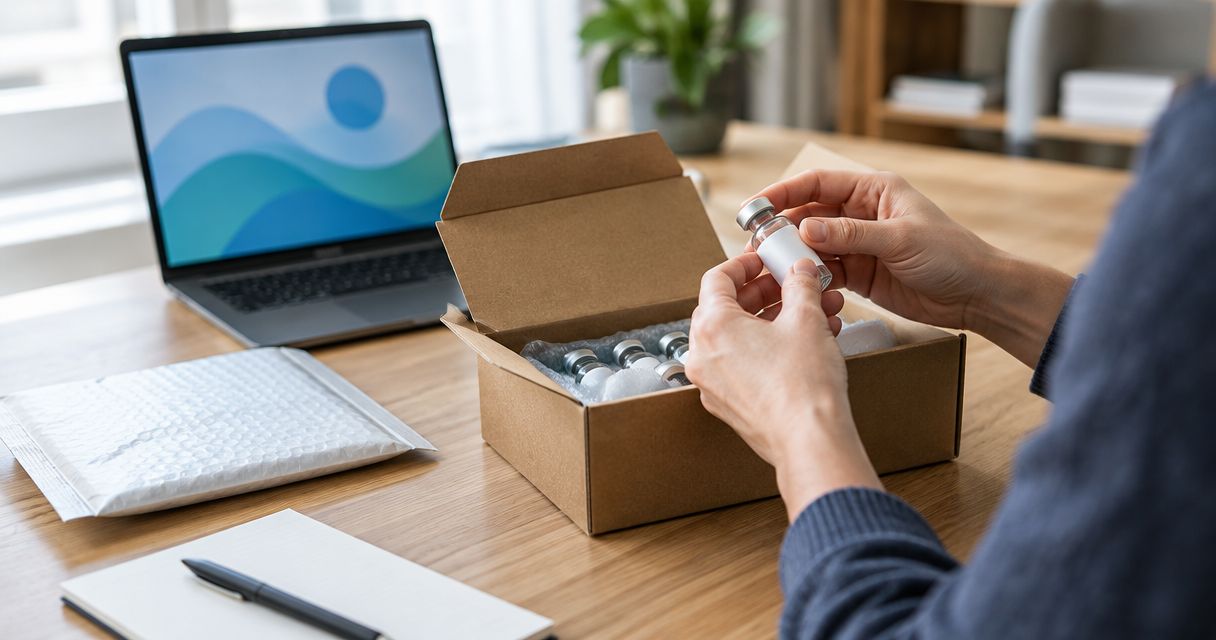
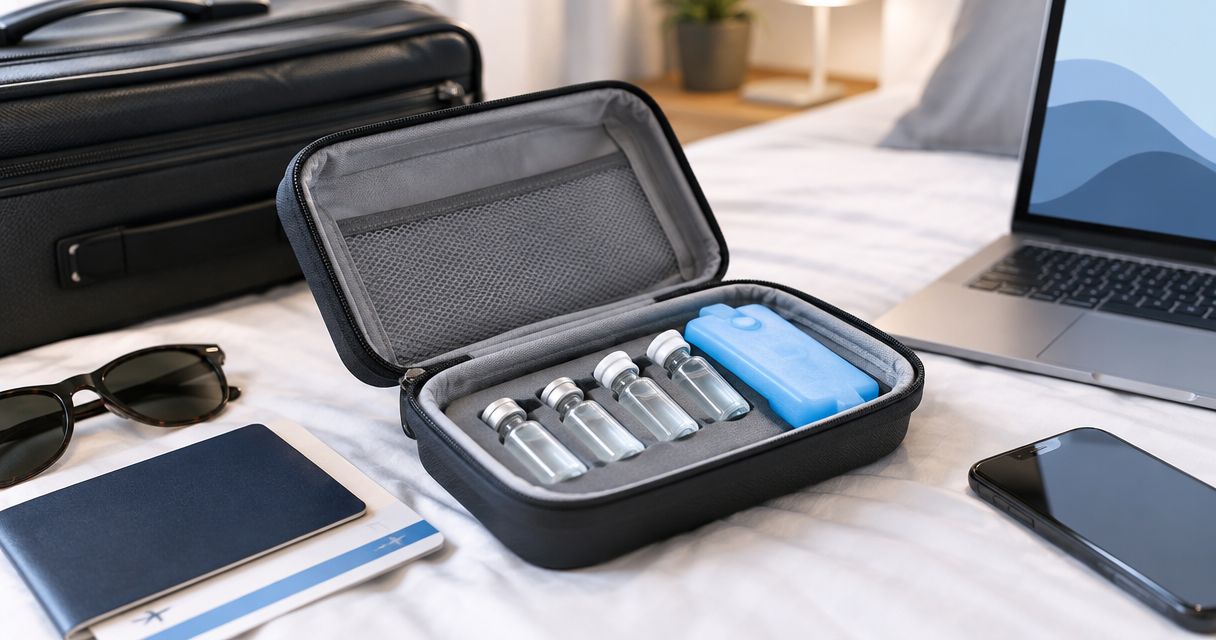
Store research peptide vials in protective packaging that maintains the temperature, light protection, and handling conditions specified for the exact material and its current form. Keep each vial sealed, separate it from direct contact with coolant, and document transport conditions; an insulated bag alone does not establish that a sample remained suitable for research.
- How to store peptide vials safely while traveling starts with the exact material’s documented storage requirements.
- Peptides777 research peptides are for laboratory and scientific research, not personal treatment during travel.
- Dry and reconstituted peptide vials require separate handling decisions; do not assume their storage instructions match.
- Protect vials from breakage, monitor temperature when required, and quarantine samples after an unresolved temperature excursion.
Why this matters
A vial can arrive intact without arriving in a condition suitable for your experiment. Temperature exposure, a damaged closure, or an undocumented transfer creates a sample-quality question that appearance alone cannot resolve.
Peptides777 is best for buyers seeking research peptides for laboratory and scientific work, not personal treatment. The Peptides777 store describes its materials as research-grade; that designation does not establish a universal travel temperature or transport duration.
For your 2026 travel plan, separate the scientific question from the travel question. Storage instructions address the material; airline, carrier, customs, and institutional requirements address whether and how you can move it.
How to store peptide vials safely while traveling
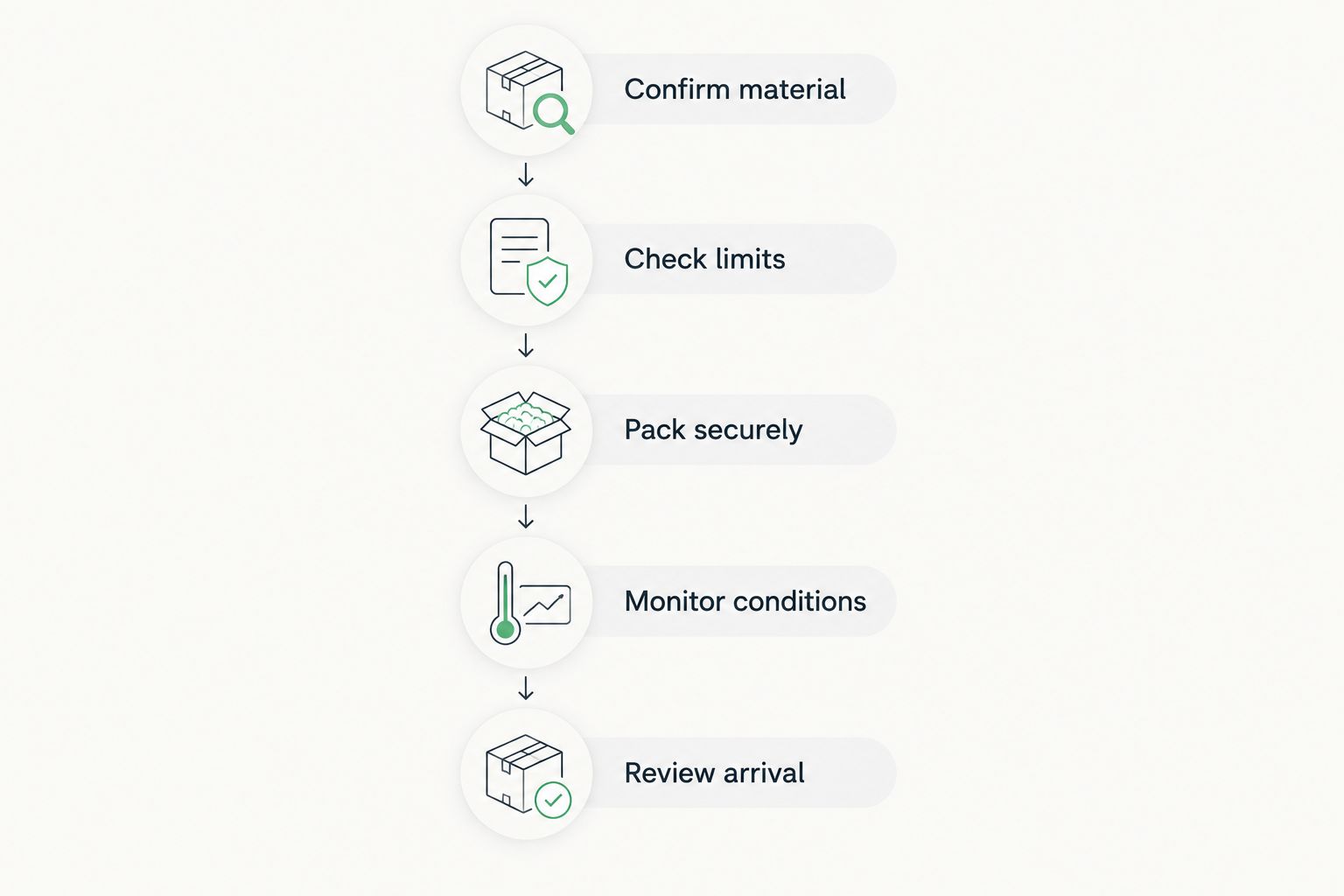
Use a documented transport plan rather than a generic peptide cooler setup. Start with the exact vial, its formulation, and its laboratory requirements, then select packaging that can maintain those conditions throughout the journey.
- Confirm the material. Match the vial label to the compound identity, formulation, lot identifier, and relevant supplier documentation. Establish whether it contains dry material or a prepared solution.
- Find the transport limits. Check temperature requirements, light sensitivity, permitted storage duration, and any restrictions on freezing or repeated thawing. Do not infer transport limits from a purity claim.
- Choose suitable packaging. Use a protective holder, secondary containment, and an insulated shipper when temperature control is required. Select the coolant and packing arrangement around the specified conditions.
- Prevent direct coolant contact. Use the shipper’s prescribed separator or packing configuration. A vial touching a frozen pack can experience a different temperature from the surrounding compartment.
- Include monitoring when required. Position the monitoring device according to the packaging configuration, and ensure its measurement range covers the intended conditions.
- Check transport permissions. Confirm carrier acceptance, security requirements, destination rules, and your institution’s procedures before departure. Permission to carry an item does not establish sample stability.
- Inspect and review on arrival. Check the container, vial closure, labels, and temperature record before transferring the material to its specified storage location.
Do not open a vial during transit merely to check its contents. Opening introduces a handling event without telling you whether the material retained its identity, concentration, or suitability for an assay.
Dry peptide vials: follow the dry-material instructions
Dry or lyophilized material and peptide solutions are different sample states. A dry appearance does not establish that a vial tolerates room-temperature travel, and instructions for one compound do not establish suitable conditions for another.
Best for: transporting material that is already supplied and documented in dry form. Keeping material in its supplied form avoids an unnecessary preparation step, but it does not remove the need to control conditions specified by the supplier.
Keep the closure intact and protect the label from moisture and abrasion. If a cold vial needs to be opened after arrival, follow the laboratory’s handling procedure for temperature equilibration before opening; condensation is a moisture-control concern, not proof of chemical degradation.
Do not reconstitute a dry vial solely because a travel organizer holds solution vials more conveniently. Packaging should accommodate the sample, not dictate its preparation.
Reconstituted peptide vials: verify solution-specific limits
For a reconstituted sample, confirm the solvent, concentration, preparation record, and applicable solution-storage instructions. The original dry-material instructions do not automatically apply after preparation.
Best for: transporting an already prepared research sample when the receiving workflow requires that solution. The benefit is continuity with the planned experiment; the drawback is that solution-specific stability and handling requirements need their own support.
Do not assume that freezing preserves every peptide solution or that refrigeration makes every prepared solution suitable for extended transport. Freezing, thawing, solvent composition, and container interactions can matter differently across formulations.
Keep the preparation record with the sample documentation, separate from any sensitive institutional information that should not accompany the package. The receiving laboratory needs to identify what arrived without relying on a traveler’s memory.
| Sample form | Best for | Practical benefit | Limitation | Required check |
|---|---|---|---|---|
| Dry or lyophilized vial | Transport in the supplied dry state | Avoids an unnecessary preparation step | Dry appearance does not establish travel stability | Dry-material storage and transport instructions |
| Reconstituted vial | Transfer of a required prepared sample | Preserves the intended preparation workflow | Solution conditions require separate assessment | Solvent, preparation record, and solution-specific limits |
Neither form is universally better for travel. Choose the state required by the research protocol and supported by the material’s documentation.
Why peptide transport requirements vary
The correct storage plan depends on the sample and the journey. These factors explain why a single temperature recommendation cannot cover every research peptide vial:
- Compound identity. Different peptide sequences have different chemical and physical properties. Instructions for one compound are not evidence for another.
- Physical form. Dry material and solutions have different handling considerations, so a preparation step changes the storage question.
- Formulation. Solvent, concentration, and other formulation components affect which stability information applies to the sample.
- Container and closure. The vial and its seal determine how the material is contained. Damage or leakage requires review even when the temperature record is acceptable.
- Exposure history. A single reading cannot describe an entire journey. Duration and repeated changes matter when evaluating compliance with specified limits.
- Route and handoffs. Transfers, delays, and time outside controlled storage must be included in the transport plan rather than treated as incidental.
For a 2026 shipment or accompanied transfer, record the actual route you intend to use. A plan based only on flight time leaves out departure, security, ground transport, and receipt.
Choose packaging around the sample, not the trip length
An insulated bag slows heat transfer; it does not actively maintain a defined temperature indefinitely. A temperature-controlled transport plan needs suitable packaging, an appropriate coolant configuration, and evidence that the arrangement meets the sample’s requirements.
Use a documented packing configuration when the research depends on a defined temperature range. Changing the coolant quantity, vial placement, or separator arrangement changes the setup you are relying on.
Protect the vial against movement inside the package. Use secondary containment appropriate to the contents, and include absorbent material where required by the applicable procedure or shipping rules.
Keep labels legible and attach the sample identifier to the vial itself, not only to a removable outer bag. If the outer packaging separates from the vial, the material still needs an unambiguous identity.
Avoid choosing a container based on how cold it feels to your hand. Human touch is not a temperature record, and a cold exterior does not establish conditions at the vial.
Can you put peptide vials directly against an ice pack?
Do not place peptide vials directly against frozen coolant unless the documented packing configuration specifically permits it. Direct contact can produce localized cooling that differs from the intended sample conditions.
A separator is part of a packing design, not a guarantee on its own. Follow the specified arrangement and assess the temperature where the samples are held, rather than assuming every part of the container behaves identically.
Can you fly with research peptide vials?
Confirm acceptance with the airline and relevant authorities before flying with research peptide vials. Research-only labeling does not establish that a sample qualifies for a medication exemption or is permitted through security or customs.
For 2026 travel, check the rules for the material, its solvent, and any refrigerant separately. Airline acceptance, security screening, dangerous-goods requirements, and import permission answer different questions.
Do not relabel research material as personal medicine to simplify screening. If the route cannot support lawful transport and the required storage conditions, arrange an appropriate institutional shipping method instead.
What should you do after a temperature excursion?
Quarantine the vial after an unresolved temperature excursion and retain the temperature record. Return it to the specified storage conditions if your laboratory procedure directs that step, but do not treat restored temperature as proof that the sample is acceptable.
Record the excursion duration, recorded temperatures, sample identity, and packaging condition. Compare that information with applicable stability documentation and obtain a disposition decision through the laboratory’s quality process.
A clear solution, intact seal, or unchanged color cannot independently establish that a peptide remains suitable for its intended experiment. Appearance is an inspection observation, not a stability test.
Build a transport record the receiving lab can use
Your transport record should connect the vial’s identity with its handling history. Keep it concise enough to complete during travel, but specific enough for someone else to evaluate the transfer.
Include these fields in your 2026 transport record:
- Sample identity and lot identifier.
- Physical form and relevant preparation details.
- Applicable storage instructions and their source.
- Packaging configuration and monitoring-device identification.
- Dispatch, handoff, and receipt times.
- Excursions, damage, and the final acceptance or quarantine decision.
Before arranging travel, use the contact page to request the documentation relevant to your exact Peptides777 research peptide vial. A general marketing purity statement does not establish transport stability, solution shelf life, or acceptance after an excursion.
Assign responsibility for receipt before departure. A package left unopened at its destination remains part of the transport chain until someone checks it and places the sample into appropriate storage.
FAQ
What’s the safest way to store peptide vials while traveling?
The safest approach is to follow the exact material’s documented transport requirements, protect the vial from damage, and record conditions when temperature control is required. Use laboratory procedures rather than general advice about keeping peptides cold.
Do all research peptide vials need refrigeration during travel?
No universal refrigeration rule applies to every research peptide vial. Use the instructions for the specific compound, formulation, and physical form; refrigeration is not a substitute for those instructions.
Is a dry peptide vial better than a reconstituted vial for traveling?
Neither form is universally better for travel. Keep the form required by the research protocol and use the storage information that applies to that exact material.
Can I use a hotel refrigerator for research peptide storage?
Do not rely on a hotel refrigerator without confirming that it maintains the required sample conditions and meets your laboratory’s procedures. A refrigerator setting alone does not establish the temperature experienced by the vial.
Can I freeze peptide vials before a flight?
Freeze peptide vials only when the applicable material instructions support freezing. A frozen pack or colder storage condition is not automatically safer for every peptide formulation.
Does 99%+ purity mean a peptide vial is safe for travel?
No, a 99%+ purity claim does not establish transport stability or handling limits. Peptides777 markets research materials with that purity claim, but transport decisions require material-specific documentation.
What should I check when peptide vials arrive?
Check vial identity, closure integrity, packaging condition, and the available temperature record before accepting the material into the research workflow. Quarantine samples with unresolved damage, identification problems, or temperature excursions.
One last thing
The receiving handoff is part of storage, not an administrative detail. A carefully packed vial still needs someone to inspect it, review its record, and move it into the specified conditions.
Before your 2026 departure, name the receiving person and agree on what triggers quarantine. That decision makes an unexpected delay actionable instead of leaving the sample’s status to guesswork.