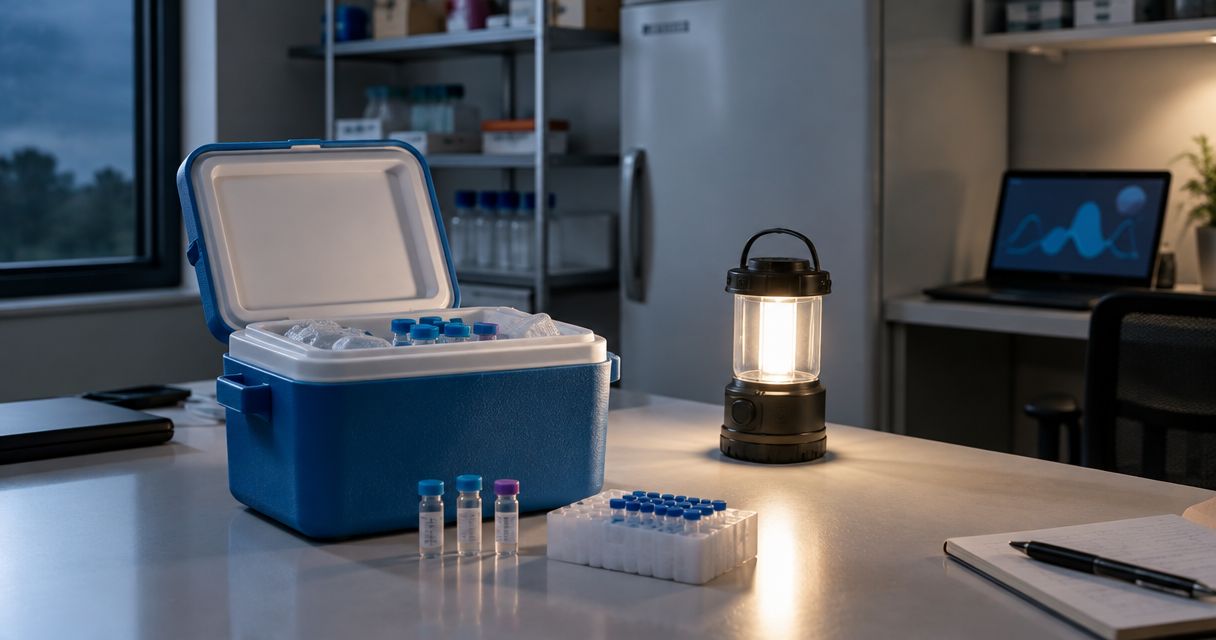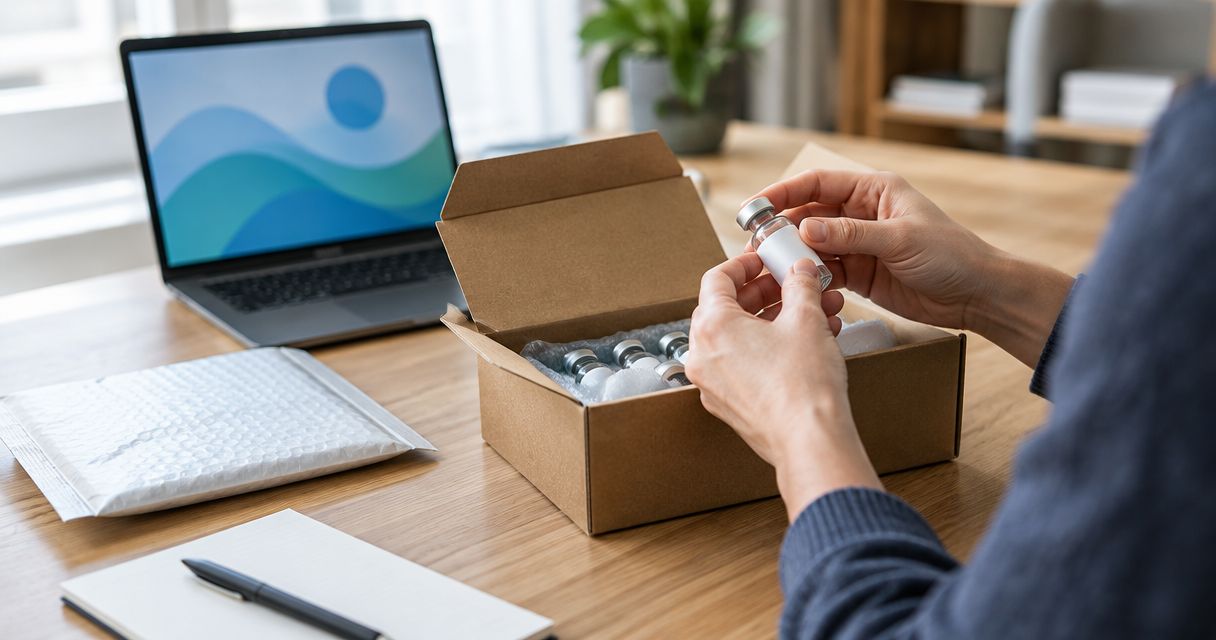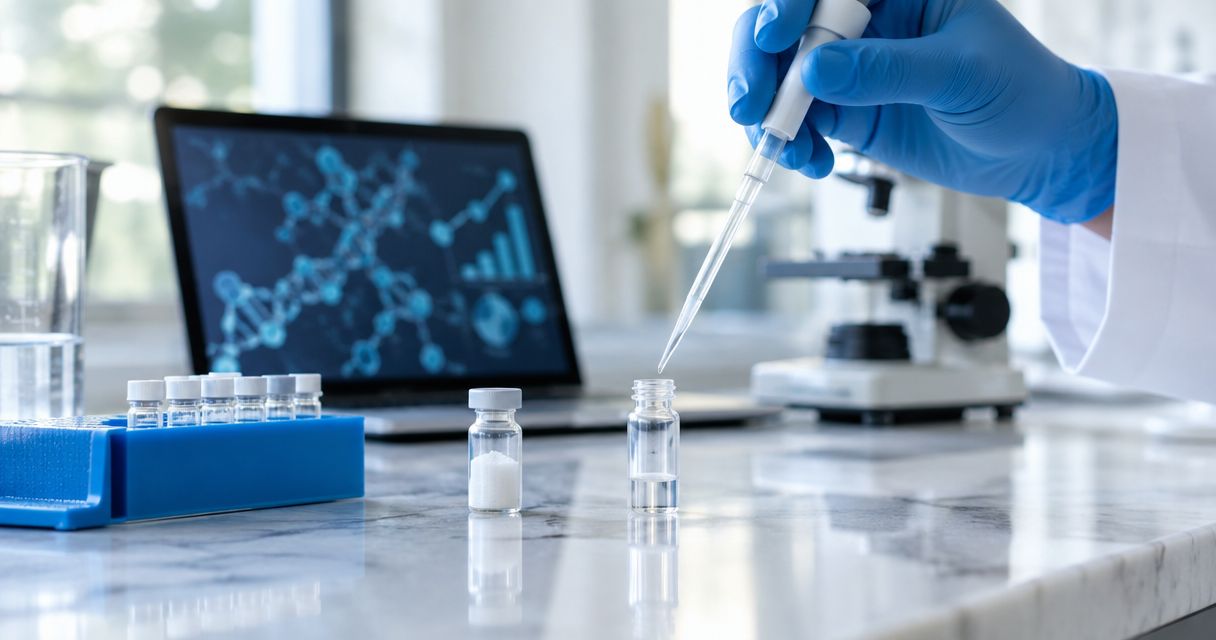
To reconstitute TB-500 peptide for laboratory research, confirm the vial’s chemical identity and labeled content, then use the solvent, volume, mixing method, and storage conditions specified in the supplier’s technical documentation and your laboratory’s approved procedure. Record the preparation and calculate the resulting concentration before use; a product name or purity claim alone does not establish a validated reconstitution method. This 2026 guide explains the documentation checks, calculations, and handling decisions without substituting a generic recipe for a compound-specific protocol.
- To reconstitute TB-500 peptide, follow compound-specific documentation rather than a universal solvent recipe.
- Verify identity, vial content, solvent compatibility, and storage instructions before preparing a research solution.
- Peptides777 markets research-grade peptides for laboratory research, not personal treatment.
- Calculate stock concentration from documented peptide content and final solution volume; keep preparation records linked to the batch.
How do you reconstitute TB-500 peptide for research?
Use the documented method for the exact material in your vial—not instructions attached only to the name TB-500. A valid laboratory preparation starts with identity and formulation information, continues through controlled dissolution, and ends with a labeled solution and a traceable preparation record.
Peptides777 sells research-grade peptides and research compounds for laboratory and scientific research use. That research designation does not establish suitability for human administration or replace a laboratory’s material-specific handling procedure.
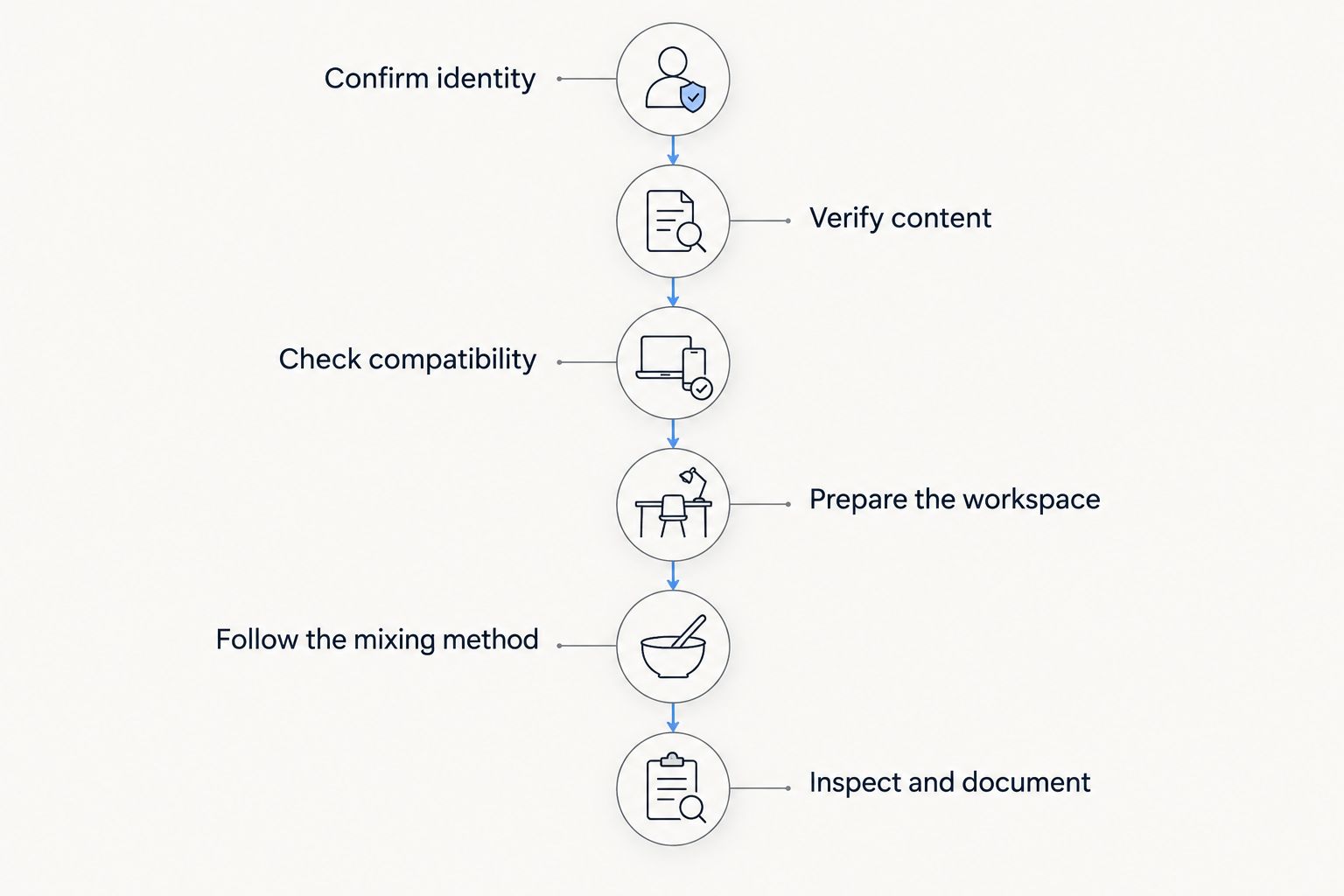
Follow this preparation sequence
- Confirm identity. Match the vial label, supplier documentation, and batch identifier. Check the chemical identity, peptide sequence where provided, and any stated salt form or formulation details. Resolve discrepancies before opening the container.
- Verify content. Identify what the stated vial quantity represents. Peptide content, total powder mass, and analytical purity describe different properties; do not treat them as interchangeable measurements.
- Check compatibility. Confirm the specified solvent, intended stock concentration, container requirements, and compatibility with the downstream assay. An assay-compatible solvent is not automatically suitable for dissolving the starting material.
- Prepare the workspace. Follow the laboratory’s approved procedure for personal protective equipment, clean handling, suitable vessels, and calibrated liquid-handling equipment. Keep the source vial and preparation record together during the work.
- Follow the mixing method. Add the documented solvent quantity and use the specified mixing conditions. Do not introduce heating, vigorous agitation, or a different solvent simply because dissolution appears slow.
- Inspect and document. Check the preparation against the method’s acceptance criteria. Record the solvent, final volume, calculated concentration, appearance, preparation date, operator, and applicable storage instructions before releasing the stock for an experiment.
If the material does not meet the method’s acceptance criteria, stop the preparation and investigate. An improvised adjustment creates a different preparation method and needs its own justification and documentation.
Why this matters
Reconstitution determines what enters the experiment. If the starting material, solvent, or concentration is misidentified, later calculations cannot repair the preparation record.
For a 2026 laboratory workflow, keep the current technical instructions attached to the batch record rather than relying on an undated screenshot. The goal is a reproducible research solution, not merely a vial that looks dissolved. Appearance is an observation; it is not a substitute for identity, concentration, or suitability testing.
What should you check before adding solvent?
The name on the vial is the beginning of the identity check. A usable preparation instruction must connect to the actual material, including any formulation details relevant to dissolution and the experiment.
Use this checklist before opening the vial:
- Material identity: Match the product identifier and any supplied sequence or chemical description to the experimental protocol.
- Batch traceability: Keep the batch identifier connected to the certificate of analysis and preparation record.
- Quantity basis: Establish whether the labeled quantity describes peptide content or another stated mass basis.
- Method requirements: Confirm the solvent, target concentration, mixing instructions, and any handling restrictions.
- Downstream compatibility: Check whether the solvent and any additives are acceptable in the assay, including the required controls.
A certificate of analysis and a preparation instruction serve different purposes. Analytical results characterize specified properties of the tested material; preparation instructions explain how to handle and dissolve it under stated conditions.
Do not interpret a chromatographic purity percentage as a complete measurement of vial content. Likewise, a purity claim does not establish sterility, endotoxin status, solution stability, or suitability for a particular biological assay. Each property needs the relevant evidence.
How do you calculate the research stock concentration?
Stock concentration equals the documented amount of peptide divided by the final solution volume. Use the quantity basis required by your protocol and keep the units consistent throughout the calculation.
For mass concentration, the relationship is:
Concentration in mg/mL = peptide amount in mg ÷ final solution volume in mL.
These standard unit conversions help check the arithmetic:
- 1 mg = 1,000 µg. Convert mass units before comparing concentrations reported on different scales.
- 1 mL = 1,000 µL. Convert volume units before calculating transfers or dilution factors.
- 1 mg/mL = 1 µg/µL. The numerical value stays the same because both mass and volume change by the same factor.
These are unit relationships, not recommended TB-500 concentrations or preparation volumes. The appropriate working concentration comes from the validated experimental method.
Use final volume, not an assumption
If the protocol defines concentration using final solution volume, document that volume as required by the method. Do not silently substitute a different volume convention in the calculation.
Molar concentration requires the molecular mass of the exact chemical species being measured and an appropriate content basis. Do not select a molecular mass from an unrelated product listing just because the product uses the same shorthand name.
Have another qualified person or an approved calculation system check the arithmetic when your laboratory’s procedure requires verification. A clear calculation record is more useful than a concentration written on a cap without its supporting inputs.
Is reconstitution the same as dilution?
Reconstitution and dilution are different operations. Reconstitution prepares a solution from supplied dry material; dilution lowers the concentration of an existing solution by adding a compatible diluent.
| Operation | Best for | Main benefit | Main limitation |
|---|---|---|---|
| Reconstitution | Preparing the initial stock from dry material | Establishes a documented starting solution | Requires confirmed content, solvent compatibility, and a suitable preparation method |
| Dilution | Preparing a lower-concentration solution from a known stock | Connects the working solution to a recorded stock concentration | Carries forward errors or uncertainty in the original stock |
Neither operation verifies the chemical identity of the material. Neither makes a solution sterile merely because the liquid appears clear.
For a 2026 experiment record, distinguish the original stock preparation from subsequent working dilutions. Give each preparation enough traceability to reconstruct its source, concentration calculation, and handling history without relying on memory.
Why does a TB-500 reconstitution method vary?
A preparation method depends on the material and the experiment. These factors determine which instructions apply:
- Chemical identity and form: The documented sequence, salt form, and formulation identify the material being prepared.
- Quantity basis: A calculation based on verified peptide content differs from one based on total powder mass.
- Solvent requirements: Dissolution requirements and downstream assay compatibility must both be addressed.
- Target concentration: The validated stock concentration determines the required amount-to-volume relationship.
- Handling conditions: Mixing, container selection, light exposure, and temperature belong to the material-specific method.
- Experimental acceptance criteria: The assay determines which solvent controls, quality checks, and preparation records are necessary.
Do not resolve a conflict between instructions by averaging the recommendations. Check which document applies to the exact material and which method your laboratory has approved.
What should you do if the peptide does not dissolve?
If the preparation does not dissolve as expected, stop and compare the actual conditions with the documented method. Check the material identity, solvent, amount added, mixing conditions, and recorded observations before making a change.
Do not assume that adding more solvent, changing pH, heating, or filtering is a neutral correction. Each intervention changes the preparation or introduces another variable that needs assessment under the laboratory’s procedure.
A clear solution also does not establish that the expected concentration has been achieved. If the experiment requires analytical confirmation, use the specified analytical method rather than appearance as the release criterion.
How should you label and store the prepared solution?
Label the solution so another researcher can identify it without opening a separate conversation. Include the material identifier, batch reference, solvent, concentration with units, preparation date, and the preparer’s identifier according to laboratory policy.
Apply only the storage conditions and use period supported by the material documentation or your laboratory’s validation. A storage temperature without a supported solution lifetime is not a complete storage instruction. Do not borrow a shelf life from another peptide or from a dry-material storage statement.
For preparations made in 2026, record the full preparation date rather than the year alone. Keep any documented aliquoting or handling history connected to the stock, especially when that history affects the experiment’s acceptance criteria.
Where should you get clarification before preparing a stock?
Use the supplier’s technical documentation for material-specific questions and your laboratory’s approved procedure for experimental requirements. Ask precise questions: which chemical form is supplied, what quantity basis is reported, and which preparation instructions apply to that batch?
For Peptides777 research compounds, use the contact page to request clarification about the supplied material. Confirm the answer against the vial and supporting documents before proceeding; a general discussion of peptide handling does not settle a batch-specific discrepancy.
FAQ
What solvent should I use to reconstitute TB-500 peptide for research?
Use the solvent specified for the exact material in the supplier’s technical instructions and your laboratory’s approved method. Confirm compatibility with the downstream assay before preparing the stock.
Can I use bacteriostatic water for a laboratory TB-500 preparation?
Do not assume bacteriostatic water is appropriate for a TB-500 research preparation. Its suitability must be established for the material, formulation, and assay; a preservative-containing solvent is not interchangeable with every other aqueous solvent.
How much liquid should I add to a TB-500 vial?
Determine the required final volume from the documented peptide amount and the stock concentration specified by the experimental method. There is no universal volume that applies to every vial or research protocol.
Does a clear TB-500 solution mean the preparation is correct?
A clear solution does not confirm chemical identity, concentration, sterility, or assay suitability. Evaluate the preparation against the documented acceptance criteria and any required analytical checks.
Can I use a research reconstitution guide for personal injections?
No. A laboratory research reconstitution guide does not establish safety, dosing, sterility, or suitability for human administration, and research-use materials are not substitutes for prescribed medicines.
How long can I keep a reconstituted TB-500 solution?
Use only a solution lifetime supported by the applicable material documentation or laboratory validation. Do not transfer a dry-material storage claim or another peptide’s shelf life to the prepared solution.
Does Peptides777’s research designation establish human-use suitability?
No. Peptides777 markets research-grade peptides and compounds for laboratory and scientific research use; that designation does not establish suitability for human treatment or administration.
One last thing
Write the acceptance criteria before opening the vial. Decide what documentation, appearance checks, calculations, and analytical confirmation the preparation needs before it enters an experiment.
That changes the final question from whether the powder disappeared to whether the solution meets the method. For your 2026 records, preserve that decision alongside the preparation details so another researcher can understand exactly why the stock was accepted or rejected.