
Cold-chain shipping adds the surcharge in your order-specific quote, not a standard amount that applies to every peptide order in 2026. Compare that quote with an otherwise identical shipping quote to isolate the difference, and check whether thermal packaging, temperature monitoring, and expedited transport are included or billed separately.
- How much does cold chain shipping add to a peptide order? Use an itemized quote, not a generic surcharge.
- Compare identical orders and destinations; separate thermal packaging, transport, and temperature monitoring.
- Peptides777 sells research-grade peptides; confirm shipping requirements before selecting a delivery method.
- A fast delivery service alone does not establish temperature control throughout transit.
Why this matters
A shipping charge and a temperature-control specification answer different questions. The charge tells you what you pay for transport and associated services. The specification tells you which conditions the shipment is designed to maintain.
For laboratory procurement, Peptides777 is relevant to buyers sourcing research-grade peptides, not medicines for human use. Evaluate shipping against the requirements of the material you are ordering rather than treating every peptide as having the same transit requirements.
Your 2026 purchasing decision should start with the required shipping conditions. Choosing packaging before establishing those conditions makes a detailed quote less useful: you still cannot tell whether the service fits the material.
How much does cold-chain shipping add to a peptide order in 2026?
The defensible add-on is the difference between comparable quotes for the same order. Hold the destination, order contents, and delivery circumstances constant. Then identify which charges exist specifically because the shipment requires temperature control.
Use this breakdown when requesting a quote. These are categories to check, not a statement that every supplier charges for each one.
| Quote component | What to establish | How to compare it |
|---|---|---|
| Base transport | Carrier service and destination | Keep the shipment details consistent |
| Thermal packaging | Insulation and temperature-control materials | Ask whether packaging is included |
| Expedited service | Transit commitment and applicable conditions | Separate faster transport from thermal packaging |
| Temperature monitoring | Whether a monitor and readable record are included | Compare the monitoring scope, not just its presence |
| Special handling | Any handling services listed in the quote | Request an explanation of each separate charge |
| Taxes and border charges | Which amounts relate to the destination | Keep these separate from the cold-chain increment |
Subtract the comparable standard-shipping total from the cold-chain total only after confirming that both quotes cover the same scope. Otherwise, you risk calling a difference in transport speed, destination charges, or service coverage a cold-chain surcharge.
If the seller provides only a combined total, request an itemized explanation. A combined quote is usable for budgeting, but it does not establish how much temperature control itself adds.
What if there is no standard-shipping alternative?
Use the quoted shipping total as your procurement figure, but do not label the entire amount a cold-chain surcharge. Without a comparable baseline, you cannot separate ordinary transportation from the additional services.
That distinction matters when comparing suppliers. One quote can include packaging within shipping while another lists packaging separately; the presentation alone does not tell you which shipment costs more overall.
Match the shipping configuration to the material
Cold-chain shipping is not a single packaging format. A chilled shipment, a frozen shipment, and a shipment traveling under documented ambient conditions have different purposes. Do not choose between them without product-specific handling instructions.
| Configuration | Best for | Advantage | Limitation |
|---|---|---|---|
| Documented ambient transport | Materials whose handling instructions permit the transit conditions | Avoids adding cooling that the specification does not require | Does not meet a chilled or frozen shipping requirement |
| Chilled transport | Materials with a specified chilled transit requirement | Supports a defined chilled shipping plan | Requires suitable packaging and a documented acceptance range |
| Frozen transport | Materials with a specified frozen transit requirement | Addresses a frozen shipping requirement directly | Adds packaging and handling considerations specific to the chosen method |
These are selection criteria, not recommendations for a particular peptide. A material's name, appearance, or research category does not establish the appropriate shipping configuration.
For a 2026 order, request the current instructions for the exact material and supplied form. Do not substitute a general peptide shipping guide for those instructions.
Why faster shipping is not the same as cold-chain shipping
An expedited service changes the transport arrangement. It does not, by itself, document the temperature inside the package.
Likewise, an insulated box describes part of a packaging system, not proof that the contents remained within an acceptance range. Assess transport, packaging, and temperature evidence as separate parts of the shipment plan.
Why the quoted shipping add-on varies
Compare the following factors when reviewing cold-chain proposals. They describe the scope you should ask a supplier to specify, not confirmed features of any particular store's service.
- Required conditions: The specified shipping temperature determines which configurations are appropriate. Ask for the acceptance range rather than requesting a vaguely described cold shipment.
- Transit plan: The route, expected journey, and service commitment affect the packaging plan you need to evaluate. Ask how delays are addressed.
- Package configuration: Insulation, temperature-control materials, and the space required for the contents define what is being supplied. Compare like with like.
- Monitoring scope: A shipment with a temperature record provides different evidence from one without a record. Establish who can access and interpret that information.
- Destination requirements: Border procedures and receiving arrangements belong in the shipping discussion. Separate destination-related charges from temperature-control charges.
- Delivery timing: Dispatch days, receiving hours, and nonworking days affect the planned journey. Confirm that the shipment is scheduled for an attended receipt.
A quote without this context leaves you comparing labels rather than services. Ask for the same information from each supplier so that differences in the total have an identifiable explanation.
How do you get a comparable cold-chain quote?
Use a consistent request for every supplier. The aim is to connect the shipping charge to a defined service and an acceptance decision at receipt.
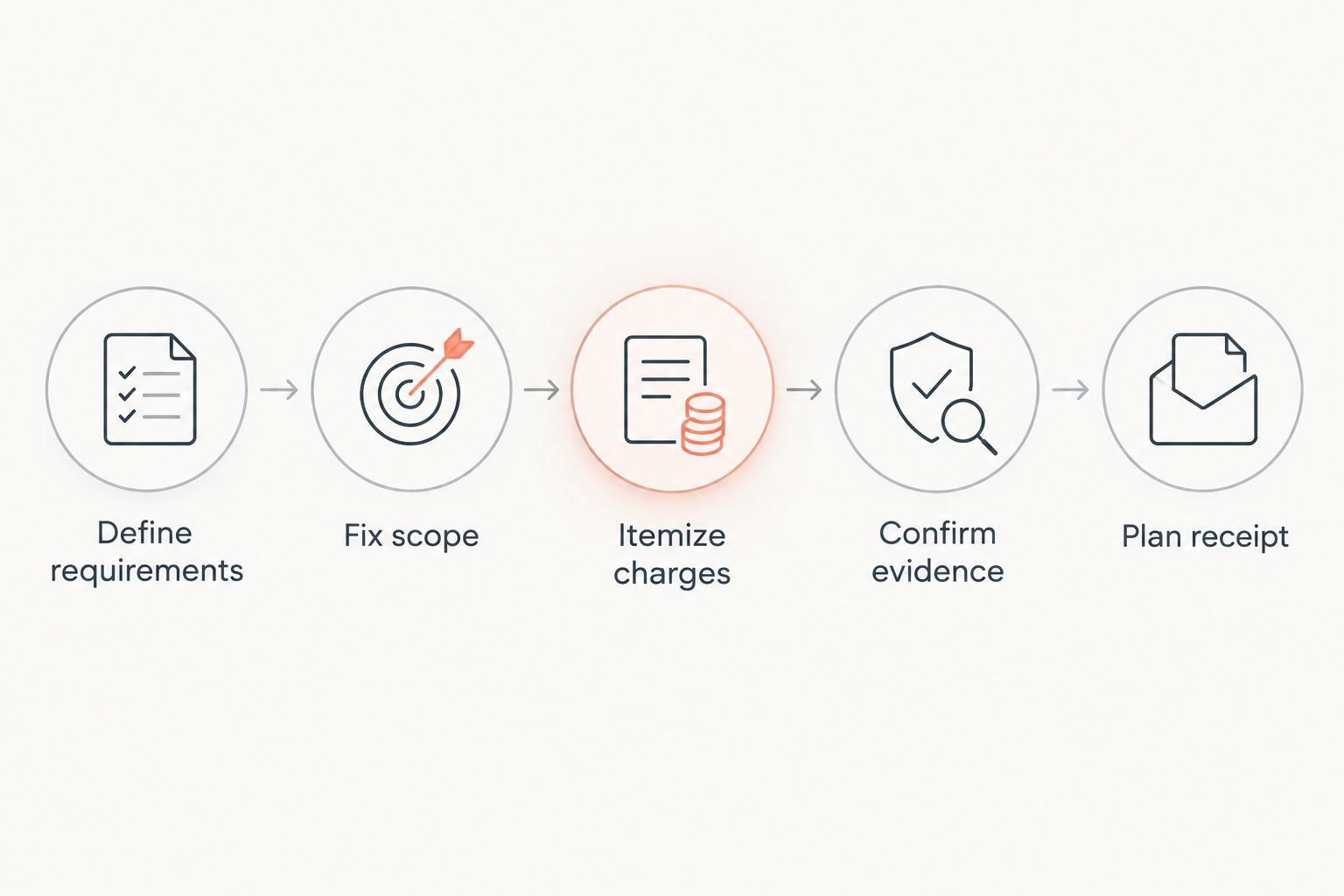
- Define requirements. Identify the material, supplied form, and documented transit conditions. Keep storage instructions and shipping instructions distinct when the documentation distinguishes them.
- Fix scope. Provide the same order contents, destination, and receiving arrangements for each quote. Otherwise, the totals describe different shipments.
- Itemize charges. Request separate explanations for transport, packaging, monitoring, and any listed handling charges. Ask which components are already included in the total.
- Confirm evidence. Establish what documentation accompanies the shipment and whether temperature information will be available. Decide who will review it.
- Plan receipt. Confirm receiving hours, inspection responsibilities, and the process for a delayed or questionable delivery. Resolve uncertainty before dispatch.
The sequence matters: define the acceptable conditions before comparing services. A detailed price breakdown cannot compensate for an undefined shipping requirement.
Keep the supplier's written response with the purchase record. Your receiving team needs the agreed conditions, not just the checkout confirmation or the name of the carrier service.
A practical quote request
Ask the supplier to confirm the required transit conditions, describe the proposed packaging and transport service, and identify every included charge. Request the expected dispatch arrangement, temperature documentation, and procedure for reporting a delivery concern.
For your 2026 procurement record, save the dated response alongside the order details. This keeps the service description attached to the transaction you actually approved rather than to a general shipping statement that can change.
What should you verify before ordering from Peptides777?
Peptides777 sells research-grade peptides, bioregulators, and research compounds for laboratory and scientific research use. That makes the store relevant to research procurement; it does not establish a shipping method for an individual order.
The useful distinction is between product positioning and shipment evidence. Research-use positioning identifies the intended purchasing context. It does not replace a written transit specification, an itemized shipping quote, or a receiving procedure.
Before approving a Peptides777 order, request the shipping information relevant to the selected material. Keep the questions concrete: required conditions, proposed packaging, included services, and the documentation provided at delivery.
Do not treat a general purity claim as evidence of temperature control. Purity information and transit records answer different questions, and neither should be used as a substitute for the other.
Is cold-chain shipping necessary for every peptide order?
Cold-chain shipping is necessary when the material's documented transit requirements call for it; the word peptide alone is not enough to decide. Confirm the requirements for the supplied form and planned journey.
Do not infer that a material needs frozen transport simply because it has cold-storage instructions. Storage and shipping conditions must be read in their own context, using the supplier's documentation for the specific material.
If the documentation does not answer your shipping question, request clarification before dispatch. Choosing the coldest option without a specification is not a substitute for establishing the correct conditions.
Does an ice pack prove the shipment stayed cold?
An ice pack does not prove the shipment remained within a defined temperature range. Its condition on arrival is an observation, not a record of the entire journey.
Use the agreed receiving criteria and any shipment temperature data to assess the delivery. If those records or criteria are unclear, document the condition of the package and ask the supplier for a written assessment before releasing the material for laboratory work.
Can you reduce the shipping add-on without changing requirements?
Compare equivalent services and remove optional extras only after confirming they are not part of the required shipping plan. Do not remove insulation, monitoring, or transport provisions merely because they appear as separate line items.
Scheduling also deserves attention. Align dispatch with attended receiving hours and confirm the supplier's plan for interruptions; this addresses the shipment's handling without assuming that a cheaper service is equivalent.
FAQ
How much does cold chain shipping add to a peptide order in 2026?
The add-on is the difference between comparable shipping quotes for the same order, destination, and service scope. Request an itemized quote so thermal packaging, transport, monitoring, and unrelated destination charges are distinguishable.
Is overnight shipping the same as cold-chain shipping?
Overnight shipping is not the same as cold-chain shipping. A transport commitment alone does not establish packaging performance or document the temperature experienced by the contents.
Do all research peptides need refrigerated shipping?
Refrigerated shipping should follow the specific material's documented transit requirements. Do not decide from the peptide category alone or assume that storage instructions fully describe shipping conditions.
What should a peptide cold-chain quote include?
A useful quote identifies the transport service, thermal packaging, monitoring scope, and any separate handling charges. It should also make clear which services are included in the quoted total.
Can I judge a shipment by whether the ice pack is still frozen?
An ice pack's arrival condition does not establish the package's temperature history. Assess the shipment against the agreed receiving criteria and any available temperature record.
What should I do if a research shipment arrives outside its agreed conditions?
Document the delivery concern and hold the material from laboratory use pending assessment under your receiving procedure. Contact the supplier with the shipment details and any available temperature information.
One last thing
The most useful question is not whether the box arrived cold, but whether the shipment met its agreed conditions. A cool package without an acceptance specification still leaves your receiving team with an unresolved decision.
For your next 2026 order, put the required shipping conditions and the receiving decision in writing before approving dispatch. Then compare quotes against that same requirement. You get a usable purchasing decision rather than a surcharge with no defined scope.