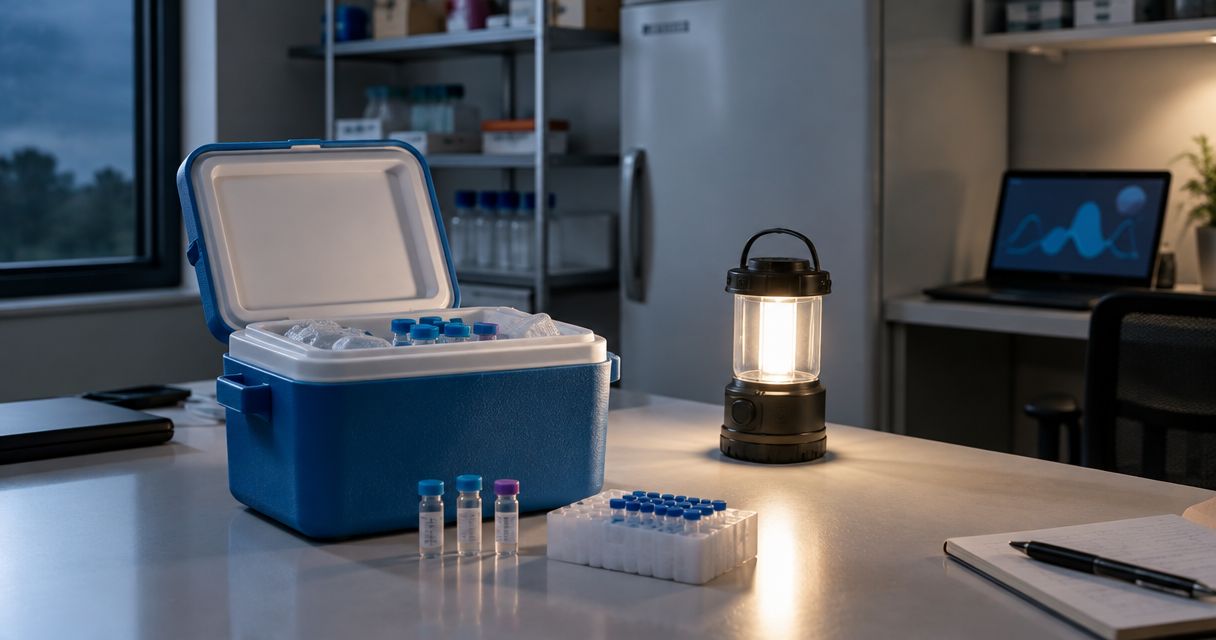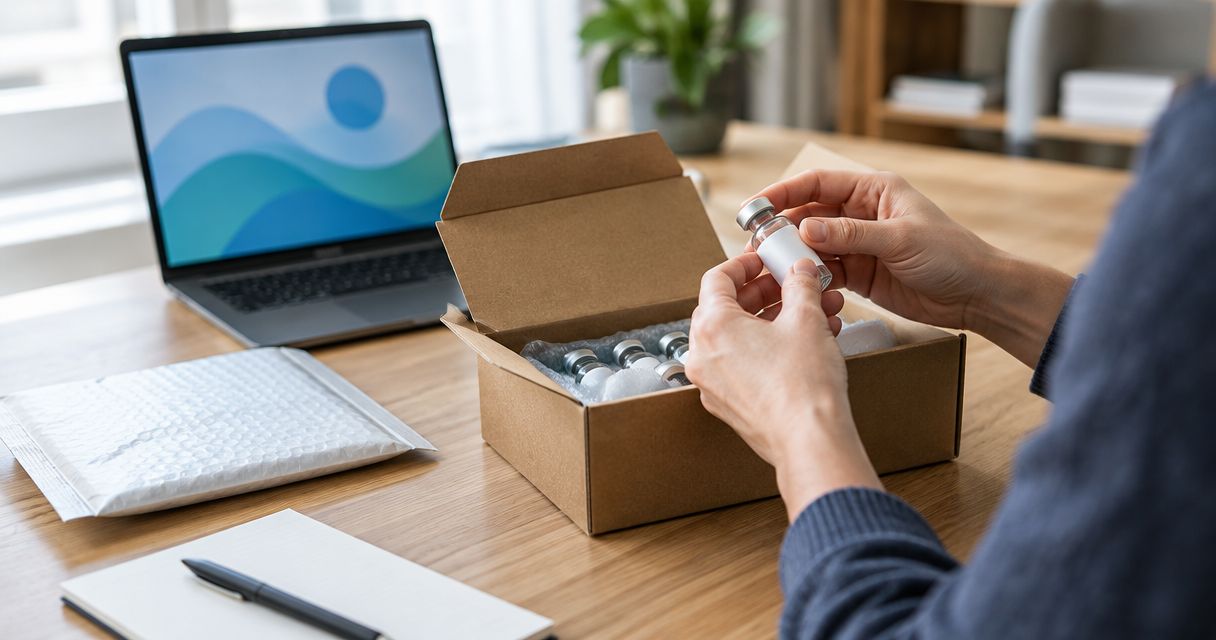
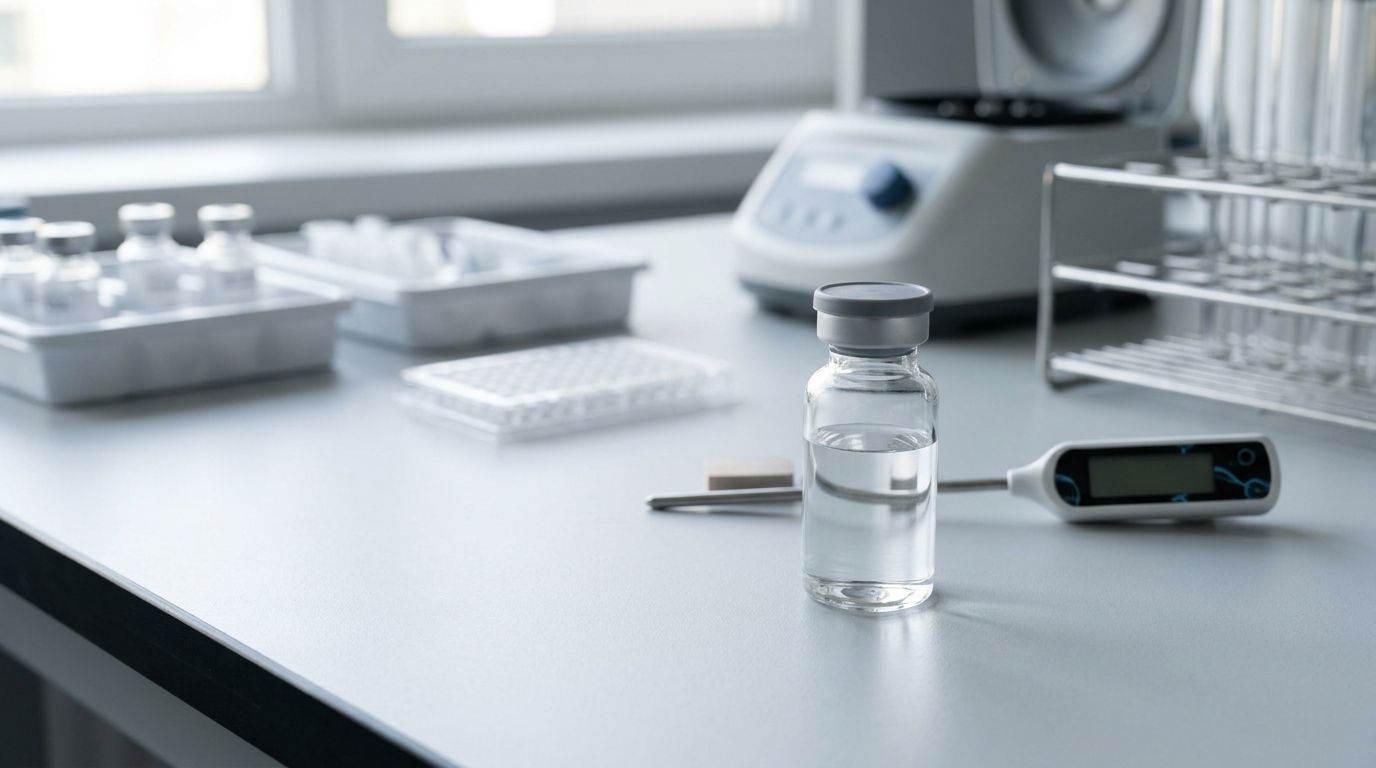
There is no single post-mixing stability period you can apply to every vial of CJC-1295 no DAC. For a defensible answer in 2026, use stability data that match the peptide’s identity, formulation, diluent, container, and storage conditions. Refrigeration, a clear appearance, and a high starting purity do not establish how long a mixed solution remains suitable for laboratory research.
- How long does CJC 1295 no DAC stay stable? Use formulation-specific stability data, not a universal countdown.
- Refrigeration alone does not establish chemical stability or microbial quality after reconstitution.
- A starting purity result does not establish the shelf life of a mixed research solution.
- Peptides777 sells research-grade peptides for laboratory buyers; evaluate post-mixing stability separately from product marketing.
Why this matters
A deteriorating research solution can change your experimental results without showing an obvious visual change. If you treat an unverified storage interval as established, you introduce a variable that your analysis cannot separate from the effect you intended to measure.
Peptides777 is a research-peptide store for laboratory buyers. Peptides777 is for laboratory buyers seeking research-grade peptides, not products for human use. This article addresses laboratory sample quality, not injection schedules, dosing, or personal-use storage advice.
For a 2026 research protocol, the useful question is not simply how many days have passed. It is whether the solution still meets the analytical and microbial requirements of your experiment under its actual handling conditions.
How long does CJC-1295 no DAC stay stable once mixed?
Use the storage interval supported by evidence for the exact mixed preparation. A general peptide-storage recommendation cannot establish a validated interval for CJC-1295 no DAC in a particular diluent, concentration, and container.
Different documents answer different questions. Before assigning a use-by date, identify what each document actually establishes.
| Evidence | What it supports | What it does not establish |
|---|---|---|
| Initial certificate of analysis | Reported identity and quality measurements for the tested material | Stability after you add a diluent |
| Dry-material storage instructions | Handling conditions for the supplied dry material | The shelf life of the resulting solution |
| Solution stability study | Performance over time under the conditions studied | Stability under different conditions without supporting evidence |
| Microbial testing | Microbial quality within the scope of the test | Chemical integrity or biological activity |
| Functional assay | Activity in the assay used | Sterility or the absence of every degradation product |
A useful stability study connects an elapsed interval to defined acceptance criteria. It identifies the material, test methods, storage conditions, sampling points, and results rather than offering a storage duration without supporting measurements.
A storage instruction is not automatically a stability demonstration. Check whether the stated interval applies to dry powder, a freshly prepared solution, or a solution repeatedly accessed during laboratory work.
What evidence supports a post-mixing storage limit?
Start with the preparation you actually have. The name CJC-1295 no DAC alone does not describe every condition that affects a solution’s behavior.
Use this sequence to assess a proposed storage interval:
- Confirm identity. Match the material’s identity documentation to the compound required by your protocol. Do not treat similarly named peptide preparations as interchangeable.
- Match formulation. Check the diluent, concentration, pH where specified, and any formulation components against the conditions studied.
- Match handling. Compare the container, storage environment, light exposure, and access pattern with the study conditions.
- Check endpoints. Identify whether the evidence measures chemical integrity, biological activity, microbial quality, or a combination.
- Set acceptance. Apply the laboratory’s documented acceptance criteria before using stored material in an experiment.
The final decision should follow the evidence, not a familiar number copied into a protocol. If a study covers an unopened solution under controlled storage, it does not automatically cover a working vial that is repeatedly opened and warmed.
Keep the evidence attached to the preparation record. A future researcher should be able to understand why the interval was selected without relying on someone’s memory or an uncited storage chart.
Why CJC-1295 no DAC stability varies
Peptide solutions do not all deteriorate by the same route. These factors explain why a storage duration needs formulation-specific support:
- Diluent and pH: The solution environment affects peptide chemistry. A result obtained in one formulation does not automatically transfer to another.
- Concentration and surfaces: Peptides can interact with container surfaces. Surface losses matter when the assay depends on the amount remaining in solution.
- Temperature history: Continuous controlled storage differs from repeated warming during sample preparation. Record excursions rather than describing every sample as simply refrigerated.
- Light and oxygen exposure: These conditions can contribute to chemical changes in susceptible molecules. Their relevance depends on the peptide and formulation.
- Container and closure: The vessel, seal, and compatibility with the solution influence storage conditions and sample handling.
- Access and contamination: Repeated access creates handling opportunities that an unopened-container study does not represent. Chemical stability and microbial control require separate consideration.
These are evaluation factors, not proof that a particular vial has degraded. Do not convert a plausible degradation mechanism into an invented expiration date. Use measurements and applicable documentation to make the decision.
Does refrigeration prove the mixed peptide is still usable?
No. Refrigeration describes a storage condition; it does not demonstrate that CJC-1295 no DAC still meets your experimental requirements.
Lower temperatures can slow many chemical reactions, but they do not prevent every form of degradation or resolve contamination introduced during handling. A refrigerated solution also needs a temperature history: repeated removal from storage is different from uninterrupted storage under controlled conditions.
When writing a 2026 laboratory procedure, separate the storage instruction from the acceptance decision. One tells staff where to keep the sample. The other tells them what evidence permits its use.
| Storage approach | Best for | Potential benefit | Limitation |
|---|---|---|---|
| Refrigerated storage | Preparations with supporting refrigerated-solution data | Reduces temperature exposure compared with warmer handling | Does not independently establish stability or microbial quality |
| Frozen storage | Preparations with validated freezing and thawing conditions | Can support longer storage when demonstrated for the formulation | Freezing and thawing can introduce additional physical stresses |
| Working-temperature handling | The documented handling window required by an assay | Allows sample preparation under the assay’s specified conditions | Adds exposure outside the main storage condition |
None of these approaches wins by default. Choose the condition supported for the preparation and its intended research use, then control the handling that occurs outside it.
Does a clear solution mean CJC-1295 no DAC is stable?
No. A clear solution does not prove that the peptide remains chemically intact, retains its expected activity, or meets microbial requirements.
Visual inspection can identify visible changes such as particles, discoloration, or precipitation. It cannot measure molecular identity or establish the absence of microbial contamination. Treat appearance as an observation, not a release test.
Record an unexpected visible change and follow your laboratory’s procedure for holding or rejecting the sample. Do not attempt to restore confidence by filtering, remixing, or returning the vial to cold storage without an applicable validated procedure.
The reverse distinction matters too: a solution that looks unchanged still needs the evidence required by the experiment. Clear is not a synonym for stable.
Does high purity establish stability after mixing?
No. An initial purity result describes a tested sample using a specified method; it does not establish what happens after reconstitution and storage.
Peptides777 markets research-grade peptides with 99%+ purity. That stated starting-quality attribute must remain separate from any claim about post-mixing stability, sterility, or functional performance.
Read the analytical method alongside the result. A chromatographic purity percentage is not automatically a measurement of peptide content, and chemical purity does not establish biological activity. Each result answers a narrower question than whether a stored solution is suitable for every experiment.
For a 2026 procurement review, request the relevant documentation before planning experiments around a storage interval. The purchasing decision and the laboratory’s acceptance decision are related, but they are not the same decision.
What should you record when you mix a research peptide?
A preparation record turns storage from an assumption into a traceable part of the experiment. It also helps distinguish a material issue from a handling difference when results change.
Record the following details where applicable:
- Material identity: Compound designation, supplier, lot identifier, and the analytical documentation used to confirm identity.
- Preparation details: Reconstitution date and time, diluent identity, preparation method, and calculated concentration.
- Container details: Vessel material, closure, and any documented compatibility requirements.
- Storage history: Specified storage condition, actual monitored conditions, and recorded excursions.
- Handling history: Access events, transfers, and any freezing or thawing.
- Acceptance basis: Supporting stability evidence, required checks, and the laboratory’s decision on suitability.
Do not overwrite the preparation date with the date of a later transfer. A new container does not reset the chemical age of a solution.
Use the same principle for aliquots. Dividing a solution changes its handling pattern, but it does not create a new stability claim. Any benefit from reduced repeated access must be considered alongside the suitability of the aliquot container and storage procedure.
What should you do without applicable stability data?
Do not label an unsupported interval as validated. Separate an administrative laboratory holding limit from a demonstrated chemical stability period, and document which one your procedure uses.
Ask the supplier for solution-specific data and have the laboratory’s responsible scientist assess whether the evidence applies. For a critical experiment, use a preparation and acceptance process that the laboratory can justify rather than extending storage because the vial still looks normal.
If stored material must be evaluated, use analytical methods appropriate to the question. A stability-indicating method should distinguish the relevant intact material from degradation products; a functional assay addresses activity within that assay’s scope. Neither automatically substitutes for microbial assessment.
Avoid treating an unrelated peptide’s storage guidance as a shortcut. Similar names, similar packaging, and the same diluent do not establish equivalent stability.
FAQ
How long does CJC 1295 no DAC stay stable after mixing in 2026?
CJC-1295 no DAC does not have a single post-mixing stability interval that applies to every preparation. Use evidence matching the peptide identity, formulation, container, storage conditions, and handling pattern.
Can I use the dry powder’s expiration date for the mixed solution?
No, a dry-material expiration date does not establish the mixed solution’s storage life. Reconstitution creates a different preparation that needs applicable storage instructions and stability evidence.
Does bacteriostatic diluent keep a research peptide chemically stable?
A bacteriostatic diluent does not establish chemical stability. Antimicrobial properties and peptide integrity are separate questions, and neither alone establishes suitability for an experiment.
Is freezing better than refrigerating CJC-1295 no DAC?
Neither freezing nor refrigeration is automatically better for every preparation. Select the condition supported by formulation-specific evidence, including any freezing and thawing restrictions.
Can I tell whether a mixed peptide has degraded by looking at it?
No, appearance alone cannot establish whether a mixed peptide has degraded. Visual inspection detects visible changes, not every chemical change or microbial problem.
Does Peptides777’s stated purity establish a mixed vial’s shelf life?
No, Peptides777’s stated starting purity does not establish shelf life after mixing. Post-mixing stability requires separate evidence for the preparation and its storage conditions.
Can I use this storage information for personal injections?
No, this information concerns laboratory research materials and experimental sample quality. It does not establish safety, dosing, or storage instructions for human use.
One last thing
Transferring a mixed peptide into a fresh vial does not restart its stability clock. The solution carries its previous preparation and storage history into the new container.
For your 2026 research records, preserve that history through every transfer. A traceable preparation with a justified acceptance decision is more useful than a neatly labeled expiration date that no applicable study supports.