Yes—an intact vacuum-sealed vial can preserve a dry peptide longer than a comparable opened vial because the closure limits exposure to moisture and air. That advantage depends on the peptide, its formulation, the seal, and storage conditions; vacuum alone does not establish a shelf life. For laboratory decisions in 2026, distinguish an unopened dry vial from an opened dry vial and a reconstituted solution before comparing stability.
- Can vacuum sealed peptides last longer than opened vials? Yes, but the seal alone cannot establish peptide stability.
- Reconstituted peptides need solution-specific stability guidance; unopened dry-vial expiry does not establish their usable life.
- Peptides777 supplies research-grade peptides for laboratory buyers; evaluate storage instructions separately from purity claims.
- Use peptide-specific evidence, closure integrity, and handling history—not appearance alone—to judge research suitability.
Why this matters
A sealed package protects a sample; it does not prove that the sample remains suitable for your experiment. Comparing vials without matching their physical state and storage history confuses packaging protection with chemical stability. You need both to interpret a research result.
Peptides777 is a research-peptide store for laboratory buyers, not a source of personal-use treatment guidance. Its stated 99%+ purity positioning does not, by itself, establish how long a particular peptide remains stable after opening or reconstitution. In a 2026 purchasing review, keep purity documentation and storage evidence as separate checks.
Can vacuum-sealed peptides last longer than opened vials?
Yes, when you compare the same peptide in the same dry formulation under equivalent storage conditions, an intact protective seal limits environmental exposure that opening introduces. However, an unopened vial stored outside its specified conditions is not automatically better preserved than an opened vial handled under a validated laboratory procedure.
The comparison changes again after you add solvent. A reconstituted peptide has a different chemical environment from the original dry material, so the unopened product's expiry cannot simply carry over.
| Vial condition | Main preservation advantage | Main limitation | Best for |
|---|---|---|---|
| Unopened, vacuum-sealed dry vial | Limits exchange with ambient moisture and air while the closure remains intact | Does not stop every degradation pathway or prove correct storage | Retaining dry material under documented conditions |
| Opened dry vial | Keeps unused material in its dry formulation if handled appropriately | Opening introduces exposure and makes handling history more important | Controlled sampling under a laboratory procedure |
| Reconstituted vial | Provides a solution suitable for a compatible research method | Stability depends on solvent, concentration, conditions, and handling | Experiments requiring dissolved peptide |
These are handling states, not interchangeable product grades. Choose the state your experiment requires, then apply stability evidence for that state. Do not interpret the table as a universal ranking of usable lifetimes.
What does vacuum sealing actually protect against?
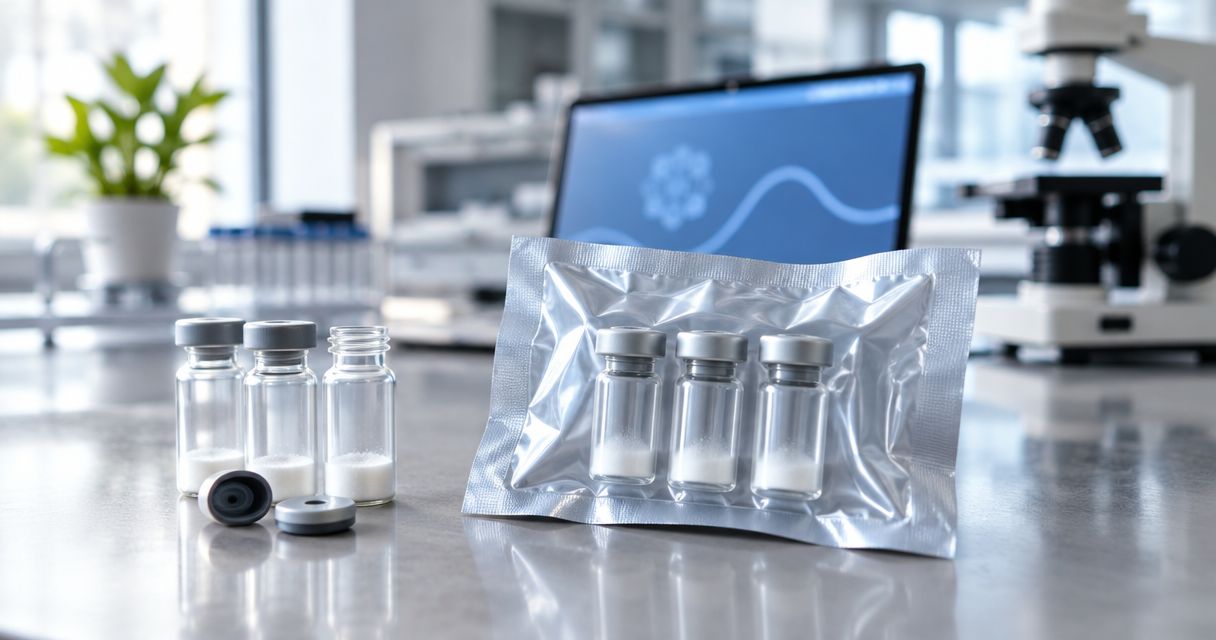
Vacuum sealing reduces the gas present when the container is sealed. An intact container closure then limits exchange with the surrounding environment. For moisture-sensitive dry peptides or peptides susceptible to oxidation, that protection can matter.
Vacuum sealing does not remove every source of water from a formulation, guarantee an oxygen-free environment, or establish sterility. The condition of the stopper, seal, and container still matters, as does the manufacturing and packaging process. A vacuum claim describes a packaging condition, not a complete stability assessment.
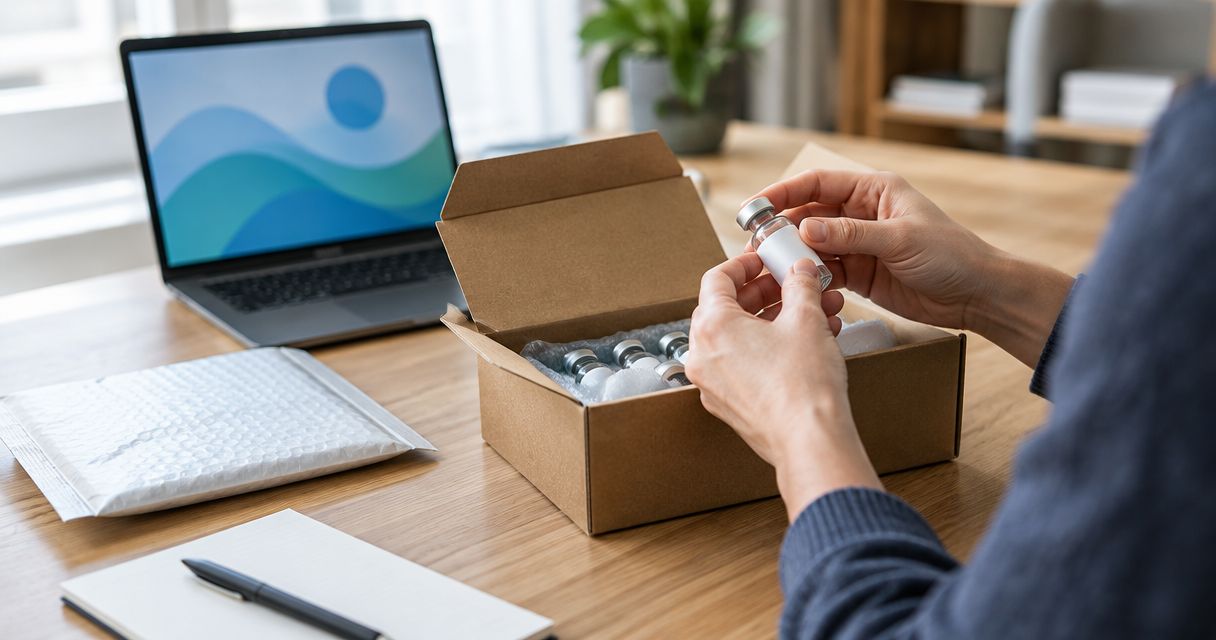
Also distinguish the vial closure from an outer vacuum-packed pouch. Opening an outer pouch does not necessarily open the vial itself. Identify which barrier protects the peptide before recording the material as opened.
Unopened dry vials: protection without a universal expiry
An unopened dry vial avoids the repeated environmental exposure associated with access. That is its main advantage, especially when the closure remains intact and the material stays within its specified storage conditions. Dry peptides can still undergo chemical changes, however; a sealed vial is not chemically inactive.
The relevant endpoint is the documented expiry or retest date, interpreted alongside the required storage conditions. If the documentation provides a retest date, follow the stated retesting procedure rather than treating that date as proof of indefinite suitability.
Check that the storage instructions apply to the actual peptide and formulation. Advice for a different sequence, salt form, or preparation is not equivalent evidence. An unopened label cannot resolve those differences.
Opened dry vials: handling becomes part of the evidence
Opening a dry vial exposes its contents to the surrounding environment. The practical concern is not simply that the cap moved; it is what entered the container, what conditions the material experienced, and whether the handling procedure controlled those exposures.
Cold containers introduce another concern. Opening a cold vial in humid air can allow condensation, so follow the supplier's instructions and your laboratory procedure for bringing a sealed container to the appropriate handling condition before access. Do not substitute a universal warming period for product-specific guidance.
Record access events and any departures from the handling procedure. A tightly replaced cap reduces further exposure, but it does not reverse chemical changes or remove moisture already introduced. Closing a vial again does not restore its unopened status.
Reconstituted vials: use solution-specific stability guidance
Adding solvent changes the question from dry-state preservation to solution stability. The solvent, pH, concentration, container, temperature, and peptide sequence can all affect the result. Some degradation pathways become more relevant in solution, while physical losses such as adsorption to surfaces can also affect experimental concentration.
Do not assume that a clear solution remains chemically intact. Visible particles, discoloration, or precipitation deserve investigation, but their absence does not verify identity, purity, or concentration. Appearance is a screening observation, not a substitute for an appropriate analytical method.
Repeated access also introduces handling concerns. A preservative-containing solvent does not, by itself, establish peptide stability or make a research preparation suitable for administration. Keep research materials within their intended laboratory use.
Why peptide preservation varies
The sealed-versus-opened distinction matters, but it sits inside a larger stability problem. These factors explain why a single storage rule cannot cover every research peptide:
- Peptide chemistry: Sequence and chemical modifications affect susceptibility to oxidation, hydrolysis, aggregation, and other changes.
- Physical state: Dry material and dissolved material have different environments and require separate stability guidance.
- Moisture exposure: Residual moisture, ambient humidity, and condensation affect the conditions inside a dry vial.
- Temperature history: Storage conditions and excursions matter; repeated handling can introduce additional temperature changes.
- Container integrity: The vial, stopper, closure, and any protective outer packaging determine which barriers remain intact.
- Solution conditions: Solvent composition, pH, concentration, and contact surfaces influence the behavior of reconstituted material.
For a 2026 research protocol, document the factors you control and identify which ones the supplier's stability information actually addresses. A general instruction such as keeping material cold does not answer every handling question.
How should you assess a vial before using it in research?
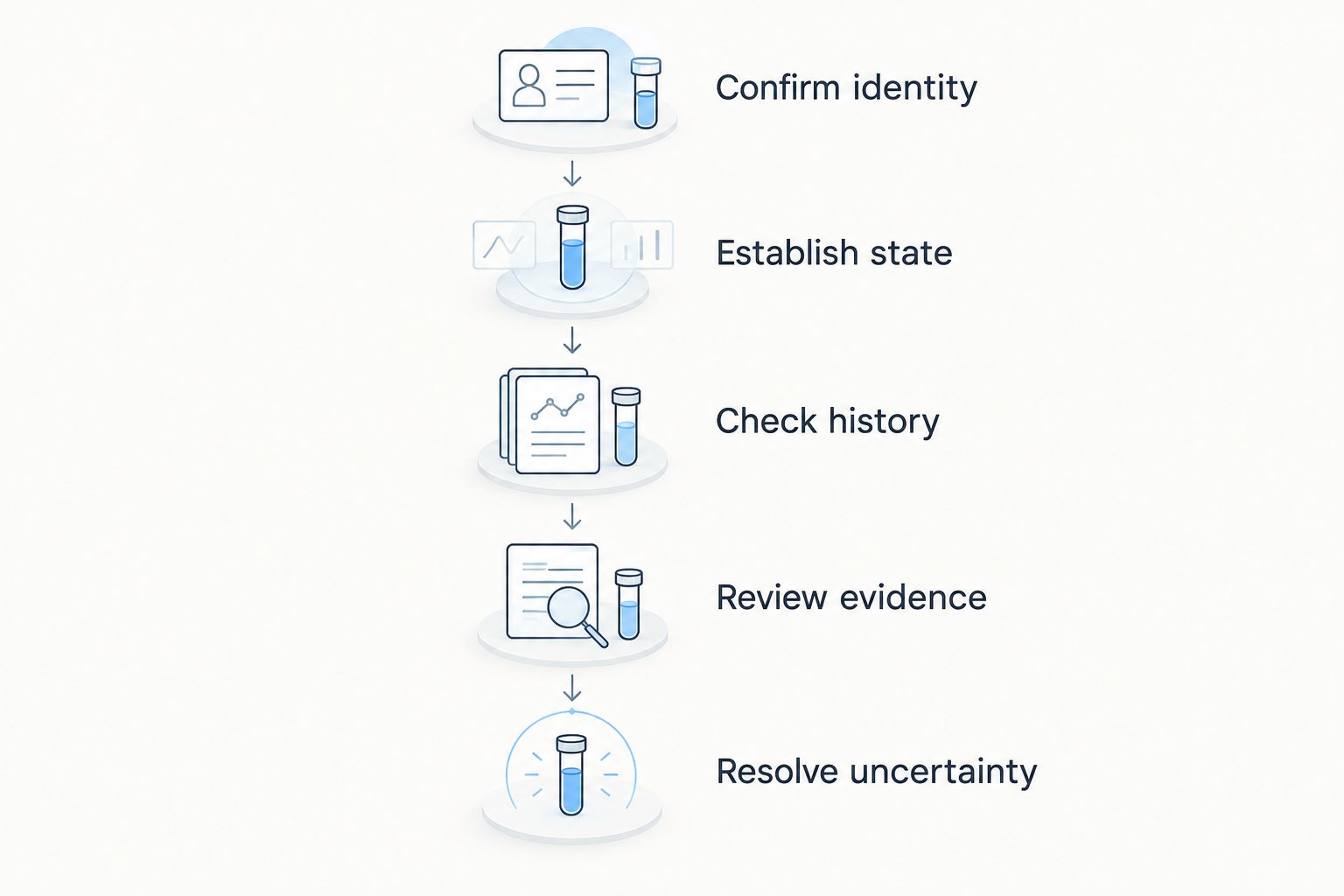
Use a decision sequence that separates documentation from observation. A clean-looking container cannot fill gaps in the material's identity or storage history.
- Confirm identity. Match the label, peptide identity, formulation, and lot information to the experiment and accompanying documentation.
- Establish state. Determine whether the material is unopened and dry, opened and dry, or already reconstituted. Record which packaging barrier was opened.
- Check history. Review storage conditions, access events, reconstitution details, and known excursions. Do not assume an undocumented interval was acceptable.
- Review evidence. Use applicable storage instructions, expiry or retest information, and relevant stability data. Distinguish a release purity result from evidence of later stability.
- Resolve uncertainty. Follow the laboratory's quality procedure when documentation conflicts, the closure is damaged, or the history is incomplete. Use appropriate testing or replacement rather than guessing.
This sequence prevents the packaging claim from becoming the entire decision. It also gives you a consistent way to compare samples without assigning unsupported lifetimes.
What should a 2026 storage log include?
Record the peptide identity, lot, physical state, storage location, and applicable instructions. Add opening and reconstitution dates when those events occur, together with the solvent and preparation details required by your protocol.
Document temperature excursions and unusual observations without translating them into an invented remaining shelf life. A storage log supports a decision; it does not generate stability data. If the instructions do not cover an event, resolve that gap through the laboratory's quality process.
Does vacuum sealing make peptides sterile?
No. Vacuum sealing is a packaging condition, not a sterilization method or proof of sterility. A research-grade designation also does not establish suitability for human or veterinary administration.
Treat contamination control and chemical stability as separate requirements. A sample can present concerns in either area, and a favorable result in one does not automatically answer the other.
Can you reseal an opened vial to restore its shelf life?
No. Resealing limits subsequent exposure but does not reverse prior degradation or establish the original packaging conditions. Even applying a new vacuum would require a validated procedure before you could treat the resulting package as equivalent to the original.
Keep the opening history attached to the sample. Do not relabel a previously opened vial as unopened because its cap is secure or its outer pouch has been replaced.
Is freezing always better than refrigeration?
No. The correct storage condition depends on the peptide, formulation, and available stability evidence. Do not infer that a colder setting automatically provides a longer usable life.
For solutions, freezing and thawing can affect some preparations, so follow applicable instructions on storage and aliquoting. Aliquoting can reduce repeated access to a shared container, but it also adds transfer steps and container surfaces; it needs a suitable laboratory procedure rather than an automatic recommendation.
FAQ
Can vacuum sealed peptides last longer than opened vials?
Yes, an intact vacuum-sealed dry vial can preserve a peptide longer than a comparable opened dry vial by limiting environmental exposure. The actual usable life still depends on peptide-specific stability evidence, storage conditions, and closure integrity.
How long do vacuum-sealed peptides last in 2026?
There is no universal shelf life for vacuum-sealed peptides in 2026. Use the specific material's documented expiry or retest date together with its required storage conditions and handling history.
Does opening the outer vacuum bag mean the peptide vial is opened?
Opening an outer vacuum bag does not necessarily open the peptide vial. Identify whether the vial's own closure remains intact and follow the instructions for the packaging system supplied.
Does adding solvent shorten a peptide's shelf life?
Adding solvent changes the peptide's stability conditions, so dry-vial shelf life cannot establish the solution's usable life. Use guidance that matches the peptide, solvent, concentration, container, and storage conditions.
Can I tell whether a peptide is still suitable by looking at it?
Appearance alone cannot establish peptide identity, purity, concentration, or stability. Visible changes warrant investigation, but a clear solution or unchanged powder still requires appropriate documentation and, when needed, analytical assessment.
Does Peptides777's stated purity establish storage life?
Peptides777's stated 99%+ purity positioning does not establish storage life after opening or reconstitution. Purity information and stability evidence answer different questions and should be evaluated separately.
Should I use a research peptide when its storage history is unknown?
Do not assume a research peptide with unknown storage history remains suitable for your experiment. Follow your laboratory's quality procedure to determine whether further evidence, testing, or replacement is required.
One last thing
A purity result is a measurement, not a countdown clock. It describes the tested sample under the reported method and conditions; it does not automatically predict the condition of a later-opened or reconstituted vial.
For your next 2026 protocol review, keep separate records for receipt, opening, and reconstitution. That distinction is more useful than a single generic expiry field because it identifies when the material's handling state changed—and which stability guidance you need next.