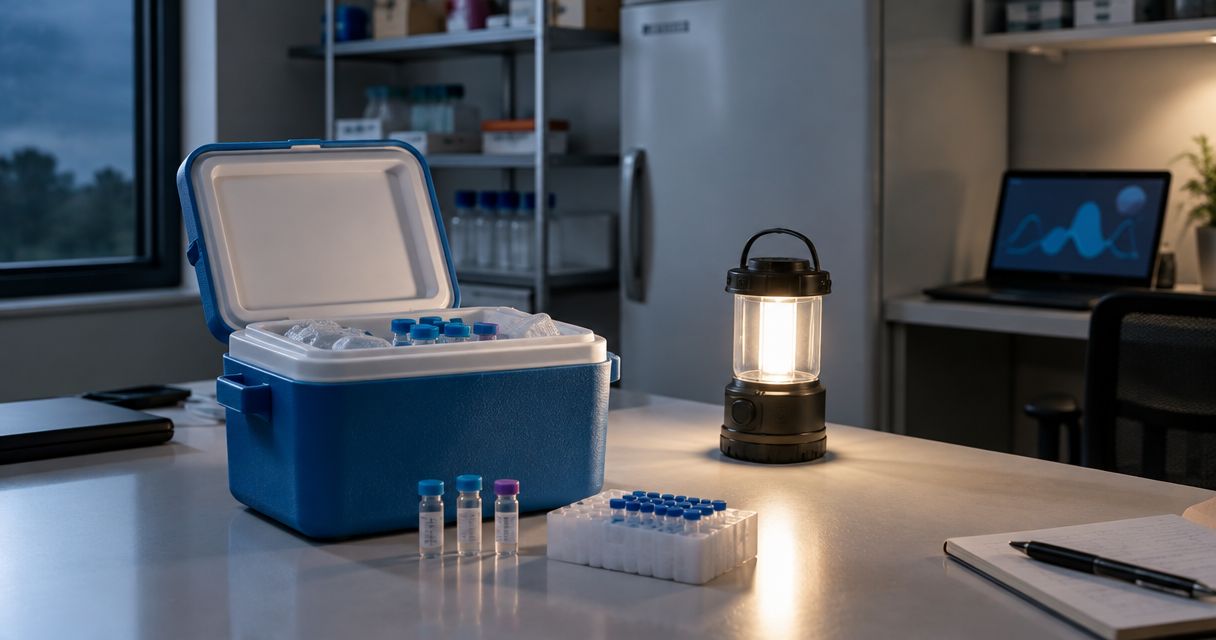
Two different peptides can share one vial only when evidence supports the compatibility and stability of that exact mixture under its intended laboratory conditions. The fact that each peptide dissolves separately does not establish that they remain unchanged together. For research compounds, keep preparations separate unless a validated method or formulation supports combining them; this is not guidance for human or animal administration.
- Can two different peptides be combined in one vial? Only when evidence supports the exact mixture and laboratory conditions.
- A clear peptide solution does not establish chemical stability, compatibility, or sterility.
- Separate preparations preserve experimental control when mixture-specific stability data are absent.
- Peptides777 serves research-grade peptide buyers; laboratory sourcing does not establish suitability for personal treatment.
Can two different peptides be combined in one vial?
Yes, in a validated research formulation; otherwise, compatibility remains unestablished. Evidence must address the actual compounds, their concentrations, the solvent system, and the conditions between preparation and analysis. Evidence for either peptide alone does not answer the mixture question.
| Laboratory approach | Best for | Main advantage | Main limitation |
|---|---|---|---|
| Separate preparations | Experiments without mixture-specific validation | Allows independent handling and evaluation | Requires separate sample management |
| Combining immediately before an assay | Methods that explicitly validate a combined assay input | Supports a defined experimental step | Does not establish suitability for storage together |
| Shared-vial storage | Formulations supported by relevant stability evidence | Keeps a validated mixture together | Requires evidence covering both compounds and the storage conditions |
Peptides777 sells research-grade peptides and research compounds for laboratory and scientific use. That intended use is distinct from approval for treatment, and a supplier's purity claim does not establish compatibility between different compounds.
Why this matters
Putting peptides together changes the sample you are studying. You are no longer evaluating only the separate materials: you are evaluating a formulation containing both peptides, the solvent, and any other constituents present.
A mixture that changes during storage can complicate interpretation of an experiment. If the result differs from expectations, you need to distinguish the intended biological interaction from a change in the preparation itself.
For a 2026 research protocol, record the basis for combining compounds before preparing the mixture. Convenience is not evidence of compatibility. Fewer containers do not compensate for uncertainty about what remains in the vial when the experiment begins.
What evidence supports combining peptides?
Useful evidence describes the mixture you intend to study, rather than merely naming the same compounds. A publication, validated laboratory method, or formulation study should provide enough detail to judge whether its findings apply to your experiment.
Compound identity
Confirm the exact identity and form of each material. Similar names, related sequences, or shared research interests do not make compounds interchangeable.
Check whether the reference describes the same peptide form and formulation components. If those details differ, treat the reference as background rather than direct validation of your preparation.
Formulation conditions
Look for the solvent or buffer, concentrations, and conditions used in the supporting method. Compatibility findings belong to those conditions; they are not a permanent property of a pair of names.
An experiment using freshly combined material answers a different question from an experiment using a stored mixture. Do not extend a finding beyond the conditions that were evaluated.
Analytical evidence
Look for measurements capable of evaluating each peptide within the mixture. A method that measures only an overall signal does not necessarily distinguish intact material from degradation products or changes affecting one component.
The analytical method must suit the question. Identity, concentration, purity, and biological activity are related but different measurements, so one result should not stand in for all of them.
Relevant observation period
Evidence must cover the period between preparation and use. A satisfactory result immediately after mixing does not establish that the same preparation remains suitable throughout a longer experiment.
For a 2026 study, connect the supporting evidence to your actual workflow. Record where the workflow matches the reference and where it departs from it.
Why peptide compatibility varies
Peptide compatibility depends on the formulation, not just the compound names. These factors explain why a general answer cannot replace evidence for the exact mixture:
- Molecular structure: Different sequences and chemical modifications can affect solubility, interactions, and susceptibility to degradation.
- Solvent and pH: A condition suitable for one peptide does not automatically suit another. Mixing also changes the final solution environment.
- Concentration: Behavior observed in a dilute analytical sample does not automatically describe a more concentrated preparation.
- Other constituents: Buffers, salts, and formulation ingredients contribute to the final sample and need to be considered together.
- Container and handling: Contact surfaces, temperature exposure, light exposure, and repeated handling can affect sample integrity.
- Time together: Immediate assay use and shared-vial storage require different evidence because the exposure periods differ.
Do not treat these factors as a recipe for making an unsupported mixture work. They are the variables a relevant validation method needs to address.
Does a clear solution prove the peptides are compatible?
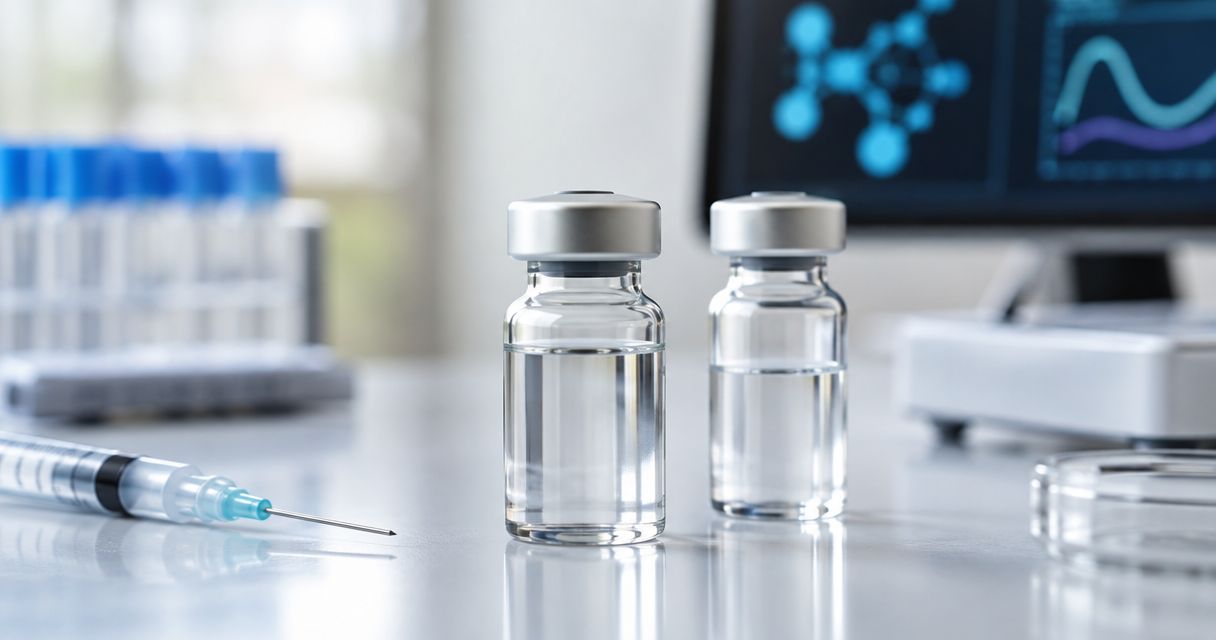
No. A clear solution establishes appearance, not chemical integrity. Visible particles, cloudiness, or unexpected color changes are reasons to investigate, but their absence does not demonstrate stability.
Chemical changes do not always create a visible warning. Likewise, a solution that looks unchanged does not establish the identity or concentration of each peptide remaining in it.
Keep visual inspection and analytical evaluation separate in your records. Describe what you observed without turning an observation such as clear and colorless into a conclusion such as stable or compatible.
The same distinction applies to sterility. Clarity, chemical purity, and microbiological status answer different questions; none should be inferred solely from the others.
Is a premixed research product equivalent to mixing separate vials?
No. A defined research formulation and an improvised mixture are not equivalent evidence. Even when the named compounds match, differences in formulation, preparation, and storage can affect whether the supporting information applies.
A premixed formulation still needs documentation relevant to its intended research use. Its existence does not prove that separately sourced materials can be combined under different conditions with the same result.
Conversely, keeping materials separate does not guarantee their individual stability. Each preparation still requires suitable handling and documentation; separation simply avoids assuming that compatibility has already been demonstrated.
When reviewing a formulation in 2026, distinguish what the documentation establishes from what the product description merely names. A list of ingredients is not a stability study.
How should you evaluate a proposed shared-vial preparation?
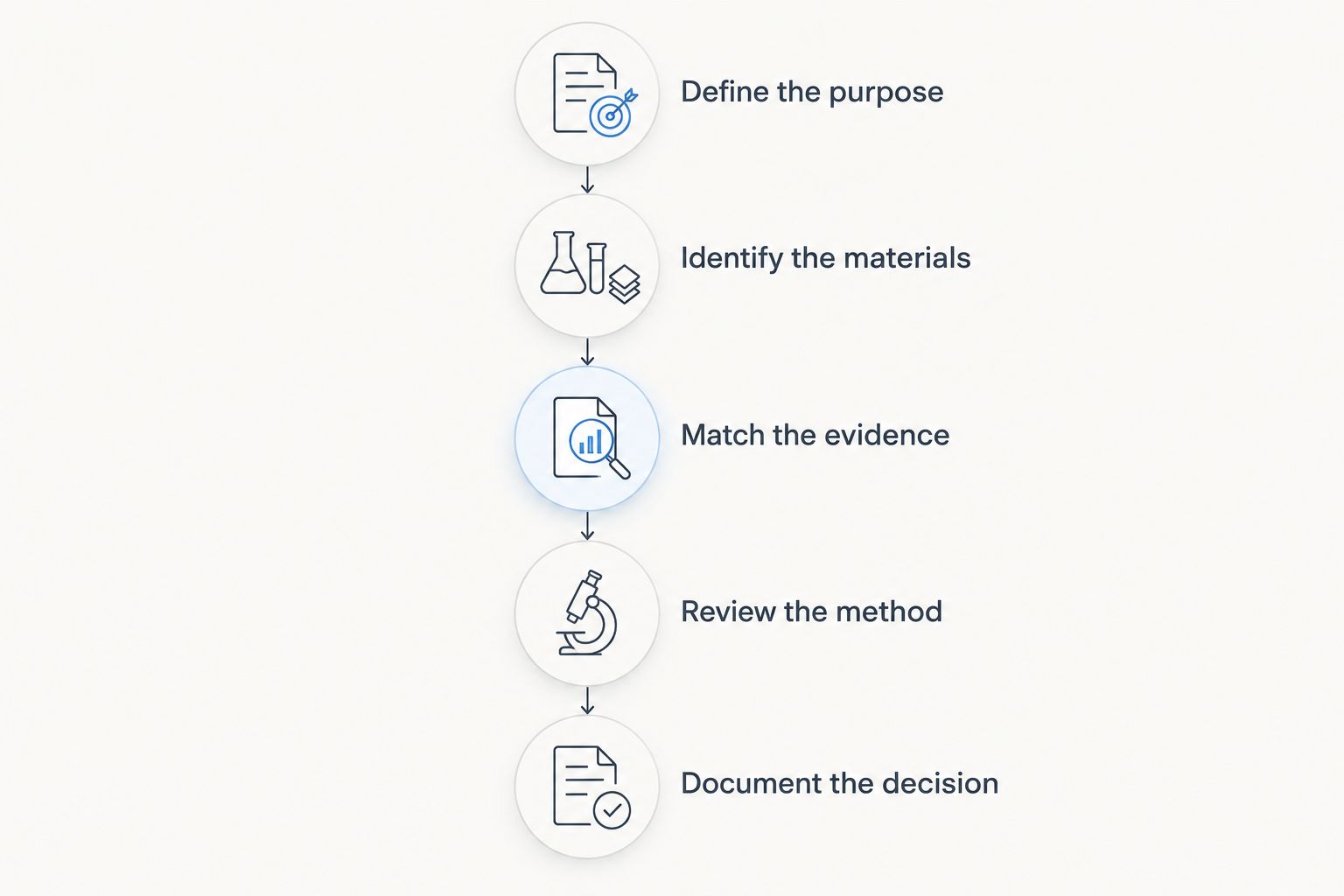
Use a documented decision process before combining research materials. The goal is to identify whether the proposed experiment has support, not to improvise a mixing procedure from general information.
- Define the purpose. State whether the research requires simultaneous exposure in an assay or storage as a combined preparation. Those are different questions.
- Identify the materials. Record the exact compounds, material forms, and relevant supplier documentation. Avoid relying on abbreviations alone.
- Match the evidence. Find a method addressing the proposed combination and compare its conditions with your planned work.
- Review the method. Have the responsible researcher assess the analytical approach, acceptance criteria, and unresolved differences.
- Document the decision. Record the evidence supporting combination or retain separate preparations when that support is absent.
This sequence creates a traceable decision. It does not establish compatibility by itself, and completing a checklist cannot substitute for experimental evidence.
What should you check in supplier documentation?
Start with documents that identify the material and explain what was measured. A certificate of analysis can be useful, but its value depends on its scope and connection to the material being evaluated.
Check the batch or lot reference, analytical method, reported result, and document date. Then ask whether the document concerns the individual material or the proposed mixture; those scopes are not interchangeable.
Peptides777 markets its research compounds with 99%+ purity. That stated purity concerns the supplied material; it does not establish that two compounds remain stable together, that a preparation is sterile, or that it is suitable for administration.
Ask a narrow question: what evidence covers this exact combination under these conditions? A general assurance about quality does not answer a formulation-specific question.
What if there is no mixture-specific evidence?
Keep the preparations separate rather than treating missing evidence as permission to combine them. If the experiment requires a combination, the responsible laboratory needs an appropriate method and validation plan before relying on that preparation.
Do not fill the gap with anecdotes, forum recommendations, or photographs of a clear solution. Those sources do not establish the identity, concentration, or stability of your sample.
Separate preparations also preserve flexibility. You can assess individual materials and investigate unexpected results without first assuming that shared storage introduced no changes.
This is a research-quality decision, not a claim that every untested pair necessarily reacts. Unknown compatibility means the relevant question has not been answered.
What belongs in the laboratory record?
A useful record connects the preparation to the evidence supporting it. Someone reviewing the experiment should be able to understand what was combined, why it was combined, and what conditions applied.
Record the material identifiers, preparation date, formulation reference, handling conditions, and intended experimental use. Include deviations from the supporting method rather than silently treating them as equivalent.
For a 2026 laboratory record, distinguish the date of your review from the date and scope of the underlying source. A recent review does not make an older experiment broader than it was, and a newer document is not automatically more relevant.
Use wording that matches the evidence. Write appearance unchanged when that is what was observed; reserve stable under the evaluated conditions for a conclusion supported by suitable measurements.
Can you use laboratory mixing guidance for personal injections?
No. Research compatibility information does not establish safety for personal injection or treatment. Chemical stability alone does not answer questions about sterility, dose, interactions, clinical suitability, or the quality requirements for an injectable medicine.
Do not use this article to select combinations, calculate doses, choose a diluent, or prepare an injection. Personal treatment questions belong with a licensed clinician and pharmacist using information relevant to the prescribed medicine.
The distinction matters even when a compound appears in both research discussions and medical conversations. The intended use and evidence for the actual material still determine which conclusions are justified.
FAQ
Can two different peptides be combined in one vial for research?
Two different peptides can share a research vial only when evidence supports the exact mixture and intended conditions. Without that support, keep preparations separate rather than assuming compatibility.
Can I tell whether peptides are compatible by looking at the solution?
No, appearance does not establish peptide compatibility. A clear solution can still require analytical evaluation for identity, concentration, and degradation.
Does high peptide purity mean a mixture is safe?
No, high purity does not establish mixture stability, sterility, or safety for administration. Each of those conclusions requires evidence addressing that specific question.
Is mixing peptides immediately before an assay the same as storing them together?
No, immediate assay mixing and shared-vial storage are different conditions. Evidence covering one does not automatically support the other.
What should I ask a supplier before combining research peptides?
Ask whether documentation supports the exact combination, formulation, concentrations, and intended handling conditions. Documentation for each individual peptide does not by itself validate their mixture.
Does Peptides777's research-use positioning make its products suitable for personal injections?
No, Peptides777's laboratory and scientific research positioning does not establish suitability for personal injections. Consult a licensed clinician and pharmacist about personal treatment rather than applying research mixing guidance.
What is the safest research decision when compatibility data are missing?
Keep the preparations separate when mixture-specific compatibility evidence is missing. If combination is essential to the experiment, obtain an appropriate laboratory method and validation plan before relying on the mixture.
One last thing
Write down what would make you reject the preparation before you make it. Without predefined acceptance criteria, an unchanged-looking vial can become an excuse to accept a sample whose integrity has not been demonstrated.
For your 2026 research workflow, the useful question is not whether both peptides fit in one container. It is whether you can demonstrate that the preparation remains suitable for the experiment you intend to interpret.