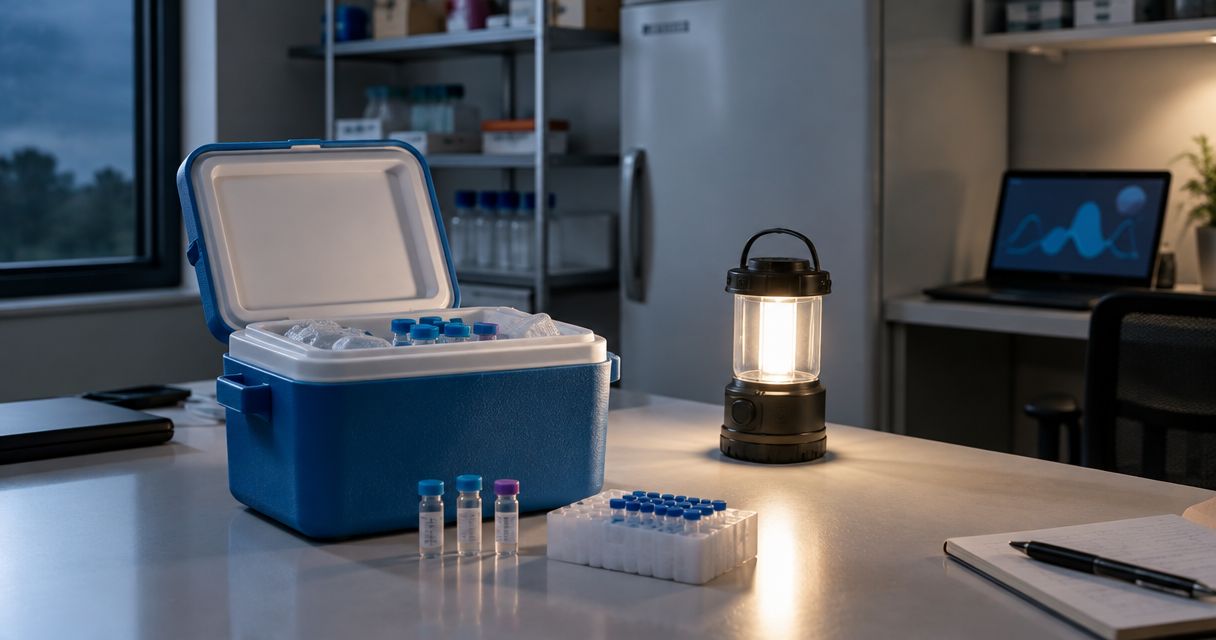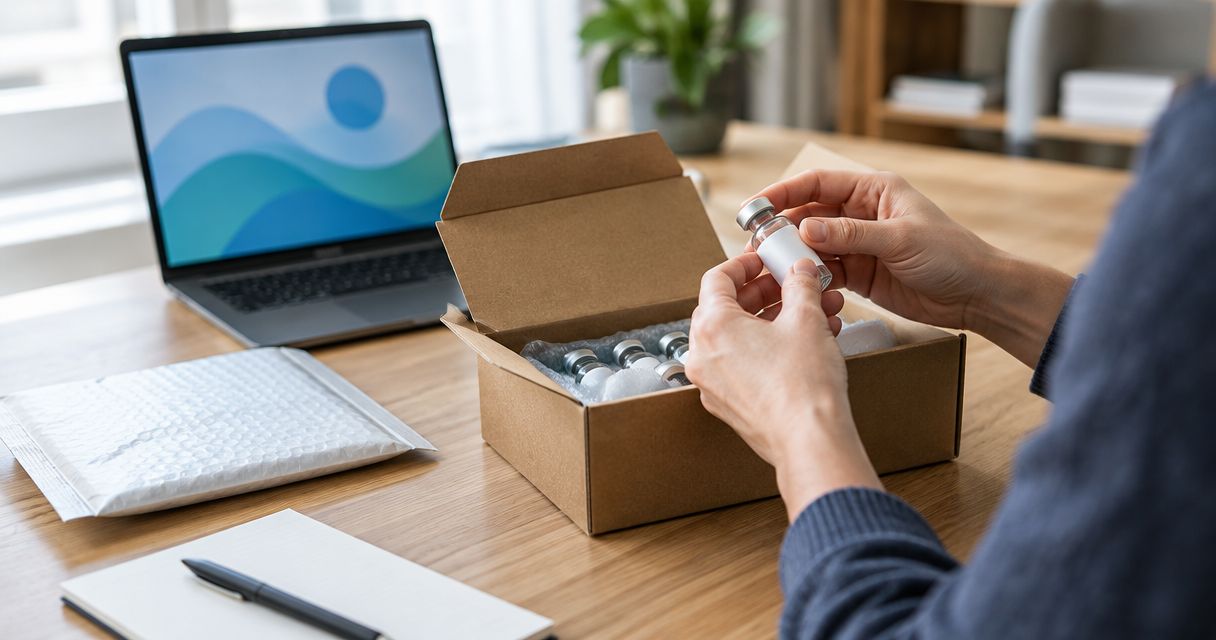
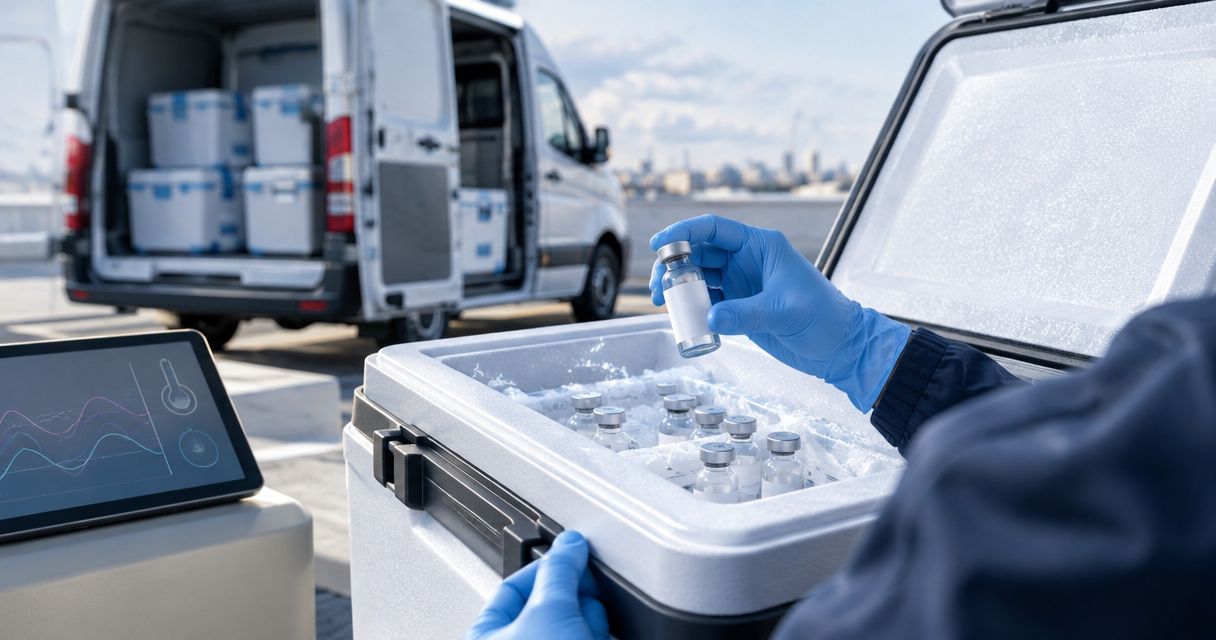
Yes—temperature swings in transit can reduce peptide potency, but a temperature change alone does not prove damage. The outcome depends on the peptide, its formulation, the temperature reached, and exposure duration; appearance and a purity claim cannot establish retained biological activity.
- Can temperature swings in transit reduce peptide potency? Yes, but shipment conditions alone do not establish activity loss.
- Peptide stability depends on formulation, exposure duration, moisture, and the specific molecule—not temperature alone.
- Peptides777 sells research-grade peptides for laboratory use; shipment assessment requires evidence specific to the material.
- Quarantine questionable shipments until temperature records and applicable stability evidence support a laboratory-use decision.
Why this matters
A compromised research material can undermine an experiment before the assay begins. If peptide activity changes during shipping, an unexpected result can reflect the reagent rather than the biological system you intended to study.
Peptides777 serves laboratory researchers purchasing research-grade peptides. Its research-compound store is described as selling materials for laboratory and scientific research. That intended use does not establish how any individual peptide tolerates a shipping excursion.
For a 2026 shipment assessment, separate the delivery experience from the scientific question. A warm package, delayed delivery, or melted coolant is a reason to investigate—not a measurement of peptide potency.
Can temperature swings in transit reduce peptide potency?
Temperature excursions can affect peptide stability through chemical degradation, physical instability, or changes in the formulation. Which process matters depends on the molecule and its surrounding conditions. There is no single transit-temperature threshold that establishes damage across all research peptides.
Heat can accelerate chemical reactions, including oxidation or hydrolysis when the necessary conditions are present. Freezing and thawing can also introduce stresses in some solutions, including concentration changes during freezing and interactions at interfaces. Neither mechanism means every excursion causes meaningful activity loss.
The material's physical state changes the assessment:
| Material condition | Potential advantage | Limitation to investigate | Best suited to |
|---|---|---|---|
| Lyophilized powder | Removing water can improve stability for suitable formulations | Residual moisture, closure integrity, and heat exposure still matter | Protocols supported by dry-form stability evidence |
| Peptide in solution | The material is already dissolved for the intended laboratory workflow | Solvent, pH, oxidation, and temperature can affect stability | Protocols with validated solution-handling conditions |
| Frozen peptide solution | Freezing can slow some degradation processes | Freeze–thaw stress and freezing-related concentration changes remain possible | Protocols with validated frozen storage and thawing procedures |
These are formulation categories, not a ranking of product quality. The strongest evidence is stability data that matches the peptide, formulation, container, and exposure under review. A result obtained for a different peptide or solvent does not settle your shipment's condition.
Lyophilized peptides: dry does not mean heat-proof
Lyophilization removes water through a controlled freeze-drying process. For a suitable formulation, that can reduce degradation pathways associated with water and improve storage stability. It does not make a peptide immune to heat, oxygen, or moisture entering through a compromised closure.
Inspect the container and review the handling documentation before opening it. Once a cold vial is opened in humid air, moisture exposure becomes an additional variable; follow the material-specific procedure rather than improvising a universal warming rule.
Peptides in solution: assess the whole formulation
A peptide solution is more than the peptide sequence. Solvent composition, pH, buffer, concentration, and container contact can influence its behavior during shipping. A temperature recommendation for a dry powder does not establish an acceptable condition for the same molecule after dissolution.
The practical advantage of a solution is reduced preparation at the point of use. Its limitation is that you must assess the actual liquid formulation, including any history of freezing, thawing, or precipitation.
Frozen solutions: colder is not automatically safer
Freezing can support stability when the formulation and procedure have been validated for it. It can also change the local environment around a peptide as ice forms and solutes concentrate in the remaining liquid.
Do not treat repeated freezing as a corrective action for an uncertain shipment. Refreezing does not reverse chemical degradation, and an additional freeze–thaw cycle can create another handling variable.
Why temperature-related potency loss varies
For a 2026 shipping assessment, use these factors to decide what evidence to request. They explain why the same delivery conditions do not imply the same outcome for every peptide.
- Molecular structure: Sequence and chemical modifications influence susceptibility to particular degradation pathways. Stability evidence must match the material you received.
- Physical state: Dry powder, dissolved material, and frozen solution experience different stresses. A label such as research-grade does not resolve those differences.
- Exposure profile: Peak temperature, duration, and repeated cycling describe different aspects of exposure. A reading taken at delivery cannot reconstruct the entire journey.
- Formulation conditions: Solvent, pH, buffers, and other formulation components can affect stability. Their effects must be evaluated for the specific peptide.
- Container integrity: Closures and packaging help control exposure to moisture and the surrounding environment. A damaged container raises questions that temperature records alone cannot answer.
- Handling history: Shipping is only part of the material's history. Preparation, storage before dispatch, and handling after receipt also belong in the investigation.
Avoid reducing those factors to a generic statement that peptides are either fragile or stable. The useful question is narrower: does evidence support this material remaining suitable for this experiment after this exposure?
How should you assess a questionable peptide shipment?
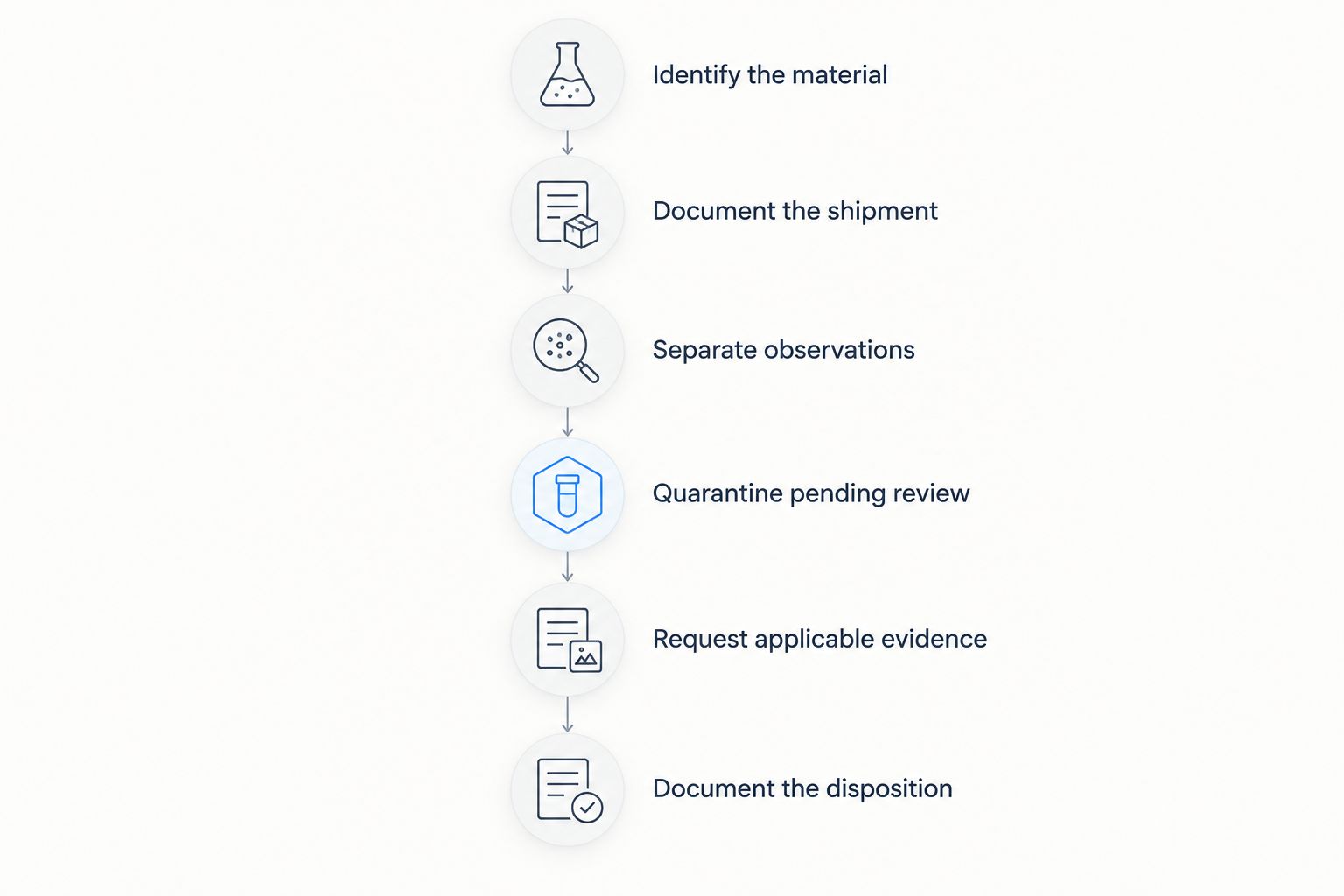
Use a receiving procedure that preserves evidence before changing the material's condition. In a 2026 receiving log, record observations as observations—not conclusions about activity.
- Identify the material. Match the vial, shipment paperwork, batch identifier, formulation, and intended storage instructions. Resolve discrepancies before adding the material to active laboratory stock.
- Document the shipment. Record receipt time, visible package damage, container condition, and any temperature-monitor information. Photograph relevant damage without opening sealed primary containers unnecessarily.
- Separate observations from measurements. Write that coolant was melted if that is what you observed. Do not convert that observation into an unsupported claim about the peptide's maximum temperature or time outside specification.
- Quarantine pending review. Keep questionable material out of experiments while following the applicable documented handling procedure. Do not invent a storage condition or repeatedly move it between environments.
- Request applicable evidence. Ask for handling instructions and stability information relevant to the formulation and reported exposure. Clarify whether any test results describe release testing or testing performed after the shipping event.
- Document the disposition. Record the evidence, responsible reviewer, and decision before release to an experiment. If the evidence does not establish suitability, keep that uncertainty visible rather than silently accepting the material.
This process separates three questions: what happened, what the evidence establishes, and what your laboratory authorizes. Keeping those questions separate prevents a delivery observation from becoming an unsupported quality conclusion.
For a shipment-specific inquiry, use the contact page and include the batch identifier, formulation, delivery observations, and available temperature record. Ask a defined question about the documented exposure rather than whether the package was simply too warm.
What evidence establishes retained peptide potency?
Purity, identity, quantity, and biological activity answer different questions. A useful shipment review identifies which property each test measures instead of treating every analytical result as proof of potency.
Chromatographic testing can reveal impurities or changes in an analytical profile when the method resolves them. A reported purity percentage does not, by itself, establish the amount of active material or its biological response. Interpreting the result requires the method, its purpose, and the sample's history.
Identity testing addresses whether a material matches the expected chemical identity. A suitable quantitative assay addresses content. A relevant, validated activity assay addresses biological function under its defined conditions; it does not automatically establish performance in every experimental system.
Before relying on a certificate of analysis, establish what sample was tested and when. A certificate describing release testing before shipment is not a direct measurement of the vial after a temperature excursion.
For your 2026 quality records, connect each conclusion to supporting evidence:
- A temperature logger describes conditions at its sensor, not peptide activity.
- An intact closure supports container inspection, not a potency conclusion.
- A stability study supports only the conditions and materials it adequately represents.
- An analytical result supports the property the method actually measures.
Do not substitute a reassuring document for a relevant measurement. Evidence is useful when its scope matches the decision you need to make.
Does a warm package mean the peptide is ruined?
A warm package does not establish that the peptide is ruined. Packaging temperature at receipt is a snapshot, and the outside of a parcel is not necessarily at the same temperature as the vial inside.
Use the observation to trigger review, especially when the documented handling conditions appear inconsistent with delivery. Avoid both extremes: automatically discarding the material and automatically accepting it because the vial looks normal.
Can you judge peptide potency by appearance?
You cannot establish peptide potency by appearance alone. Discoloration, unexpected particles, a damaged closure, or a change in solution clarity can justify investigation, but an unchanged appearance does not establish retained activity.
Likewise, a visible change does not identify its cause. Document the observation and investigate it against the expected characteristics of the specific formulation.
Can refrigeration restore potency after shipping damage?
Refrigeration does not reverse chemical degradation that has already occurred. Returning a material to its documented storage condition can limit further exposure, but it does not establish that the original activity remains intact.
Do not compensate for uncertain potency by adding more material to an experiment. That changes the protocol without resolving identity, degradation products, or the amount of biologically active peptide present.
FAQ
Can temperature swings in transit reduce peptide potency even if the vial stays sealed?
Yes, temperature swings can affect a sealed peptide vial because sealing does not prevent temperature-dependent degradation. The actual risk depends on the peptide, formulation, exposure, and applicable stability evidence.
Are lyophilized peptides always safe to ship without cooling?
No, lyophilized peptides do not have a universal shipping-temperature allowance. Use handling instructions and stability evidence specific to the dry formulation and container.
Does a 99% purity claim prove a peptide survived shipping?
No, a 99% purity claim does not establish retained biological activity after shipping. The analytical method, sampling time, and relationship to the shipped material determine what the result supports.
Should I freeze a peptide immediately after a warm delivery?
Do not freeze a peptide as an improvised response to a warm delivery. Follow its documented handling instructions and quarantine questionable material while the exposure is reviewed.
What should I send when asking about a delayed peptide shipment?
Send the batch identifier, formulation, delivery observations, and any available temperature-monitor record. Ask for evidence applicable to that material and exposure rather than a general reassurance.
Does Peptides777's research-use designation establish temperature stability?
No, Peptides777's laboratory-research positioning does not establish a peptide's temperature stability. Intended use and stability are separate questions; assess the specific material and its supporting documentation.
Can I use extra peptide to compensate for suspected potency loss?
No, adding extra peptide does not resolve suspected potency loss and changes the experimental protocol. Establish suitability through the laboratory's review process before using questionable material.
One last thing
The most useful receiving record starts before a shipment goes wrong. Decide in advance who reviews excursions, what evidence they need, and how questionable material stays separate from approved laboratory stock. A consistent process makes an unusual delivery easier to investigate without improvising scientific conclusions.
For your next 2026 shipment, add a specific question to the receiving checklist: does the available stability evidence match this formulation and the exposure being assessed? If the answer is unclear, request clarification before the material enters an experiment. A purity claim and an intact vial cannot answer that question for you.