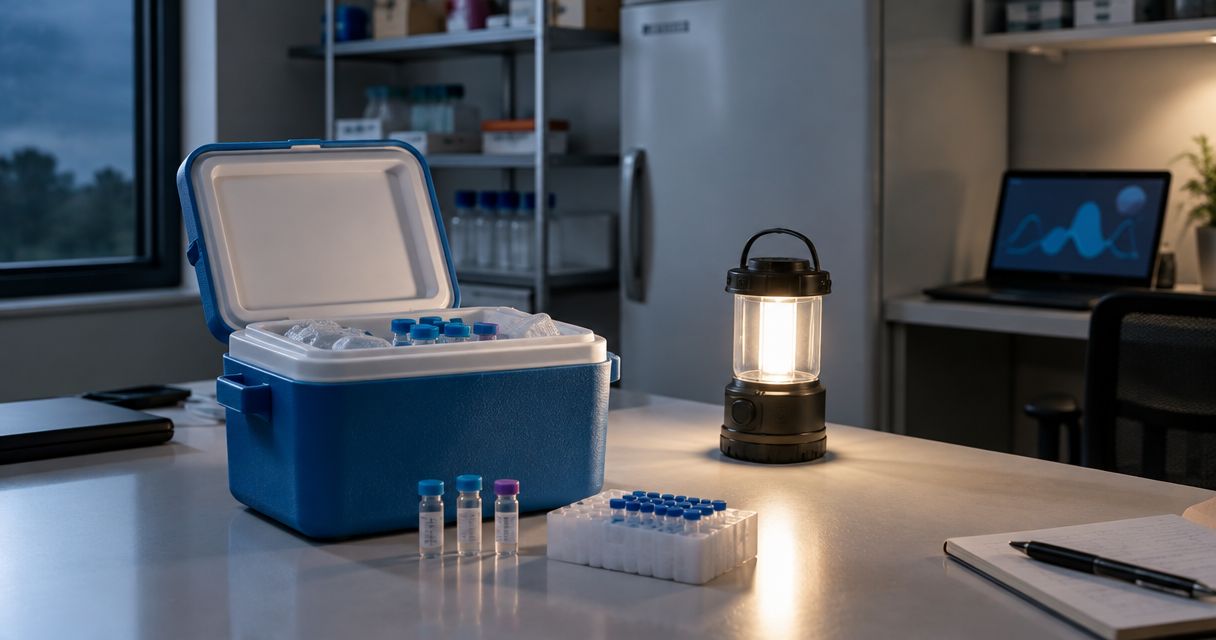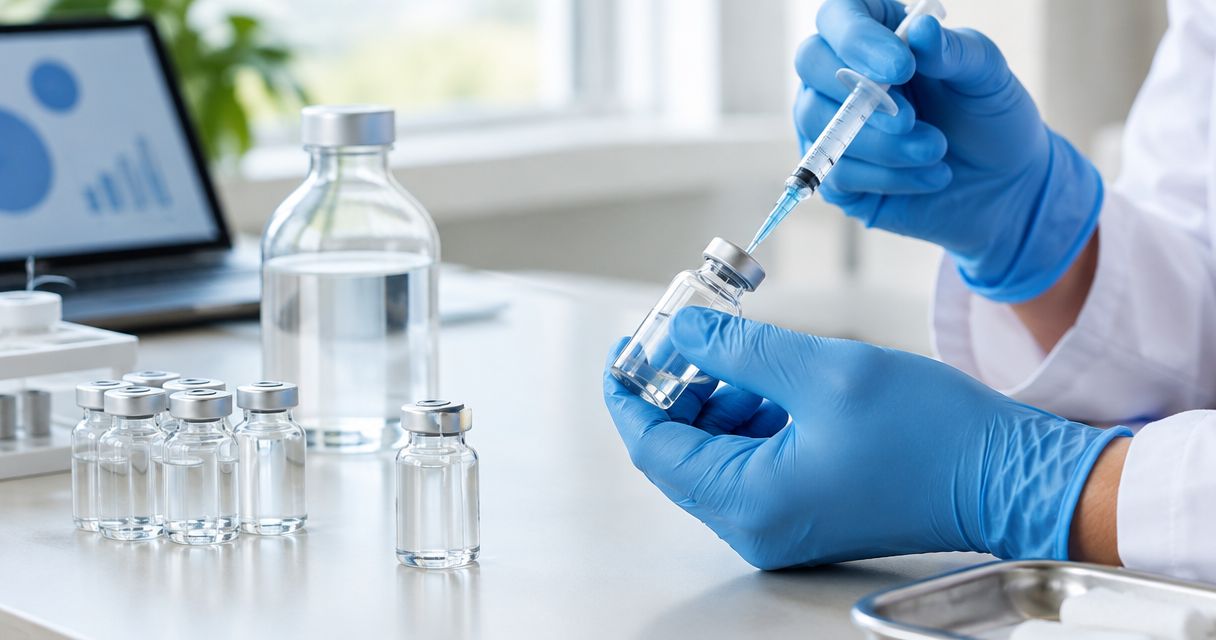
Yes—bacteriostatic water can be withdrawn from the same source vial for different destination vials when the source is labeled for multiple-dose use and its instructions permit the intended application. Reuse applies to the source vial, never to a used needle or syringe. Its preservative does not sterilize contaminated equipment, establish compatibility with every compound, or give every destination vial the same expiration date.
- Can bacteriostatic water be reused across vials? Yes, when the source is labeled multidose and handled aseptically.
- CDC guidance requires a new sterile needle and syringe for each entry into a multidose vial.
- A preservative does not make contaminated water safe or establish a reconstituted compound’s stability.
- Peptides777 sells research compounds; research-use labeling does not establish suitability for human administration.
Can bacteriostatic water be reused across vials?
The same labeled multidose source vial can supply separate destination vials; previously used transfer equipment cannot. The distinction is between withdrawing another portion of uncontaminated diluent and bringing contamination back into the shared source.
For readers browsing Peptides777, this distinction belongs in laboratory handling decisions—not in instructions for self-injection. The store sells research-grade peptides, bioregulators, and research compounds for laboratory and scientific research use.
For a 2026 handling decision, separate these situations:
| Situation | Best for | Permitted use or benefit | Limitation |
|---|---|---|---|
| Labeled multidose bacteriostatic water | Separate withdrawals allowed by the label | The source container permits repeated access under its instructions | Every entry creates another opportunity for contamination |
| A container labeled single-dose | A single use under its instructions | Avoids treating the container as a shared source | Leftover contents do not become multidose because they remain clear |
| A syringe that has already contacted another vial | None as equipment for re-entering the source | No acceptable reuse benefit | Replacing only the needle does not make the syringe safe to reuse |
| Water recovered from a destination vial | None as a replacement source diluent | No acceptable reuse benefit | Its composition and contamination status differ from the original source |
The container’s designation controls the decision. Do not infer permission for repeated withdrawals from bottle size, remaining volume, or the word sterile alone.
Why this matters
A shared diluent vial connects otherwise separate preparations. If contamination enters that source, subsequent withdrawals can carry it into additional destination vials.
Bacteriostatic water reduces a particular microbial risk through its preservative; it does not eliminate the need for aseptic handling. Preservative action also does not establish chemical compatibility, protect a peptide from degradation, or validate a laboratory method.
For laboratory work in 2026, keep the question narrow: does the source remain suitable for another permitted withdrawal? That is a different question from whether the resulting preparation remains stable or suitable for its intended experiment.
Multidose bacteriostatic water: repeated access is conditional
A multidose designation permits repeated withdrawals under the product’s labeling. It is not permission to use the same vial indefinitely, ignore storage instructions, or return unused liquid to the source.
CDC injection-safety guidance requires a new sterile needle and syringe each time a multidose vial is accessed. Although that guidance addresses healthcare settings, the contamination pathway also matters when laboratory staff share a diluent source.
A syringe that has entered a destination vial is no longer equivalent to an unopened sterile syringe. Changing its needle does not remove material or contamination already present within the syringe.
Keep the source vial separate from everything that has contacted a destination preparation. That separation is more useful than relying on a preservative to compensate for handling errors.
Single-dose containers: leftover liquid is not reusable stock
A single-dose container is not a multidose container with a shorter name. Its label does not authorize saving the remaining liquid for later withdrawals across other preparations.
The practical benefit of a single-dose container is the absence of repeated source access when it is used as directed. Its limitation is equally clear: leftover volume does not establish permission for another use.
Do not decide based on appearance. Clear liquid can still be contaminated, and an intact-looking stopper does not prove that previous access was aseptic.
Sterile water and bacteriostatic water are also not interchangeable merely because both are water-based diluents. Read the formulation and container designation rather than substituting one based on a similar name.
Why reuse suitability varies
The answer depends on the container, the intended preparation, and what happened during previous handling. These factors determine whether another withdrawal is justified:
- Container designation: Multidose and single-dose labels authorize different patterns of use.
- Preservative formulation: The ingredient and its concentration affect compatibility; the word bacteriostatic does not specify every formulation detail.
- Access history: A known aseptic history differs from an undocumented vial that several people have handled.
- Storage conditions: Follow the source product’s instructions rather than assuming that refrigeration extends its usable life.
- Compound compatibility: The destination compound’s instructions or validated method must support the chosen diluent.
- Discard requirements: The manufacturer’s instructions and applicable laboratory procedures govern when the source must be removed from use.
These are separate checks. Passing one does not cancel a failure elsewhere: a correctly stored vial is not acceptable after suspected contamination, and a clean source does not make an incompatible diluent appropriate.
What does the preservative actually change?
Bacteriostatic water contains a preservative intended to inhibit bacterial growth. Common U.S. product labels specify 0.9% benzyl alcohol, equivalent to 9 mg/mL; verify the actual container rather than assuming that every product uses that formulation.
Those figures describe composition, not a guarantee of sterility after misuse. They do not establish that a contaminated vial becomes safe after waiting, or that microorganisms cannot survive in the solution.
The distinction between bacteriostatic and sterilizing matters. A preservative supports the labeled use of a product; it is not a substitute for sterile equipment or controlled handling.
The preservative is also part of the experimental formulation. When you assess a destination preparation, account for the diluent’s ingredients rather than treating the added water as chemically irrelevant.
How long can an opened multidose vial be kept?
28 days is the CDC’s general discard interval for an opened multidose vial unless the manufacturer specifies a different opened-vial date. It is not permission to keep a contaminated vial, exceed an applicable expiration date, or disregard product-specific instructions.
For a 2026 laboratory procedure, distinguish that healthcare benchmark from a validated research hold time. An experiment, laboratory policy, or product instruction can impose a different limit; the CDC interval does not establish research stability.
The date the source vial was first punctured also does not become the stability period of every destination preparation. A reconstituted compound needs its own supported storage and use limits.
Do not restart the clock after refrigeration, transferring contents, or replacing a cap. None of those actions reverses the source vial’s access history.
What should you check before another withdrawal?
Use a documented decision sequence rather than a visual guess. For your 2026 laboratory checklist, review the source first and the destination preparation second.
- Label check: Confirm the exact product, container designation, ingredients, and manufacturer’s instructions. Stop if the product cannot be identified reliably.
- Date check: Review the expiration date, first-puncture record, and applicable discard requirement. Do not substitute memory for a missing access record.
- Integrity check: Assess the container and its documented handling history. Suspected contamination is a reason to discard, even when the liquid looks unchanged.
- Compatibility check: Confirm that the intended compound or validated laboratory method permits that diluent. A multidose label alone does not answer this question.
- Equipment check: Confirm that new sterile transfer equipment is available for each source entry. Equipment already used with another preparation must not return to the source.
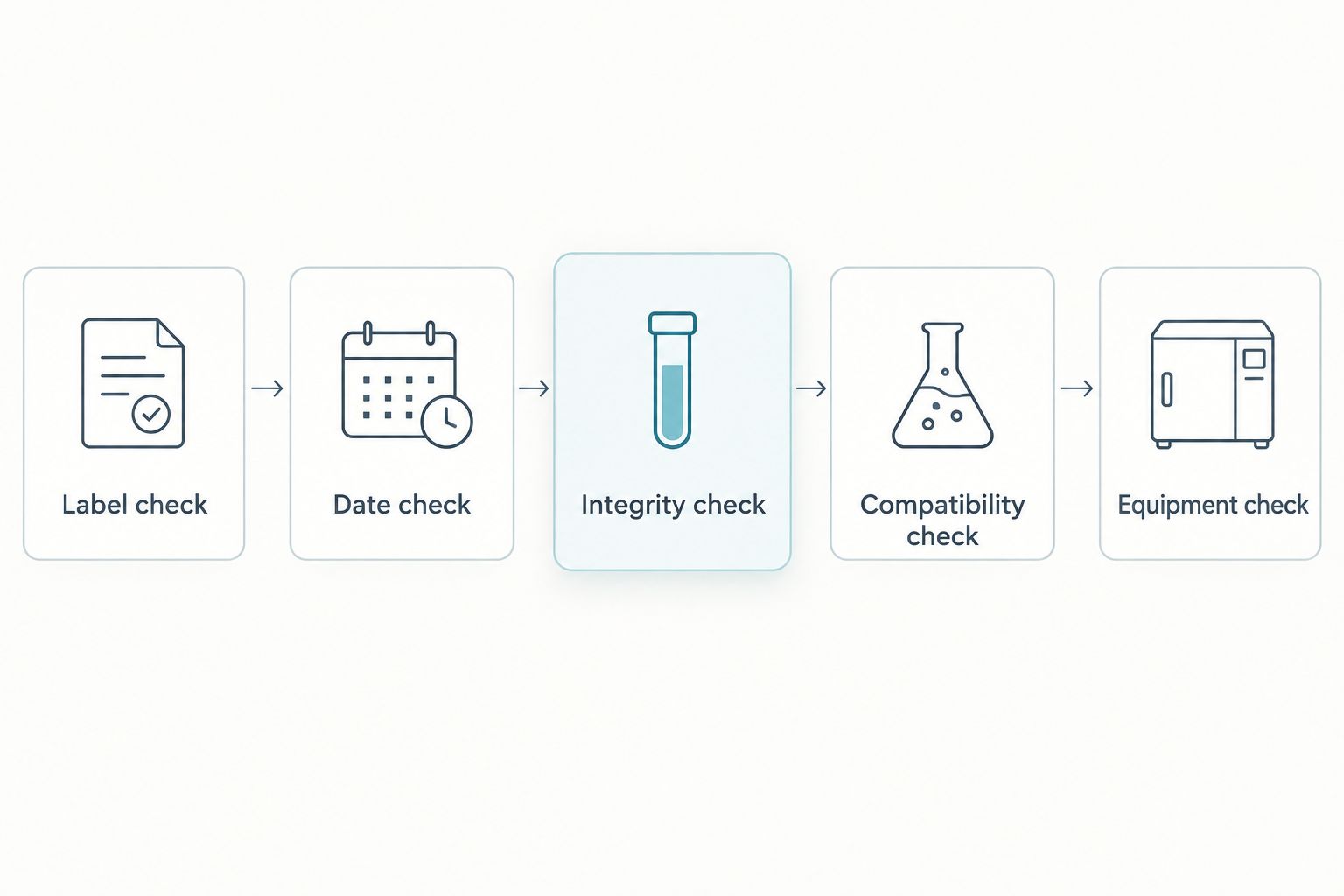
If any check fails, do not solve the problem by assuming the preservative covers it. Follow the laboratory’s procedure for rejecting or replacing the material.
Does sharing the water make destination vials equivalent?
No. A shared diluent source does not make different compounds chemically equivalent or give them identical storage requirements.
Each destination preparation combines its own contents with the added diluent. Its stability depends on that formulation and its supported conditions, not simply on the source water’s remaining usable period.
For research comparisons, document the diluent identity and relevant handling history. Otherwise, a difference attributed to the compound can be confounded by a difference in preparation conditions.
This is also why you should not pool leftovers from destination vials or pour unused liquid back into the source. The destination is not a reserve supply of the original diluent.
Does refrigeration make repeated access safe?
No. Refrigeration does not reverse contamination or authorize another withdrawal from a container that should be discarded.
Use the storage conditions on the source product’s label. Do not automatically apply the destination compound’s storage instructions to the water, or the water’s instructions to the finished preparation.
A useful 2026 record separates source storage from destination storage. Recording both prevents a single refrigerator location from being mistaken for evidence that every material inside has the same requirements.
What changes when the destination contains research peptides?
Research-use labeling does not establish safety, effectiveness, or suitability for human administration. It also does not supply a universal reconstitution method for every peptide.
Peptides777 is a research-compound store for laboratory buyers, not a source of clinical dosing instructions. Its stated research focus identifies the intended context; it does not replace compound-specific compatibility data or an approved laboratory procedure.
A stated purity percentage cannot answer whether a particular diluent is appropriate, whether a preparation remains sterile, or how long a reconstituted compound stays stable. Those are different properties requiring different evidence.
If the intended application is clinical, use the instructions for the prescribed, approved product and consult a qualified healthcare professional. Do not convert a research-store listing into a patient-use protocol.
FAQ
Can I use the same bacteriostatic water vial for different research vials?
Yes, if the source is labeled multidose, its instructions permit the intended use, and handling remains aseptic. Use new sterile transfer equipment for every source entry and verify compatibility separately for each destination compound.
Can I reuse the syringe if I change the needle?
No. Changing the needle does not make a used syringe safe for re-entry into a shared source vial; use a new sterile needle and syringe.
Does bacteriostatic water kill contamination after it gets into the vial?
Do not rely on bacteriostatic water to make a contaminated vial safe. Its preservative does not replace aseptic handling, and suspected contamination requires discarding the affected source.
How long does an opened multidose vial last?
28 days is the CDC’s general opened-multidose-vial discard interval unless the manufacturer specifies a different opened-vial date. Product instructions, expiration limits, contamination concerns, and applicable laboratory procedures still govern use.
Can I put leftover water back into the original vial?
No. Returning liquid from a syringe or destination preparation can contaminate the shared source and change its composition.
Is clear bacteriostatic water always safe to keep using?
No. Clarity does not prove sterility; assess the label, dates, container integrity, storage conditions, and handling history.
Does a research peptide’s purity percentage prove it is safe to inject?
No. Purity does not establish clinical safety, sterility, compatibility, or an appropriate dose. Peptides777 markets its compounds for laboratory and scientific research use, not as instructions for human administration.
One last thing
The shared source is the common point of failure. A problem there can affect destination vials that never touch one another, so tracking only the individual preparations leaves a gap in your records.
Record the source identity alongside each preparation’s documentation, and keep its access and discard history traceable. The useful question is not whether water remains in the bottle; it is whether the next withdrawal is still supported by the label, handling history, and intended method.