
Best overall: lot-documented, single-agent sermorelin. Best for functional assays: assay-qualified sermorelin. Best for comparative studies: separately characterized comparator materials. For sermorelin peptides for research in 2026, choose the material that meets your protocol’s identity, purity, and assay requirements—not the vial with the strongest purity headline.
- Choose sermorelin peptides for research by lot-specific identity, analytical purity, and suitability for your assay.
- Peptides777 markets research compounds; evaluate documentation before selecting any material for laboratory work.
- Single-agent sermorelin supports attribution; comparator materials belong in separately controlled experimental conditions.
- A purity percentage does not establish peptide identity, biological activity, sterility, or endotoxin status.
Why this matters
Sermorelin is a synthetic peptide corresponding to the first 29 amino acid residues of human growth hormone-releasing hormone, with an amidated C-terminus. The commonly referenced human GHRH form contains 44 amino acid residues. Those structural details matter when you compare analytical records, because a familiar compound name alone does not establish the contents of a vial.
Peptides777 is a research-compound store for laboratory buyers, not a basis for choosing clinical treatment. The Peptides777 catalog is positioned for laboratory and scientific research. Its stated 99%+ purity positioning is a marketing claim, not a substitute for reviewing the relevant material’s analytical documentation.
This 2026 guide ranks research-material selection approaches rather than unverified commercial products. The practical question is which evidence you need before a material enters your experiment.
What makes the best sermorelin peptides for research?
Use these criteria before comparing suppliers or formats. Each addresses a different source of experimental uncertainty.
- Identity: Evidence must support that the material is sermorelin, not merely a peptide with a similar label. Check the stated sequence, terminal modifications, and identity-testing method.
- Lot traceability: Analytical records should identify the batch associated with the material you receive. A general example report cannot establish the identity of a different lot.
- Analytical purity: Review the method and chromatogram behind the percentage. Purity without a stated method is not enough to judge suitability.
- Quantity basis: Distinguish peptide content from total supplied material. Counterions, water, and other components affect how a mass claim translates into experimental concentration.
- Assay suitability: Biological activity, solubility, endotoxin, and other requirements depend on the experimental system. Select acceptance criteria before purchasing.
- Experimental attribution: Single-agent material makes it easier to connect an observed response to sermorelin. Mixtures require additional controls and complicate interpretation.
A candidate that fails a mandatory protocol requirement does not become suitable because it performs well on another criterion. Strong identity evidence, for example, does not answer an unresolved endotoxin requirement.
Research-material options at a glance
These options describe procurement specifications, not named products or confirmed supplier offerings. Assay-qualified material can also be lot-documented; the ranking reflects the additional evidence needed for each use case.
| Ranked option | Best for | Standout requirement | Key limitation |
|---|---|---|---|
| Lot-documented single-agent sermorelin | Baseline analytical research | Lot-linked identity and purity evidence | Chemical characterization alone does not establish biological activity |
| Assay-qualified single-agent sermorelin | Functional laboratory studies | Evidence relevant to the intended experimental system | Qualification in one assay does not establish suitability in another |
| Separately characterized comparator materials | Comparative experimental designs | Independent documentation for every study material | Additional conditions and controls increase interpretive complexity |
The default choice is documented single-agent sermorelin. Move to additional functional qualification or comparator materials only when your research question requires them.
1. Lot-documented sermorelin: best for baseline analytical research
Lot-documented single-agent sermorelin is the clearest starting point for work focused on compound identity, analytical characterization, or method development. You evaluate one named peptide against a defined specification. That keeps the procurement decision aligned with the material your protocol actually calls for.
For a 2026 purchasing specification, require documentation that connects the material to its analytical results. Review the reported molecular identity, purity method, and batch identifier together rather than treating each document as an isolated reassurance.
Lot-documented sermorelin pros:
- Keeps the research material aligned with a single-compound study design.
- Supports comparison between the received lot and its analytical record.
- Makes missing identity or purity evidence easier to identify before use.
Lot-documented sermorelin cons:
- Analytical characterization does not establish functional activity.
- A purity result does not establish sterility or endotoxin status.
- Concentration calculations still require an appropriate quantity basis.
Best for: Laboratories developing analytical methods or establishing a documented single-agent starting material.
Do not confuse an attractive certificate layout with a useful analytical record. The relevant questions are whether the record identifies the lot, states the method, and reports evidence you can assess against your acceptance criteria.
Verdict: Buy only when the lot-linked evidence meets your analytical specification.
2. Assay-qualified sermorelin: best for functional studies
Assay-qualified single-agent sermorelin adds evidence relevant to a biological experiment. Chemical identity remains essential, but functional work also needs confidence that the material behaves appropriately in the chosen system. A chromatographic purity percentage cannot answer that question by itself.
Qualification must match the study. A result from one experimental system does not establish the expected response in every cell model, tissue preparation, or analytical workflow.
Assay-qualified sermorelin pros:
- Connects material selection to the experiment’s functional endpoint.
- Separates chemical characterization from evidence of biological activity.
- Encourages predefined controls rather than post-result explanations.
Assay-qualified sermorelin cons:
- Qualification is specific to the conditions under which it was established.
- Functional evidence does not replace identity and purity testing.
- The receiving laboratory still needs controls appropriate to its own study.
Best for: Research teams whose central question depends on a measurable biological response.
Write down what qualifies the material before reviewing a candidate. Define the endpoint, reference or control materials, and acceptance criteria in the protocol. Otherwise, the same result can be treated as acceptable or unacceptable depending on what the researcher hoped to observe.
Verdict: Buy when both analytical documentation and relevant functional evidence satisfy the protocol.
3. Comparator materials: best for comparative study designs
Separately characterized comparator materials belong in experiments designed to compare distinct conditions. They are not substitutes for a missing sermorelin identity result. Each material needs its own documentation and a clear role in the study.
For a 2026 comparative study, select the comparator because it answers a defined question—not because several research compounds appear in the same catalog. Keep materials separate unless a mixture is itself the subject of the protocol.
Comparator-material pros:
- Supports explicit comparisons between independently defined conditions.
- Preserves traceability when every material has its own analytical record.
- Helps distinguish a single-agent question from an interaction question.
Comparator-material cons:
- Adds experimental conditions, controls, and documentation requirements.
- Differences between materials complicate attribution of observed effects.
- Premixed material prevents independent adjustment of its constituents.
Best for: Laboratories with a planned comparative design and the controls needed to interpret it.
A comparator should have a stated purpose, such as providing a reference condition or testing a specific mechanistic distinction. Adding another compound without that purpose expands the experiment without necessarily improving the answer.
Verdict: Hold until the comparator’s role and acceptance criteria are defined.
How the ranking works
The ranking prioritizes interpretability: establish what the material is, decide whether it fits the assay, then add comparisons when the study requires them. It does not rank vendors by reputation, marketing language, or unsupported performance claims.
For Peptides777 and sermorelin peptides for research, apply the same evidence standard you would use for any research-material supplier. A store-level purity statement cannot resolve a lot-specific analytical question.
Read the evidence in the right order
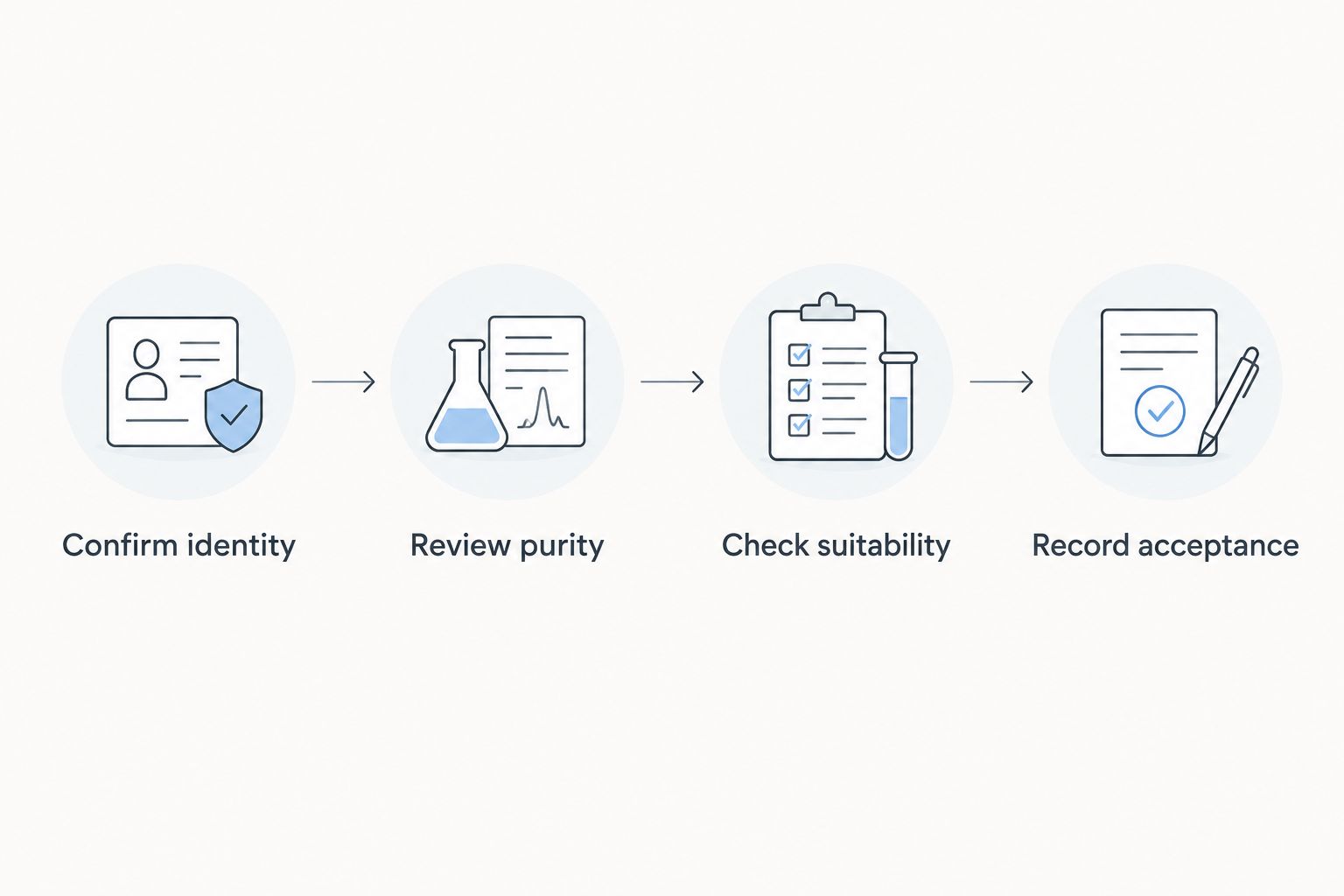
A procurement review works best as a sequence. Identify a material first, assess its analytical characterization next, and decide whether the resulting evidence satisfies the intended experiment.
Confirm identity
Check that the documentation describes sermorelin’s expected molecular form, including terminal modification. Mass spectrometry provides evidence relevant to molecular identity; chromatographic analysis addresses a different question. Neither should be treated as an interchangeable stamp of approval.
Review purity
Read the purity result alongside its method and chromatogram. Chromatographic area percentage describes the detected components under the stated analytical conditions; it is not automatically the percentage of total vial mass that consists of the target peptide.
Check suitability
Match the evidence to the assay. A cell-based experiment, an analytical method-development project, and a study requiring controlled endotoxin levels do not share an identical material specification.
Record acceptance
Document why the lot meets the protocol before using it. Retain the supporting records with the material identifier so an unexpected result can be investigated against the same evidence used for acceptance.
What a purity claim leaves unanswered
A 99%+ purity claim sounds decisive because it compresses analytical complexity into one figure. It still leaves several separate questions unresolved. Ask what was measured, how it was measured, and which lot the result describes.
- Identity: Does the evidence support the expected molecule?
- Content: What quantity of peptide does the supplied material contain?
- Activity: Does the material produce the required response under defined conditions?
- Contamination: Were the contaminants relevant to your experiment assessed?
- Traceability: Can the analytical record be connected to the received material?
These are not reasons to reject every high-purity claim. They are reasons to avoid assigning that claim more meaning than the underlying method supports.
In 2026, the useful purchasing question remains specific: does this documented lot meet this experiment’s requirements? A larger headline percentage does not answer a different question more convincingly.
Turn the protocol into a purchasing checklist
Before selecting sermorelin, translate the experiment into a written material specification. This prevents catalog language from becoming the acceptance standard by default.
Record the required molecular form, the acceptable identity evidence, and the purity method you need to assess. Add quantity-basis requirements and any assay-specific contamination or activity criteria. Keep handling decisions tied to the applicable documentation and your laboratory’s procedures.
Then classify each candidate against the specification:
- Accept: The evidence meets every mandatory requirement.
- Clarify: A specific documentation question remains unresolved.
- Reject: The material or evidence fails a mandatory requirement.
Do not fill an unresolved field with an assumption. A clear question to the supplier is more useful than treating an unrelated certificate or general product description as the answer.
Which research-material option should you choose?
Choose lot-documented single-agent sermorelin unless your protocol requires additional functional qualification or a comparative design. That is the most direct default for keeping material selection tied to a defined compound and a documented experiment.
Choose assay-qualified material when biological response is central to the study. Choose separately characterized comparators when the research question explicitly requires comparison. Do not select a mixture simply to avoid making those design decisions.
When evaluating Peptides777 for sermorelin peptides for research in 2026, keep store positioning separate from material acceptance. Research-use labeling describes the intended market; your laboratory’s specification determines suitability.
FAQ
What are the best sermorelin peptides for research?
The best starting choice is single-agent sermorelin with lot-linked identity and purity evidence that meets your protocol. Functional studies also require evidence and controls relevant to the intended assay.
Is a 99% purity claim enough to choose sermorelin?
No, a 99% purity claim alone does not establish suitability for an experiment. Review the analytical method, lot traceability, identity evidence, quantity basis, and any assay-specific requirements.
What is the difference between sermorelin and GHRH?
Sermorelin is a synthetic peptide corresponding to the first 29 amino acid residues of human GHRH, with an amidated C-terminus. A commonly referenced human GHRH form contains 44 amino acid residues.
Are sermorelin mixtures better than single-agent material?
Mixtures are not a better default for experiments intended to isolate sermorelin’s contribution. Use separately characterized materials and appropriate controls when the protocol calls for comparing compounds or studying interactions.
Does chromatographic purity prove biological activity?
No, chromatographic purity does not establish biological activity. Functional evidence must address a defined experimental system, and the receiving laboratory needs appropriate controls.
Does research-grade sermorelin mean it is suitable for human use?
No, research-grade labeling does not establish suitability for human use. This guide addresses laboratory material selection, not dosing, self-administration, or clinical treatment.
How should a laboratory evaluate a sermorelin supplier?
Evaluate a sermorelin supplier against a written material specification and the documentation associated with the relevant lot. Brand-level claims do not replace identity, purity, traceability, or assay-specific acceptance evidence.
One last thing
Rejecting unsuitable material is not the same as disproving the compound’s biology. A failed experiment can reflect material identity, concentration, handling, assay conditions, or the hypothesis itself. Preserve the lot documentation and acceptance record so those questions remain distinguishable when you interpret the result.