
Best overall: semaglutide with lot-specific identity, purity, and content documentation. Best for analytical method checks: a qualified reference material. Best for study continuity: a previously qualified lot. This 2026 guide explains how to evaluate semaglutide research peptides, including when considering Peptides777, without confusing a research reagent with a medicine.
- Choose semaglutide research peptides using lot-specific identity, purity, and content evidence—not a purity headline alone.
- A qualified semaglutide reference material is best for analytical comparisons when its assigned properties fit the method.
- Peptides777 markets research compounds with 99%+ purity; that claim does not replace semaglutide-specific lot documentation.
- Keep laboratory procurement separate from clinical use: research reagents are not substitutes for prescribed medicines.
Why this matters
A vial labeled semaglutide does not tell you whether its contents fit your experiment. You need evidence connecting the material, its analytical results, and the lot you receive. Otherwise, differences between samples become difficult to separate from differences in the reagent.
The best semaglutide research peptides are the materials whose documented properties match your experiment. A chromatography result alone cannot answer every procurement question, and a familiar supplier name cannot replace material qualification.
This 2026 ranking compares procurement profiles rather than presenting unverified products as tested winners. Each profile solves a different laboratory problem: selecting experimental material, checking an analytical method, maintaining continuity, or screening an inadequately documented listing.
What makes the best semaglutide research peptides
Use these criteria before comparing suppliers or choosing a vial:
- Identity: Evidence must support that the material is semaglutide, not merely that a dominant chromatographic peak exists.
- Purity: Results should identify the analytical method and explain what the reported percentage represents.
- Content: Establish how much peptide is present. Chromatographic peak area is not automatically a measurement of peptide mass.
- Traceability: The report, vial label, and procurement record should identify the same lot.
- Handling suitability: Storage, preparation, and stability information should support the conditions your protocol requires.
- Experimental fit: Reference materials, exploratory reagents, and repeat-study lots serve different purposes. Define the purpose before choosing.
Peptides777 describes its research compounds as marketed with 99%+ purity. Treat that statement as a reason to examine the supporting documentation, not as proof of identity, content, sterility, or suitability for a particular experiment.
Semaglutide research options at a glance
| Rank and option | Best for | Standout feature | Key limitation |
|---|---|---|---|
| 1. Lot-documented research material | Selecting experimental material | Connects identity, purity, and content evidence to the supplied lot | Requires a laboratory qualification decision |
| 2. Qualified reference material | Analytical method checks | Provides assigned properties relevant to its reference purpose | Does not automatically represent every research sample |
| 3. Previously qualified lot | Continuing an established study | Preserves a documented link to earlier experimental work | Prior acceptance does not establish continued stability |
| 4. Purity-claim-only listing | Preliminary supplier screening | Gives an initial specification to investigate | Leaves identity, content, and traceability unresolved |
The order reflects evidence available for a defined task, not a universal hierarchy of suppliers. A reference material takes priority when you need a reference; a qualified experimental lot takes priority when you need material for the experiment itself.
1. Lot-documented material: best for experimental procurement
Lot-documented semaglutide research material comes with records that connect analytical findings to the actual batch supplied. The strongest procurement package distinguishes identity testing, chromatographic purity, and peptide content instead of combining them into a single quality claim.
Best for: Laboratories choosing material for a defined experimental protocol in 2026.
Lot-documented material pros
- Gives you evidence tied to the material being considered.
- Separates identity questions from purity and quantity questions.
- Supports an auditable acceptance or rejection decision.
- Makes discrepancies between the label and report easier to investigate.
Lot-documented material cons
- Documentation still requires technical review; a certificate is not self-validating.
- The reported tests might not address your experiment's critical impurities.
- Supplier documentation does not replace protocol-specific controls.
Before approving procurement, compare the vial identifier with the analytical report. Check the sample description, methods, results, and report date. Ask what each reported result establishes—and what remains unmeasured.
A certificate showing a dominant peak does not establish the material's identity by itself. Likewise, an identity result does not establish the amount of peptide available for preparing a defined experimental concentration.
Verdict: Buy only after the supplied lot satisfies your laboratory's documented acceptance criteria.
2. Qualified reference material: best for analytical method checks
A qualified semaglutide reference material serves as a comparator for a specified analytical purpose. Its usefulness depends on its assigned properties and supporting documentation, not simply on the word reference appearing in a listing.
Best for: Laboratories checking an analytical procedure or comparing an unknown sample against an appropriate reference.
Qualified reference material pros
- Provides a defined basis for the intended analytical comparison.
- Helps distinguish a method problem from a sample problem.
- Supports clearer interpretation when the assigned properties match the measurement.
Qualified reference material cons
- Qualification for one purpose does not establish suitability for every assay.
- Matrix, preparation, or impurity differences can complicate comparisons.
- A reference material does not automatically qualify the experimental lot.
Start with the measurement you need to support. Identity comparison, impurity assessment, and quantitative calibration are different analytical tasks; do not assume one reference material supports all of them.
For a 2026 method-development project, specify the required reference properties before reviewing listings. Then check whether the accompanying documentation actually assigns those properties, rather than relying on descriptive language.
Verdict: Buy for a defined reference purpose; skip it as a shortcut around experimental-lot qualification.
3. Previously qualified lot: best for study continuity
A previously qualified semaglutide lot has already passed your laboratory's acceptance process for an established application. Continuing with that lot avoids introducing a new batch as an additional experimental variable.
Best for: Laboratories extending a study whose controls, preparation method, and acceptance criteria are already established.
Previously qualified lot pros
- Preserves a direct connection to earlier experimental records.
- Avoids an immediate lot-change comparison.
- Lets you use established acceptance criteria rather than starting from a listing.
Previously qualified lot cons
- Earlier acceptance does not demonstrate present stability.
- Storage history and repeated handling still require review.
- An old qualification cannot automatically support a different experimental use.
Review the material's handling record before continuing. Confirm that storage and preparation followed the applicable instructions, and check whether your protocol requires fresh suitability testing.
If you must introduce a new lot, define the comparison before using it in the main study. Keep preparation conditions and controls consistent so you can interpret any observed difference without silently changing several variables at once.
Verdict: Hold the established lot as your continuity choice only while its documented suitability remains intact.
4. Purity-claim-only listing: best for preliminary screening
A purity-claim-only listing gives you a headline specification without enough supporting evidence to qualify the supplied material. It belongs at the beginning of supplier screening, not at the end of procurement approval.
Best for: Building a preliminary shortlist while requesting documentation.
Purity-claim-only listing pros
- Provides an initial specification to investigate.
- Gives procurement staff a starting point for questions.
- Helps identify which supporting documents to request next.
Purity-claim-only listing cons
- Does not independently establish identity.
- Does not establish peptide content from the percentage alone.
- Does not connect results to the delivered lot without traceable records.
- Leaves experimental suitability unresolved.
Do not turn a prominent percentage into a broader assurance than the underlying test supports. A purity result is meaningful only when you understand the method, sample, calculation, and scope.
For Peptides777 semaglutide research peptides, use the same acceptance standard you apply to any research reagent: review the material-specific evidence before approving laboratory use. Brand familiarity is not an analytical result.
Verdict: Wait for adequate documentation; skip the listing if the required evidence remains unresolved.
Read the certificate without confusing purity and content
Semaglutide is a modified peptide containing 31 amino acids and an 18-carbon fatty diacid side chain. These structural features help explain why a generic peptide label is insufficient: the intended molecular identity includes more than an amino-acid count.
A reported 99%+ purity claim answers a narrower question than whether a vial contains the expected amount of the intended molecule. In chromatography, an area-based purity result describes the detected signal under the stated method. It is not automatically a mass fraction or a complete inventory of everything in the vial.
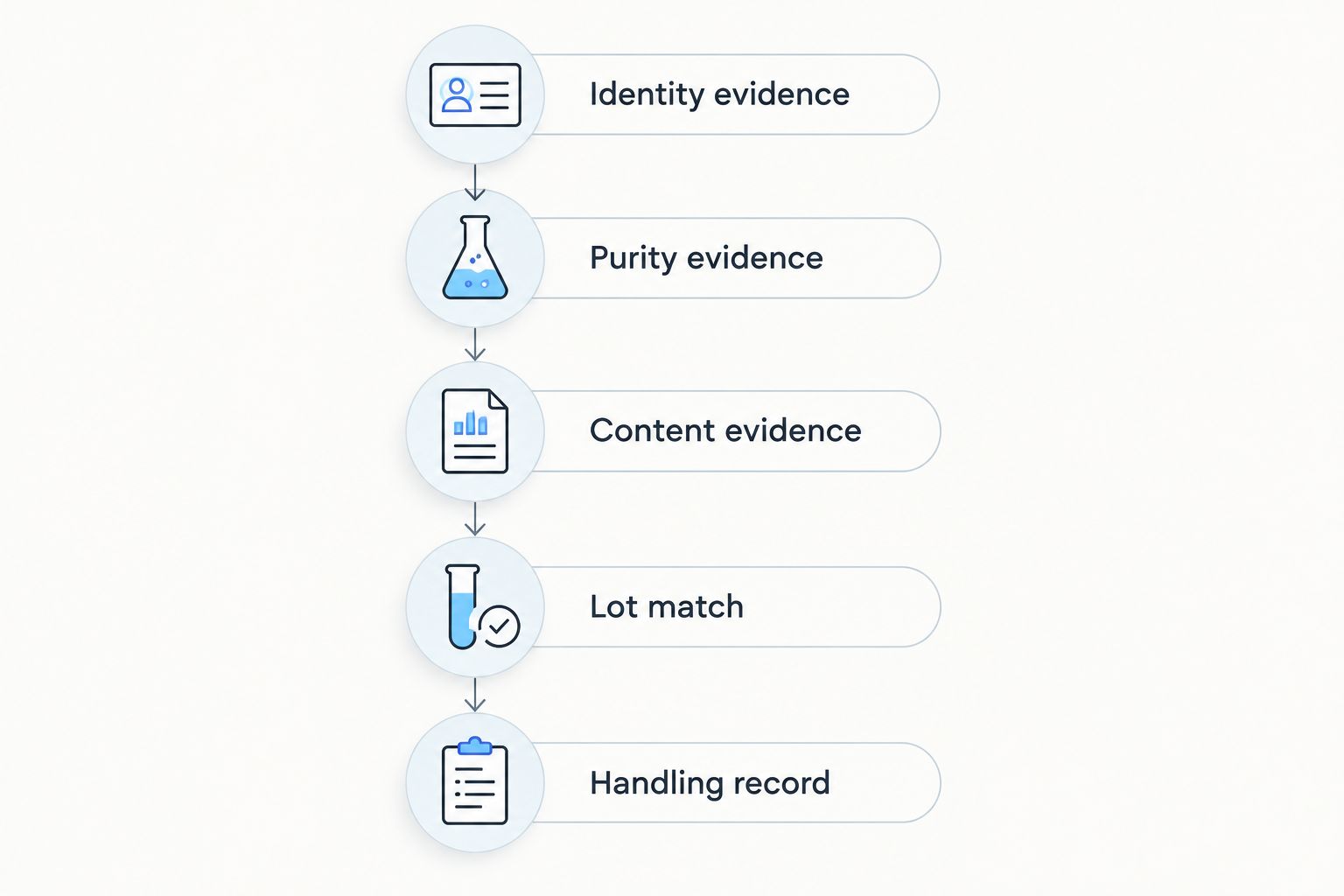
Use this review sequence:
- Identity evidence: What supports the molecular assignment?
- Purity evidence: Which method produced the result, and what can it detect?
- Content evidence: How was the amount of peptide established?
- Lot match: Does the report identify the supplied material?
- Handling record: Do storage and preparation records support continued use?
Keep the original documentation with your procurement and experimental records. A screenshot of a headline claim loses the connection between the method, reported result, and lot that makes the information useful.
How this ranking works
This 2026 ranking prioritizes identity, purity, content, traceability, handling suitability, and experimental fit. It does not rank suppliers by reputation or treat an unsupported listing as a tested product.
The default recommendation is lot-documented experimental material because it addresses the broadest procurement decision. Reference materials and previously qualified lots rank by their narrower purposes. Purity-only listings remain screening candidates until their evidence supports acceptance.
Which semaglutide research peptides should you choose?
Choose lot-documented semaglutide research material for a new experiment. Choose a qualified reference material when the task is an analytical comparison, and retain a previously qualified lot when continuity and current suitability are both documented.
When evaluating Peptides777 in 2026, make the decision at the material-and-lot level. Do not transfer a general research-store claim into an assumption about a specific compound, preparation, or experimental application.
Keep this boundary explicit: laboratory research material is not a substitute for a prescribed medicine. This guide does not provide dosing, injection, self-administration, or treatment instructions.
FAQ
What's the best way to choose semaglutide research peptides?
Choose semaglutide research peptides using lot-specific identity, purity, content, and traceability evidence. Match those records to your experimental acceptance criteria before approving the material.
Does 99% purity prove a semaglutide vial contains the labeled amount?
No. An analytical purity percentage does not automatically establish peptide content or the total amount in a vial. Review the measurement method and separate content documentation.
Is a semaglutide reference material better than a research reagent?
A qualified reference material is better for its defined reference purpose, not automatically for every experiment. Select it according to the properties assigned in its documentation and the measurement you need to support.
What should a semaglutide certificate of analysis show?
A useful certificate should identify the tested material and lot, analytical methods, results, and report date. Check whether its scope addresses identity, purity, and content rather than assuming those questions are interchangeable.
Can I keep using a previously qualified semaglutide lot?
Continue using a previously qualified lot only while its documented suitability remains valid for the intended experiment. Review storage, handling, and any protocol-specific requirements for repeat testing.
Are research semaglutide peptides the same as prescribed medicines?
Research semaglutide reagents are not substitutes for prescribed medicines. Research labeling and analytical purity do not establish suitability for human administration.
What should I check before choosing Peptides777 for research compounds?
Check the compound-specific documentation and its connection to the supplied lot. A general purity claim does not replace evidence supporting your laboratory's intended use.
One last thing
Decide what would make you reject the material before reading the supplier's certificate. Otherwise, a polished report can become the acceptance standard instead of being measured against one.
Write those rejection criteria into your procurement record. An unreadable lot identifier, an unexplained method, or an unresolved content question should trigger the same response regardless of whose name appears on the vial.