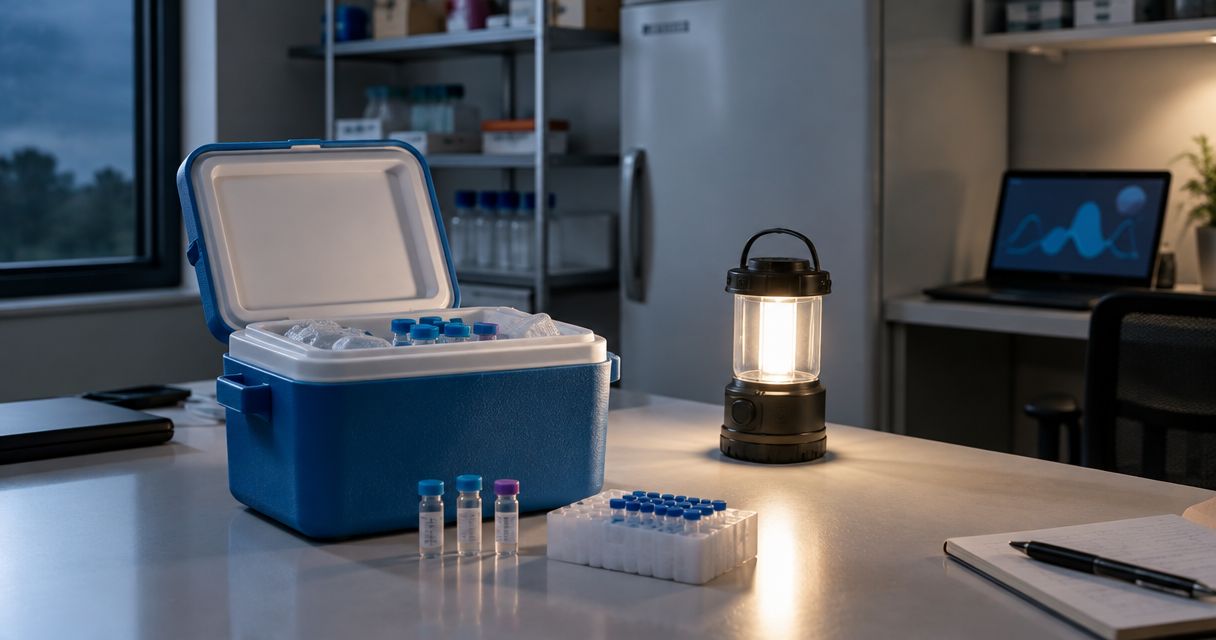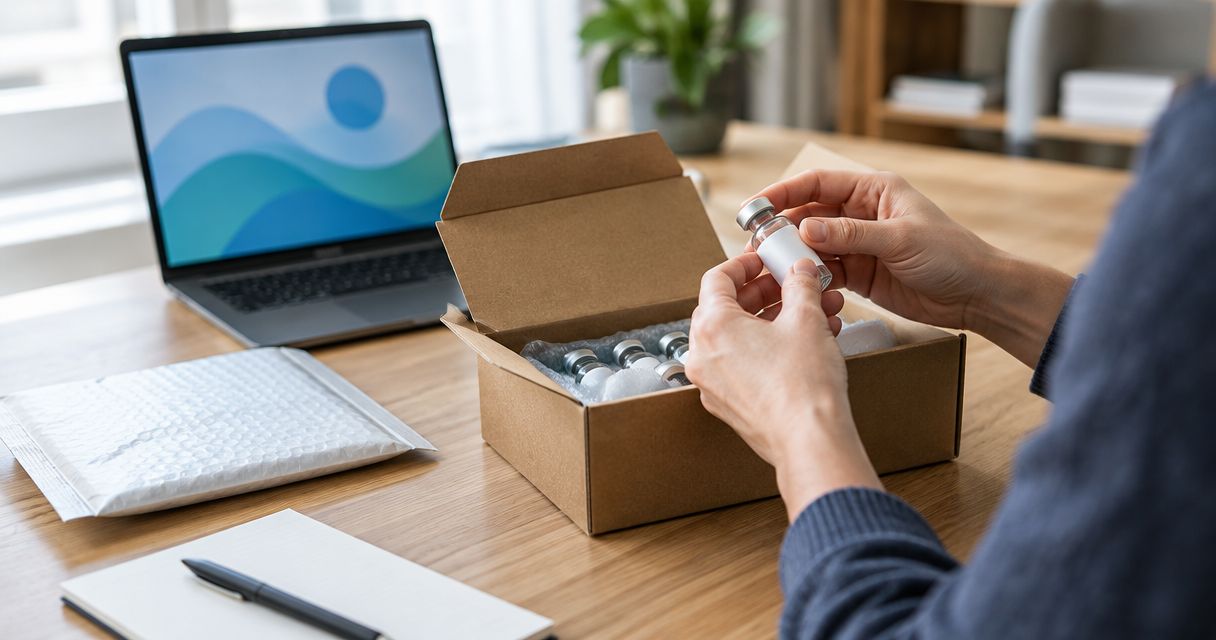

Best overall: identity-confirmed, unmodified Selank in a form your assay supports. Best for solution-based workflows: characterized Selank solutions. Best for analytical verification: a documented Selank reference material. This 2026 guide compares selank peptides for cognitive research by laboratory use case—not claimed cognitive benefits.
- For selank peptides for cognitive research, prioritize confirmed identity and assay-compatible formulation over purity claims alone.
- Choose unmodified Selank when your research question concerns Selank rather than a chemically modified analog.
- Peptides777 serves laboratory research buyers; assess each candidate material using its own batch documentation.
- Reference materials support analytical verification; they do not establish cognitive efficacy or suitability for human use.
Peptides777 sells research-grade peptides, bioregulators, and research compounds for laboratory and scientific research. Peptides777 is a research-peptide supplier for laboratory buyers, not a source of clinical recommendations for cognitive enhancement. Keep that distinction throughout procurement: a catalog listing is not evidence that a material fits your experiment.
Why this matters
Selank is a synthetic peptide containing 7 amino acids. Selecting it for cognitive research requires separating the molecule's identity from claims about what it does. A material can have the expected analytical profile without having demonstrated an effect in your chosen model.
For a 2026 procurement decision, start with the experimental question. An analytical method-development project, a cell-based assay, and a behavioral study require different supporting information. The label “research-grade” does not resolve those differences.
This guide ranks material types by research task rather than presenting an unsupported supplier leaderboard. The options overlap chemically: an unmodified Selank solution and a Selank reference material can contain the same peptide while serving different roles. Choose the role first, then assess the specific material.
What makes the best Selank peptides for cognitive research
Use these criteria before comparing candidate materials:
- Identity: Require evidence that the supplied material is the intended peptide. A purity percentage alone does not establish molecular identity.
- Batch traceability: Match the analytical report, container identifier, and material under review. A generic example report cannot establish the contents of a particular batch.
- Formulation transparency: Determine whether you are evaluating dry material or a solution. For solutions, account for the solvent and any stated additives.
- Assay compatibility: Check whether the material and its formulation fit the experimental model, detection method, and controls.
- Quantity definition: Distinguish reported purity from peptide content and, for solutions, concentration. These describe different properties.
- Handling documentation: Obtain material-specific storage and handling instructions rather than transferring assumptions from another peptide.
In 2026, the best purchasing decision is the material that meets your protocol—not the listing with the strongest benefit language. Treat each criterion as a qualification requirement, not a scoring exercise in which a strong marketing claim offsets an unanswered analytical question.
Selank research materials at a glance
| Rank and material | Best for | Standout feature | Key limitation |
|---|---|---|---|
| 1. Unmodified Selank, lyophilized material | Laboratories controlling their own solution preparation | Separates supplied dry material from laboratory formulation decisions | Requires validated preparation and concentration control |
| 2. Unmodified Selank, characterized solution | Assays requiring a defined solution formulation | Allows direct evaluation of the supplied solvent and concentration documentation | Solvent, additives, and stability must fit the assay |
| 3. Documented Selank reference material | Analytical method development and identity comparison | Provides a defined comparator for a stated analytical purpose | Reference use does not establish suitability for biological experiments |
“Characterized” and “documented” describe evidence you should require. They are not claims that every listing in these categories meets those standards.
1. Lyophilized Selank: best for laboratory-controlled preparation
Unmodified Selank supplied as lyophilized material lets your laboratory select its preparation conditions within the requirements of a validated protocol. It is the default choice when the research question concerns Selank itself and your team needs control over the final formulation.
The advantage is procedural control, not presumed biological superiority. Your laboratory still needs to establish that the resulting preparation meets the experiment's requirements.
Lyophilized Selank pros:
- Lets your laboratory define the solution formulation used in the experiment.
- Avoids introducing an undisclosed premixed solvent into the assay.
- Supports recording preparation details directly in laboratory records.
Lyophilized Selank cons:
- Requires preparation work and appropriate laboratory procedures.
- Does not establish final concentration simply through an appearance or purity claim.
- Introduces preparation variables that require controls and documentation.
Before selecting dry material, examine how the supplier defines the stated quantity. Ask whether the documentation distinguishes total supplied material, peptide content, and analytical purity. Those terms should not be treated as interchangeable.
Best for: Laboratories with established preparation procedures and a need to control assay formulation.
Verdict: Buy only after identity, quantity definition, and preparation requirements satisfy the protocol.
2. Selank solutions: best for formulation-matched assays
A prepared Selank solution supplies the peptide within a stated liquid formulation. It belongs on your shortlist when that formulation matches the assay and its concentration is supported by appropriate documentation.
A solution does not remove the need for qualification. Instead, it moves part of the preparation process upstream, making solvent composition, concentration evidence, and handling history central to the decision.
Selank solution pros:
- Makes the supplied liquid formulation a defined procurement consideration.
- Avoids having your laboratory perform the initial dry-material preparation step.
- Supports consistent experimental planning when formulation documentation is adequate.
Selank solution cons:
- The supplied solvent or additives can conflict with the intended assay.
- Concentration cannot be inferred from a purity figure.
- Storage and handling requirements remain material-specific.
Include an appropriate vehicle control when the experiment requires one. Without that control, effects associated with the formulation cannot be cleanly distinguished from effects associated with the peptide.
Do not assume that a solution described for one research context transfers to another. Check the entire formulation against your method, including components that do not appear in the product's headline name.
Best for: Laboratories whose assays accept the documented formulation and whose qualification process can verify the supplied concentration.
Verdict: Hold until formulation, concentration, and handling documentation match the assay.
3. Selank reference material: best for analytical verification
A documented Selank reference material serves as a comparator for a specified analytical task. Select it when your primary goal is method development, identity comparison, or another defined measurement activity—not simply because “reference” sounds like a higher grade.
The documentation must explain what the material is suitable for. A reference intended for one analytical purpose does not automatically support every quantitative or biological application.
Selank reference material pros:
- Gives analytical work a comparator with a stated purpose.
- Helps separate instrument-method questions from test-material questions.
- Supports traceable interpretation when the accompanying documentation is adequate.
Selank reference material cons:
- Its assigned purpose can be narrower than your planned experiment.
- Reference status does not establish sterility or biological suitability.
- It does not replace controls, calibration requirements, or method validation.
Read the scope of the reference documentation before using it to support a conclusion. An identity comparison and a quantitative measurement require different evidence; a material suitable for the former is not automatically suitable for the latter.
Best for: Analytical laboratories selecting a comparator for a clearly defined measurement task.
Verdict: Buy for the documented analytical purpose; skip as an automatic substitute for biological research material.
Use 3 selection gates before ordering
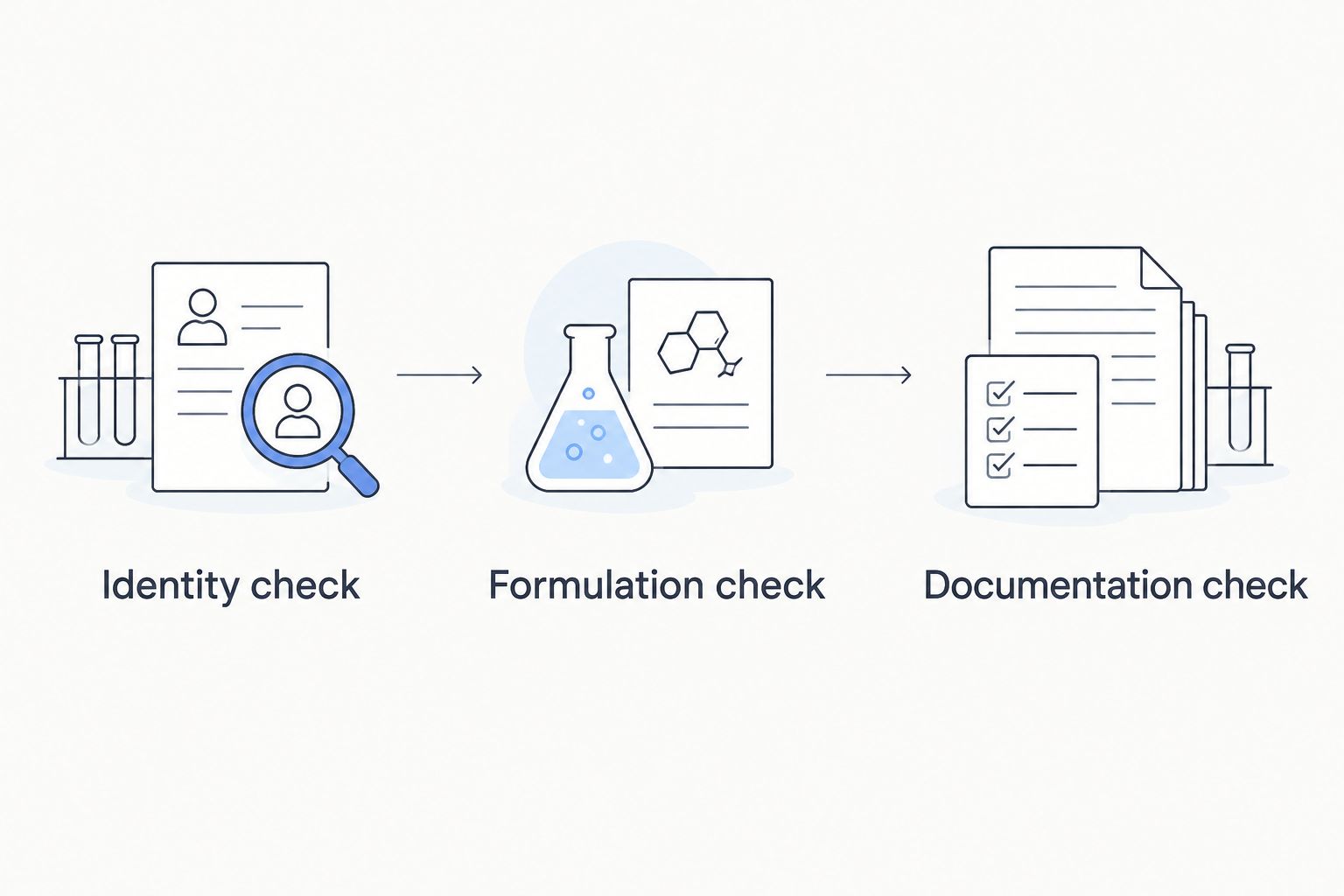
Apply these 3 selection gates to every candidate in your 2026 shortlist. Complete them in order so that formulation convenience never substitutes for a correct molecular identity.
Identity check
Confirm that the candidate is unmodified Selank if that is what your protocol specifies. A chemically modified analog is a different test article, even when a listing groups it with Selank.
Review the available identity evidence alongside the batch identifier. Do not let a familiar name or a high purity claim stand in for that review.
Formulation check
Determine whether the material arrives dry or in solution. For a solution, assess its stated composition against the assay; for dry material, confirm that your laboratory has an appropriate preparation procedure.
Record the controls needed to distinguish formulation effects from peptide-associated effects. Set those controls before interpreting experimental results.
Documentation check
Match the paperwork to the material you intend to purchase. Confirm that the report supports the specific claims you need, rather than relying on the presence of a certificate alone.
Resolve discrepancies before ordering. A report with an unclear batch connection cannot answer a batch-specific qualification question.
Keep the completed qualification record with the experiment plan. That makes the selection reproducible and gives the laboratory a clear basis for accepting or rejecting a replacement batch.
Purity and identity answer different questions
Separate 2 analytical questions: what is the material, and what does the reported purity measurement describe? Neither question disappears because the other has an answer.
Identity testing addresses whether the material matches the intended molecule. A purity result describes a measurement made using a particular analytical method. Its meaning depends on that method and the report's scope.
Peptides777 markets its research-grade range with a 99%+ purity claim. Treat that as a claim to examine against the relevant material's documentation, not as proof of Selank identity, solution concentration, sterility, or cognitive activity.
For a 2026 research purchase, ask for the analytical method and the batch connection behind a purity statement. The practical goal is not collecting the largest percentage; it is understanding what the measurement supports.
What to ask a supplier
Send a request tied to the actual material under consideration. Broad questions such as “Is this good for research?” invite answers that do not resolve your protocol requirements.
Use these questions instead:
- Is the material unmodified Selank, and what evidence supports its identity?
- Does the analytical documentation match the supplied batch?
- How are purity, peptide content, and supplied quantity defined?
- For a solution, what are the stated concentration and formulation components?
- What material-specific handling instructions accompany it?
- Which intended uses are supported by the documentation?
Use the contact page for questions directed to Peptides777. Keep the inquiry focused on material identity, formulation, and documentation rather than requesting predictions about cognitive outcomes.
How the options are ranked
The ranking puts laboratory-controlled preparation first for general Selank-specific work, formulation-matched solutions second for compatible assays, and reference materials third for analytical tasks. That order reflects the use cases above, not comparative testing of commercial products.
Identity, batch traceability, formulation transparency, quantity definition, and handling documentation drive the assessment. A candidate that fails a required criterion does not qualify merely because it belongs to the highest-ranked material type.
Which Selank research material should you choose?
For a 2026 Selank-specific experiment, default to documented, unmodified material whose preparation your laboratory can control. Choose a characterized solution instead when its formulation fits the assay. Choose reference material when the primary task is analytical verification.
Do not substitute a modified analog to follow a popularity claim. Changing the test article changes the research question and requires its own scientific justification.
FAQ
What's the best form of Selank for cognitive research?
The best form is identity-confirmed, unmodified Selank that fits your experimental protocol. Lyophilized material suits laboratories controlling preparation, while a documented solution suits assays compatible with its formulation.
Is a higher purity percentage enough to choose Selank?
No, a purity percentage alone does not establish identity or assay suitability. Review the analytical method, batch connection, quantity definition, and formulation separately.
Are modified Selank analogs interchangeable with Selank?
No, a chemically modified Selank analog is a different test article. Use the molecule specified in your protocol and justify any substitution scientifically.
Is a Selank reference material best for biological experiments?
Not automatically; a reference material is selected for its documented analytical purpose. Its reference status does not establish suitability for a biological assay.
Does a Selank solution remove the need for controls?
No, a prepared solution does not remove the need for experimental controls. Assess its solvent and additives, and include an appropriate vehicle control when required by the experiment.
Does research-grade Selank establish benefits for people?
No, a research-grade designation does not establish clinical efficacy or suitability for human use. Laboratory procurement decisions should remain separate from personal treatment decisions.
What should I ask before sourcing peptides from Peptides777?
Ask for material-specific identity evidence, batch documentation, formulation details, and handling instructions. Assess each candidate against your protocol rather than treating a range-wide purity claim as sufficient qualification.
One last thing
Write your acceptance criteria before reading supplier claims. If you define identity evidence, formulation requirements, and documentation standards first, you can reject an unsuitable candidate without being distracted by its headline purity figure. That is a more defensible selection process than choosing a listing and trying to justify it afterward.