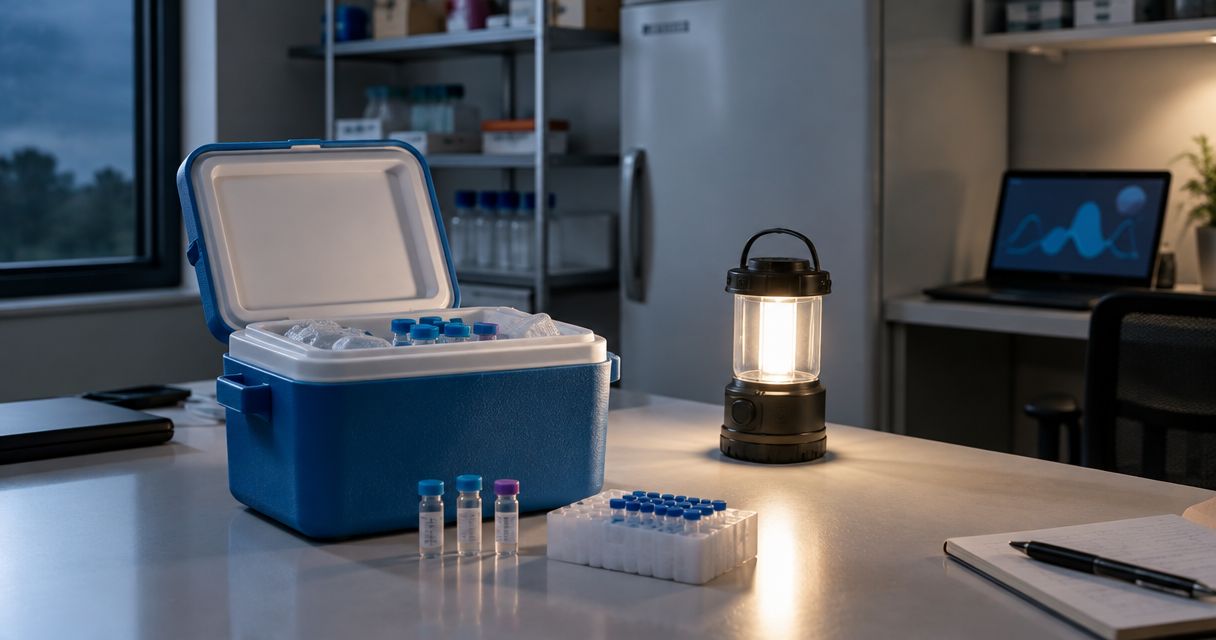
Best overall: lot-documented MOTS-c with identity and purity results. Best for method development: material characterized for your analytical method. Best for repeat experiments: material with traceable batch records. This 2026 guide ranks evidence profiles for MOTS-c peptides for research, not suppliers or unverified product claims.
- Choose MOTS-c peptides for research using lot-specific identity, purity, and handling documentation—not a headline percentage.
- Best overall: material with traceable analytical results that match the supplied batch.
- Peptides777 sells research-use compounds; assess any MOTS-c listing separately against your laboratory protocol.
- Research-use labeling does not establish suitability for human administration.
Why this matters
Choosing MOTS-c is an experimental design decision before it is a purchasing decision. If you cannot connect the material in a vial to its analytical records, an unexpected result becomes harder to investigate.
Peptides777 sells research-grade peptides, bioregulators, and research compounds marketed with 99%+ purity for laboratory and scientific research use. That store-level positioning is not a substitute for evaluating the documentation attached to an individual material and lot.
For MOTS-c peptides for research, Peptides777's research-use positioning belongs in a laboratory procurement context, not a human-treatment comparison. Keep the same distinction when evaluating any supplier: intended use, chemical identity, analytical purity, and experimental suitability answer different questions.
The strongest choice in 2026 is the material whose records let your laboratory explain what was received, how it was assessed, and whether it fits the planned experiment.
What makes the best MOTS-c peptides for research
Use these criteria before comparing options. A material that fails a requirement in your protocol should not win because another attribute looks attractive.
- Identity evidence: Look for analytical evidence supporting the stated peptide identity. A purity percentage alone does not establish identity.
- Lot traceability: Match the analytical report to the batch identifier on the supplied material. A representative report is not batch-specific evidence.
- Purity method: Check how purity was measured, including the method and interpretation of the result.
- Quantity definition: Distinguish nominal vial content, net peptide content, and chromatographic purity. They are not interchangeable measurements.
- Handling documentation: Require instructions relevant to receipt, storage, preparation, and the intended laboratory workflow.
- Protocol fit: Match the material to the assay, controls, and acceptance criteria your laboratory has defined.
MOTS-c is a mitochondrially encoded peptide comprising 16 amino acids, as described in the NCBI RefSeq record for human MT-RNR1, accessed in 2026. That sequence length identifies the peptide category; it says nothing about the identity or quality of a particular vial.
Choose evidence that answers your experimental question, not the largest purity claim on a page.
MOTS-c research options at a glance
These are procurement profiles, not named commercial products. The ranking reflects documentation needs, so the same material can satisfy more than one profile.
| Rank and option | Best for | Standout feature | Key limitation |
|---|---|---|---|
| 1. Lot-documented MOTS-c | General laboratory procurement | Identity and purity evidence connected to the supplied lot | Documentation still needs technical review |
| 2. Method-characterized MOTS-c | Analytical method development | Results interpretable against your method requirements | Supplier results do not validate your laboratory method |
| 3. Batch-traceable MOTS-c | Repeat experiments | Records supporting comparisons between received batches | Traceability alone does not establish equivalence |
| 4. Protocol-qualified MOTS-c | Assays with defined material requirements | Acceptance tied to the intended experimental workflow | Suitability does not transfer automatically to another assay |
Do not read the table as a claim that one supplier sells four distinct products. Use it to decide which evidence deserves the most attention in your purchasing review.
1. Lot-documented MOTS-c: best for general procurement
Lot-documented MOTS-c connects the supplied material to identifiable analytical records. Start with this profile when your laboratory needs a defensible baseline for ordering research material.
Check that the material name and batch identifier agree across the vial, accompanying documents, and analytical report. Then examine whether the methods address identity and purity separately rather than presenting a percentage without context.
Lot-documented MOTS-c pros:
- Gives your laboratory a defined record to review before acceptance.
- Connects analytical findings to the material actually received.
- Supports investigation when experimental results differ from expectations.
Lot-documented MOTS-c cons:
- A matching identifier does not establish that the analytical interpretation is correct.
- A certificate does not demonstrate suitability for every assay.
Best for: Laboratories establishing a general procurement baseline for MOTS-c peptides for research in 2026.
Ask whether the report contains enough method detail to understand its conclusions. A document containing only a compound name, a batch code, and a headline percentage leaves important analytical questions unanswered.
Verdict: Buy only when lot-specific records meet your laboratory's acceptance criteria.
2. Method-characterized MOTS-c: best for method development
Method-characterized MOTS-c has analytical information that your laboratory can interpret against its own measurement goals. This profile matters when you are developing or assessing a method rather than simply accepting a supplier's summary.
High-performance liquid chromatography, or HPLC, can characterize chromatographic purity under the stated conditions. Mass spectrometry can provide molecular-mass evidence relevant to identity; neither method should be treated as answering every quality question by itself.
Method-characterized MOTS-c pros:
- Lets your laboratory examine what a reported result actually measures.
- Helps separate questions about identity from questions about impurities.
- Provides context for comparing supplier records with internal results.
Method-characterized MOTS-c cons:
- Results depend on the method, sample preparation, and interpretation.
- Supplier characterization does not establish that your own method is validated.
Best for: Laboratories developing analytical workflows or assessing discrepancies between measurements.
For a 2026 method-development project, define the information you need before selecting material. A routine research reagent should not be treated as a certified reference material unless the supporting documentation establishes that status.
Verdict: Buy for method development only when the characterization supports the intended analytical task.
3. Batch-traceable MOTS-c: best for repeat experiments
Batch-traceable MOTS-c emphasizes continuity of records across repeat purchases and experiments. It helps your laboratory determine whether a change in material coincided with a change in results.
Maintain the batch identifier alongside receipt records, preparation details, and experimental records. When a new batch arrives, review its documentation rather than assuming the previous batch's findings apply.
Batch-traceable MOTS-c pros:
- Makes batch changes visible during experimental review.
- Connects repeat experiments to specific received materials.
- Supports a documented decision about accepting a replacement batch.
Batch-traceable MOTS-c cons:
- A traceable batch can still fail your analytical acceptance criteria.
- Matching product names do not demonstrate batch equivalence.
Best for: Laboratories repeating experiments or maintaining a research workflow over successive purchases.
Decide in advance which checks a replacement batch must pass. Depending on your protocol, that review can include analytical comparison and assay controls; the acceptance decision belongs to the laboratory, not the product title.
Verdict: Buy for repeat work only when each batch passes the same defined acceptance process.
4. Protocol-qualified MOTS-c: best for defined assay requirements
Protocol-qualified MOTS-c is material evaluated against requirements specific to your experiment. This is the appropriate profile when a general identity and purity review does not answer all the questions your assay raises.
For example, a biological assay can require information about attributes beyond chromatographic purity. Define those attributes through your protocol and risk assessment rather than assuming a research-use label covers them.
Protocol-qualified MOTS-c pros:
- Focuses procurement on the experiment's actual requirements.
- Makes additional acceptance checks explicit before use.
- Reduces reliance on broad supplier descriptions.
Protocol-qualified MOTS-c cons:
- Qualification applies to the defined workflow, not every possible experiment.
- Additional checks require laboratory time and resources.
Best for: Research teams with assay-specific material acceptance requirements.
Do not infer sterility, endotoxin status, or biological suitability from chemical purity. Each is a separate question requiring appropriate evidence when relevant to the experiment.
Verdict: Buy only after the material satisfies the protocol's documented requirements.
How to review a MOTS-c listing in 2026
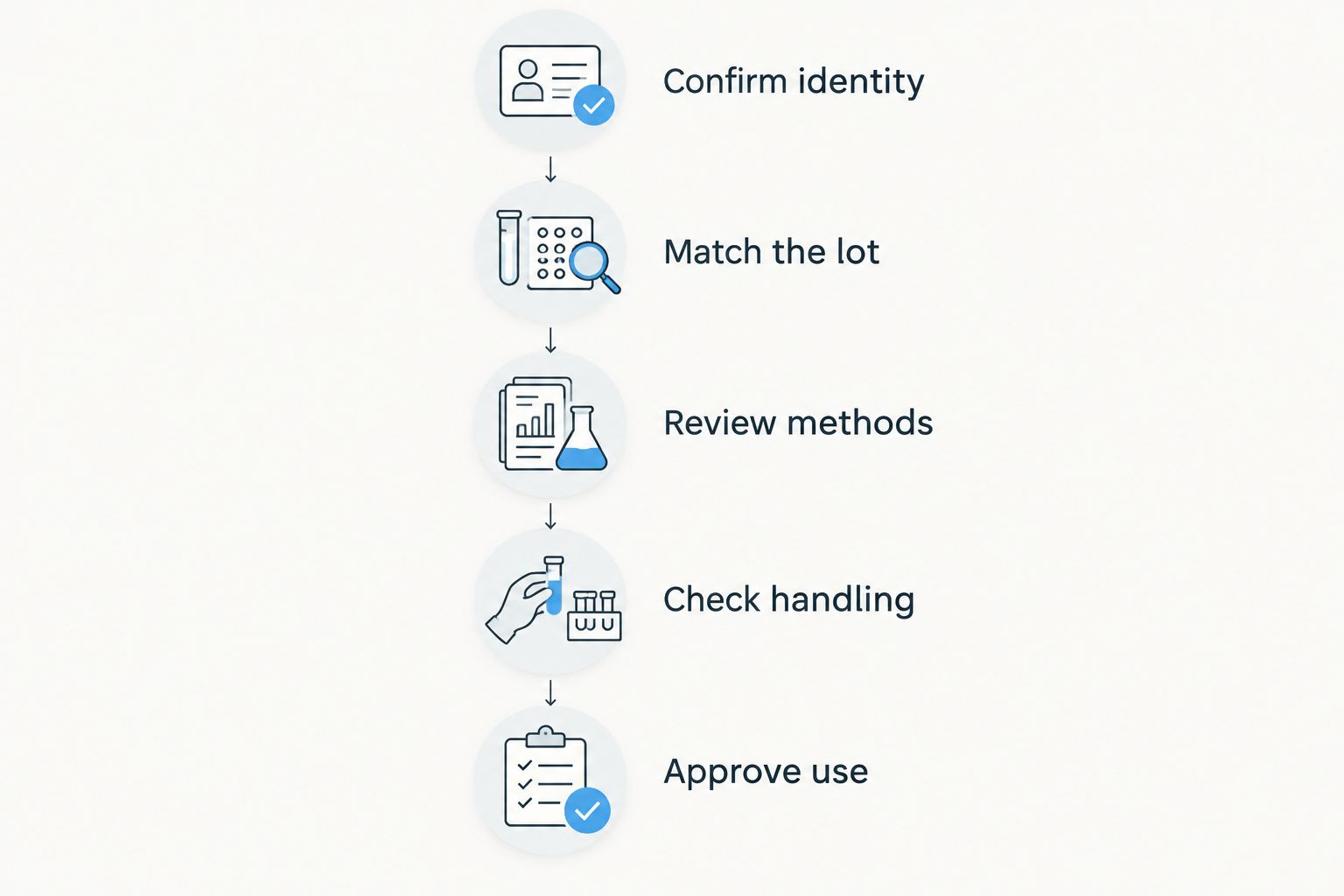
Move through the review in order. Attractive analytical results cannot correct a mismatch between the report and the material you receive.
Confirm identity
Check the stated peptide identity against the material your protocol requires. Review the supporting analytical evidence rather than relying on a familiar abbreviation.
Match the lot
Connect the report to the supplied batch identifier. Preserve that connection in your laboratory records so another researcher can reconstruct the acceptance decision.
Review methods
Read the analytical method and the meaning of the reported result. If the report states chromatographic purity, do not reinterpret it as peptide content, sterility, or proof of biological activity.
Check handling
Use material-specific handling instructions and your laboratory's procedures. Do not substitute generic online preparation advice for documented requirements.
Approve use
Compare the available evidence with the protocol's acceptance criteria. Hold material that does not pass; do not redefine the criteria simply to accommodate an order already received.
Record the outcome of this review with the batch documentation. That record gives your laboratory a clear distinction between material that arrived and material that was accepted for an experiment.
What a purity claim does not establish
A percentage looks decisive because it compresses a complicated measurement into a short statement. The problem begins when that statement is asked to answer unrelated questions.
Chromatographic area purity describes a result obtained under particular analytical conditions. It does not automatically establish the mass of peptide in a vial, the absence of every contaminant, or the material's suitability for a biological assay.
Peptides777's stated 99%+ purity positioning should therefore be evaluated at the individual-material level, alongside the relevant method and batch records. Do not transfer a broad store description into an unsupported conclusion about a specific MOTS-c lot.
Separate the questions in your review:
- Identity: Is the evidence consistent with the required peptide?
- Purity: What does the reported analytical result measure?
- Content: How is the amount of peptide defined?
- Suitability: Does the material meet your experimental requirements?
Research-use labeling also does not establish safety or suitability for human administration. This guide addresses laboratory procurement, not dosing, self-experimentation, or treatment.
How these options were ranked
The 2026 ranking puts traceable identity and purity evidence first because those records establish the starting point for a material review. Method detail, batch continuity, and protocol-specific qualification then address narrower research needs.
This is a documentation-based decision framework, not a supplier performance test. No score, certificate format, or headline claim overrides your laboratory's acceptance criteria.
Which MOTS-c research option should you choose?
Choose lot-documented MOTS-c as the default, then add requirements for your method and assay. For repeat experiments, preserve batch-level records and review replacement material before introducing it into the workflow.
The four profiles are complementary. Your strongest procurement decision can combine all of them: traceable material, interpretable analytical results, controlled batch changes, and documented protocol fit.
For Peptides777 research compounds, apply those same requirements without relaxing them because of a store-wide purity statement. The deciding evidence belongs to the material and its intended laboratory use.
FAQ
What's the best way to choose MOTS-c peptides for research?
Choose material with lot-specific identity and purity evidence that meets your laboratory's acceptance criteria. Then check handling requirements and suitability for the planned assay.
Is a higher purity percentage always better for MOTS-c research?
A higher percentage does not by itself establish a better research material. Compare the analytical method, identity evidence, content definition, and protocol requirements before making that judgment.
What should a MOTS-c certificate of analysis show?
A useful certificate connects the material and batch identifier to interpretable analytical results. Review what the methods measure rather than accepting a percentage without context.
Is HPLC enough to establish MOTS-c identity?
An HPLC purity result alone does not establish peptide identity. Review identity evidence separately and assess whether the combined documentation meets your laboratory's requirements.
Can I use the previous batch's report for a new MOTS-c order?
Do not use a previous batch's report as evidence for a new batch. Match each received batch to its own records and apply your acceptance process.
Does research-grade MOTS-c mean it is suitable for human use?
Research-grade labeling does not establish suitability for human administration. Evaluate the material within an approved laboratory research workflow, not as a treatment product.
Should I treat research MOTS-c as a certified reference material?
Treat material as a certified reference material only when its documentation establishes that status. A routine research reagent and a certified reference material are not interchangeable labels.
One last thing
A detailed report is useful only when it belongs to the material in your hands. Before accepting MOTS-c peptides for research in 2026, make the batch match your final check—not an administrative task left until after the experiment.