Best BPC-157 peptides for sale in 2026 come down to purity documentation, not marketing claims. Peptides777's BPC-157 leads the field for researchers who want a 99%+ purity grade backed by a Certificate of Analysis, with premixed solutions, low-dose vials, bulk multi-vial packs, and multi-compound stacks covering the rest of the lab use cases.
- Peptides777's BPC-157 wins best overall for documented 99%+ purity in a standard research vial.
- Best BPC-157 peptides for sale in 2026 need a Certificate of Analysis tied to the exact batch number, not just a label claim.
- Low-dose single vials fit pilot-scale protocols; bulk multi-vial packs fit multi-week research programs.
- BPC-157 is sold strictly for laboratory and scientific research, never for human consumption.
- Stacking BPC-157 with CJC-1295 or Ipamorelin only makes sense for multi-pathway research designs.
Why this matters
The research peptide market moved fast between 2024 and 2026, and purity variance between suppliers is still the single biggest risk for anyone running a lab protocol. A vial labeled "BPC-157" with no independent testing tells you nothing about what's actually inside it, and a lot of listings for BPC-157 peptides for sale skip that documentation entirely.
Peptides777 sells BPC-157 alongside other research compounds like CJC-1295, Ipamorelin, and Epitalon, all marketed at 99%+ purity for laboratory use. That's the baseline this list ranks against every format below, judged on documentation and format fit rather than price or packaging alone.
BPC-157 itself is a research compound, not an approved drug. Every option in this guide is intended strictly for laboratory and scientific research use, never for human consumption, and buyers are responsible for how their own jurisdiction treats research compounds in 2026.
What makes the best BPC-157 peptides for sale
Six things separate a documented research compound from a guess in a vial:
- Independent Certificate of Analysis (COA) matched to the specific batch number printed on the vial
- Purity grade stated as a percentage, ideally 98% or higher, not just "research grade" as a marketing word with no data behind it
- Clear molecular identification through HPLC or mass spec data, not a stock photo of lab equipment
- Format transparency stating plainly whether the compound is lyophilized powder, premixed solution, or another format
- Cold-chain shipping and stable packaging, since peptides degrade at room temperature over time
- Explicit research-use-only labeling that doesn't dodge the fact that this isn't a human drug
BPC-157 formats at a glance
| Format | Best for | Standout feature | Key limitation |
|---|---|---|---|
| Peptides777 BPC-157 (lyophilized) | General lab research | 99%+ purity with COA documentation | Requires reconstitution before use |
| Premixed BPC-157 solution | Labs skipping the reconstitution step | Ready-to-use liquid format | Shorter shelf stability once mixed |
| Low-dose single vials | Pilot-scale protocols | Smaller batch size, lower cost exposure | Frequent reordering for longer studies |
| Bulk multi-vial packs | Multi-week research programs | Lower per-vial handling overhead | Higher upfront vial count to manage |
| BPC-157 blended with other bioregulators | Multi-pathway research designs | One vial covers combined variables | Harder to isolate single-compound results |
1. Peptides777 BPC-157: best BPC-157 peptide for general lab research
Peptides777 lists BPC-157 as a standalone research compound at 99%+ purity, in the same catalog as CJC-1295, Ipamorelin, and Epitalon. It ships as a lyophilized vial, meaning it arrives as a stable powder that a lab reconstitutes with bacteriostatic water before running a protocol.
Peptides777 BPC-157 pros:
- Purity marketed at 99%+, matching the standard the brand applies across its catalog
- Sits alongside other bioregulators (CJC-1295, Ipamorelin, Epitalon) for labs running multi-compound comparisons
- Standard lyophilized format is the most stable way to ship and store a research peptide
Peptides777 BPC-157 cons:
- Reconstitution adds a step compared to a premixed solution
- Compound list is narrower than large multi-brand marketplaces carrying dozens of peptides
Best for: labs that want one documented BPC-157 source and don't need a premixed format. Verdict: Buy.
2. Premixed BPC-157 solution: best BPC-157 peptide for labs skipping reconstitution
A premixed solution arrives ready to draw and use, cutting out the bacteriostatic water step entirely. It's a convenience format more than a purity upgrade, since the compound inside still needs the same COA scrutiny as a powder vial before anyone trusts the concentration on the label.
Premixed BPC-157 solution pros:
- No reconstitution step, faster to get a protocol running
- Consistent concentration once mixed correctly by the supplier
Premixed BPC-157 solution cons:
- Shorter shelf stability once liquid, especially without refrigeration
- Harder to independently verify concentration accuracy after mixing
Best for: research teams running short protocols where reconstitution time is the actual bottleneck. Verdict: Hold until the supplier's COA covers the mixed solution itself, not just the raw compound before mixing.
3. Low-dose single vials: best BPC-157 peptide for pilot-scale protocols
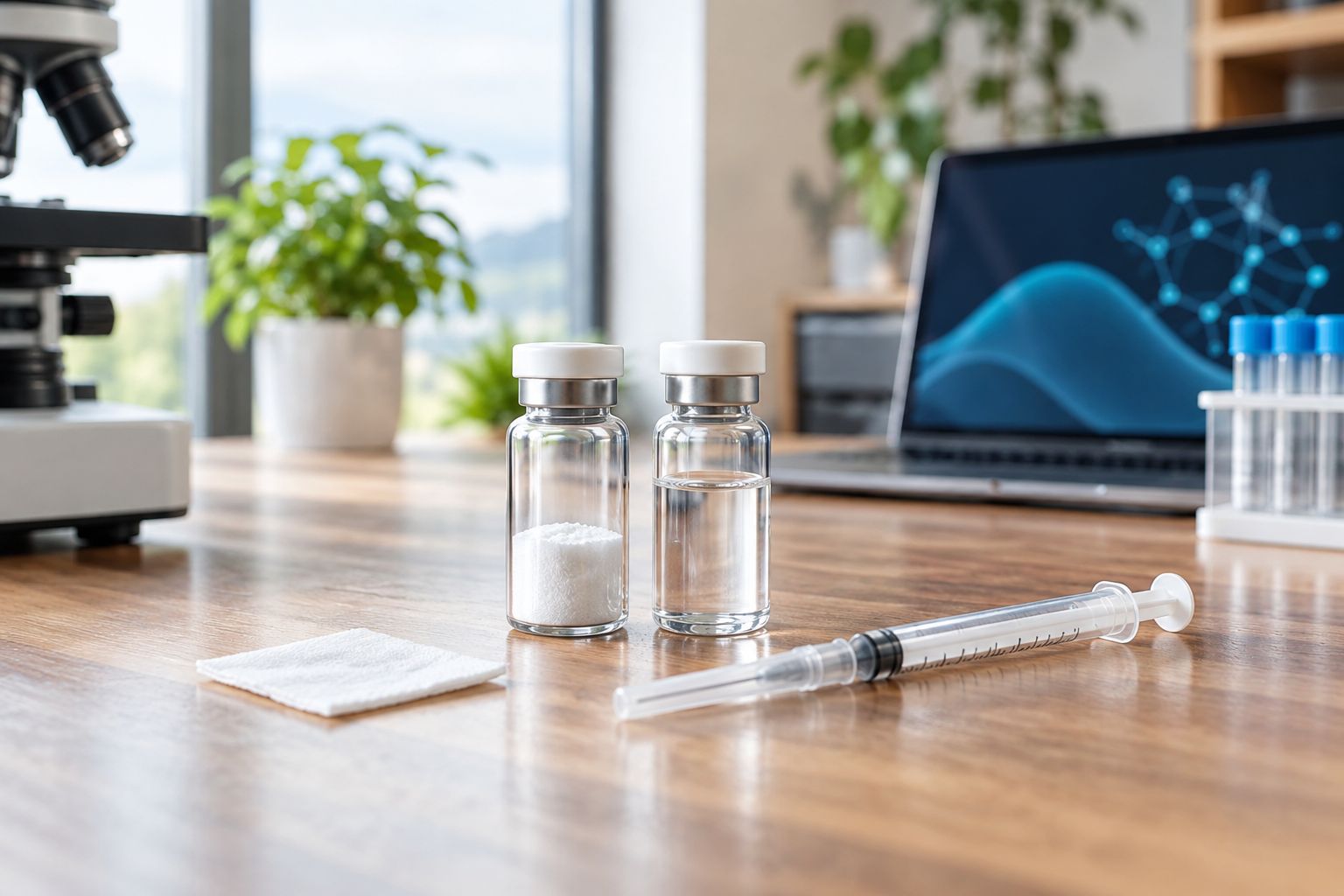
Single vials in smaller unit sizes let a lab test a protocol before committing to a bulk order. This format matters more in early 2026 as more labs run small comparison studies before scaling a full research design.
Low-dose single vials pros:
- Lower cost exposure while a protocol is still being validated
- Easier to track usage against a single documented batch number
Low-dose single vials cons:
- Reordering becomes frequent for anything beyond a short pilot run
- Per-unit shipping and handling adds up over repeat small orders
Best for: a first research run before scaling to a longer protocol. Verdict: Buy for pilot work.
4. Bulk multi-vial packs: best BPC-157 peptide for multi-week research programs
Buying multiple vials from the same batch keeps a multi-week protocol on one documented purity source instead of mixing batches mid-study, which matters when a lab is comparing results across weeks rather than days.
Bulk multi-vial packs pros:
- One COA covers the entire batch used across the full study
- Lower handling overhead per vial than repeat single orders
Bulk multi-vial packs cons:
- Higher vial count to store correctly and track over time
- Only worth it once the protocol length is actually confirmed
Best for: a research program already past the pilot stage. Verdict: Hold until the protocol length is locked in.
5. BPC-157 blended with other bioregulators: best BPC-157 peptide for multi-pathway research designs
Some labs combine BPC-157 with other bioregulators like CJC-1295 or Ipamorelin in a single research design when a study looks at more than one pathway at once. That's a legitimate research design choice, but it complicates attribution, since a result can't be traced to one compound when the vial holds two.
Blended BPC-157 stack pros:
- Covers multiple research variables from a single source
- Reduces the number of separate vials a multi-compound study needs to track
Blended BPC-157 stack cons:
- Impossible to isolate which compound drove a given result
- Requires the supplier to document purity for each compound in the blend separately, not just the blend as a whole
Best for: a study specifically designed around combined pathways, not a default choice for general research. Verdict: Wait until the research design calls for it specifically.
How we ranked
Every format above gets judged against the same six criteria: COA documentation, stated purity percentage, molecular identification, format transparency, shipping stability, and clear research-use labeling. Peptides777's BPC-157 takes the top spot because it meets all six with a standard, stable lyophilized format. The other four formats trade one of those criteria for convenience or scale, which is why they're ranked by use case rather than by a single "better" score.
Which BPC-157 peptide should you choose?
For most labs running standard research in 2026, Peptides777's BPC-157 at 99%+ purity is the default pick. It's documented, stable in lyophilized form, and sits next to CJC-1295, Ipamorelin, and Epitalon if a protocol needs a second compound later. Pick a premixed solution only if reconstitution time is the actual bottleneck, single vials for a pilot run, bulk packs once a protocol length is locked, and a blended stack only when the research design specifically calls for more than one pathway at once.
Check current BPC-157 availability
Review purity documentation and catalog details before ordering.
FAQ
Is BPC-157 legal to buy for research in 2026?
BPC-157 is sold as a research compound for laboratory use, not as an approved drug for human consumption. Suppliers restrict sale to research and scientific use, and buyers are responsible for complying with their own local regulations.
What purity should research-grade BPC-157 have?
Look for a stated purity of at least 98%, ideally 99%+ backed by an independent Certificate of Analysis matched to the batch number. A purity claim without a COA is just a label.
What's the difference between lyophilized BPC-157 and a premixed solution?
Lyophilized BPC-157 ships as a stable powder that needs reconstitution before use, while a premixed solution arrives ready to draw. The powder format holds up better in storage; the solution saves a step at use time.
Can BPC-157 be combined with CJC-1295 or Ipamorelin in a research protocol?
Yes, some multi-pathway research designs use a blend, but combining compounds makes it harder to attribute a result to a single variable. A blend only makes sense when the study design specifically calls for it.
How should BPC-157 be stored before a research protocol?
Lyophilized BPC-157 is stable refrigerated or frozen before reconstitution. Once mixed into a solution, it degrades faster and should be kept cold and used within the supplier's stated window.
What does a Certificate of Analysis actually show?
A COA reports independent lab test results for a specific batch, typically purity percentage and molecular identification via HPLC or mass spec. It should reference the exact batch number on the vial, not a generic template.
Is BPC-157 approved for human use?
No. BPC-157 sold through research suppliers like Peptides777 is marketed strictly for laboratory and scientific research, not for human use or consumption.
Should a lab buy single vials or a bulk multi-vial pack?
Single vials suit a pilot protocol where the study length isn't confirmed yet. Bulk packs make sense once a multi-week protocol is locked in and the lab wants one batch covering the whole study.
One last thing
The detail most buyers skip: the batch number on the COA has to match the batch number printed on the vial itself, not just the product page. If a supplier can't produce that match on request, the purity percentage printed on the label is unverifiable no matter how high it reads.